The dust in Central Anatolia has a way of settling on everything—the tea glasses, the windowsills, and the heavy iron gates of the local schools. It is a quiet, rhythmic place where the passage of time is usually measured by the call to prayer or the changing colors of the steppe. But yesterday, that rhythm broke. It didn't just break; it shattered under the weight of nine lives lost in a tragedy that the nation is still struggling to name.
For the second time in forty-eight hours, the sound of gunfire replaced the ringing of a school bell.
We often talk about statistics in the wake of such events. We count the bodies, the casings, and the minutes it took for the police to arrive. But numbers are cold. They are a defense mechanism we use to keep the horror at arm’s length. Nine dead. It sounds like a data point. It isn't. It is nine empty chairs at nine different dinner tables tonight. It is nine sets of shoes left by the door that will never be stepped into again.
Consider a mother we will call Adalet. She is not a real person, but she represents a very real grief currently echoing through the streets of Kayseri. Adalet spent her morning packing a lunch—flatbread, olives, a piece of fruit. She worried about whether her son had studied enough for his geography exam. She kissed his forehead, complained about the dirt on his jacket, and watched him walk toward the school gates. That was the last moment of her life that made sense. Everything since has been a blur of sirens, screaming, and the suffocating realization that the school, once a sanctuary, had become a tomb.
The first shooting, barely two days ago, felt like an anomaly. Turkey has seen its share of political strife and regional tension, but the Americanized horror of the "school shooting" felt like a distant, foreign fever dream. Not here. Not in our neighborhoods. But the second event, occurring so swiftly after the first, has ripped away that veil of exceptionalism.
Violence is a contagion. It doesn't need a logical reason to spread; it only needs a crack in the social fabric.
What drives a person to walk into a place of learning with the intent to extinguish life? Investigators are currently sifting through the wreckage of the shooters' lives, looking for the "why." They look at social media posts, they interview distant relatives, and they track the origin of the weapons. These are necessary steps, but they often miss the invisible stakes. The real tragedy isn't just the act itself, but the slow, quiet erosion of safety that precedes it.
The weapons used were not high-tech or sophisticated. They were tools of mundane destruction. In a region where traditional values often clash with the isolating pressures of modern, digital life, the sense of community that once acted as a safety net is fraying. When young men feel they have no voice, some choose to speak through the barrel of a gun because it is the only way they believe the world will finally listen.
The air in the aftermath is thick. It tastes like copper and exhaust.
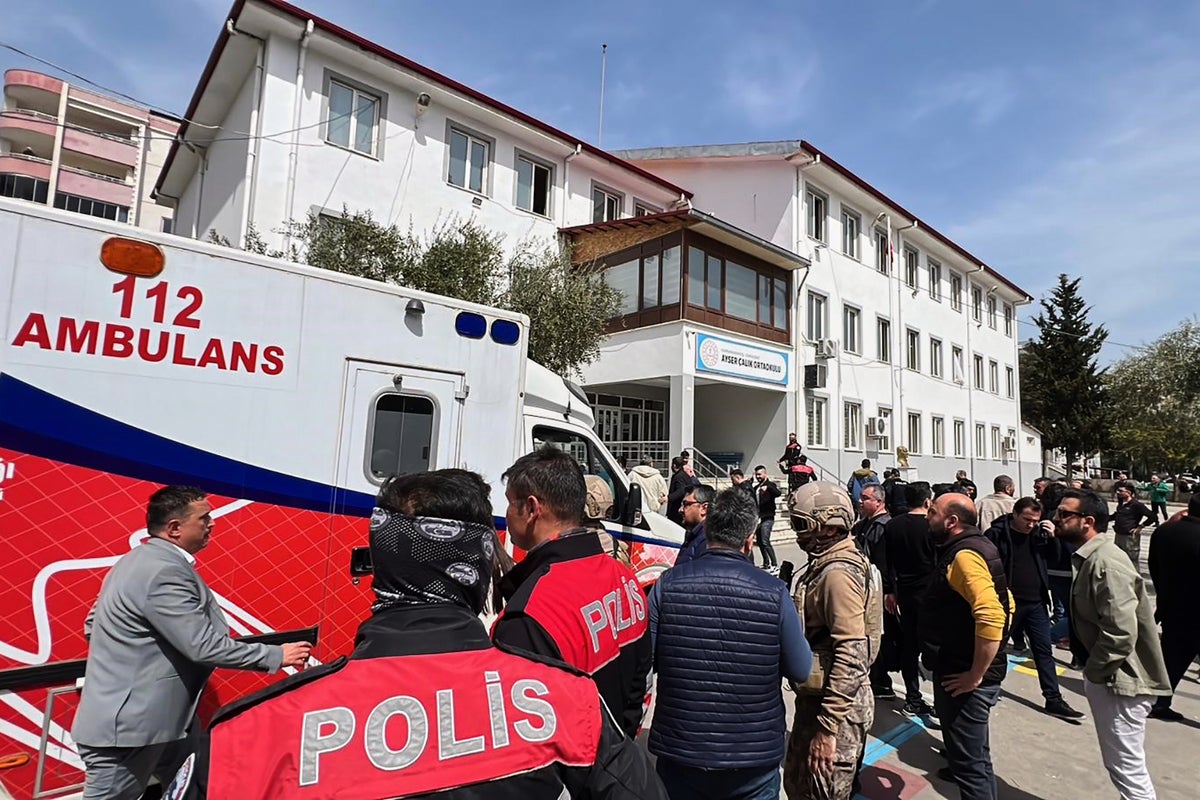
The streets surrounding the school were lined with parents who didn't know if they were grieving or waiting. Have you ever stood in a crowd where everyone is holding their breath? It is a heavy, physical pressure. You can feel the heartbeat of the person next to you, a frantic, jagged pulse. When the names began to be read, the sound that followed wasn't just crying. It was a primal howl, a rejection of a reality that no one was prepared to accept.
We must look at the geography of this pain. This didn't happen in a vacuum. It happened in a country navigating a complex crossroads of identity, where the pressure to succeed is immense and the resources for mental health are often buried under layers of cultural stigma. To talk about "feeling lost" or "feeling angry" is often seen as a weakness in a society that prizes stoicism. But that stoicism has a boiling point.
Nine people.
Among them were students with dreams of becoming engineers, teachers who had dedicated thirty years to the chalk-dusted life of the classroom, and a janitor who knew every crack in the floorboards. Their deaths are not just a "security failure." They are a collective failure of a society to see the boiling point before the steam starts to rise.
Some will argue for more metal detectors. Others will demand more guards at the gates, turning schools into fortresses. Perhaps those things are necessary in the short term. But you cannot build a wall high enough to keep out a darkness that is already inside the house. The "invisible stakes" are the conversations we aren't having—the ones about the growing isolation of our youth, the ease of access to firearms, and the way violence is glorified in the dark corners of the internet.
Yesterday, the sun set over the Anatolian plains just as it always does, casting long, golden shadows across the hills. But for nine families, the light has gone out permanently.
There is a specific kind of silence that follows a gunshot. It is not the peaceful silence of a sleeping house. It is an expectant, terrifying silence. It is the sound of a world waiting for an answer that may never come. As the funerals begin and the coffins are carried through the streets on the shoulders of weeping men, the rest of the nation watches through glowing screens, feeling a mixture of horror and a burgeoning, icy fear.
The dust will settle again. It always does. It will cover the flowers left at the school gates and the chalk marks on the pavement. But the memory of that sound—the sudden, violent interruption of a Tuesday morning—will remain.
It is a reminder that the things we take for granted, like the safety of a child in a classroom, are fragile. They are as thin as the glass in a tea cup, capable of holding warmth one moment and becoming a thousand jagged shards the next. We are left to pick up those shards, careful not to cut ourselves, wondering how many more times we will have to do this before something truly changes.
The school gates are locked now. The hallways are dark. In the silence, if you listen closely enough, you can hear the ghost of a bell that was supposed to signal the end of the day, but instead, marked the end of an era of innocence.