The autumn air in Dhaka carries a distinct scent this time of year. It is a blend of incense, fried sweets, and the damp, cooling breath of a changing season. For generations, this scent has meant celebration. It has meant the beating of dhak drums echoing off brick walls, the rhythmic sway of embroidered cloth, and the collective heartbeat of thousands gathered under temporary bamboo canopies to witness the triumph of light over shadow.
Yet, celebration has often lived alongside a quiet, watchful tension.
History is heavy in South Asia. It is written in the masonry of old buildings and the unspoken boundaries that communities draw around themselves. When festivals arrive, they do not merely mark a date on a calendar; they test the structural integrity of a society. Will the streets remain calm? Will the lights stay on? Will the neighbor look across the fence with a smile or a sneer?
To understand why a simple walk through a crowded pavilion matters, you have to look at the ground beneath your feet. You have to remember what happens when fear dictates the rhythm of daily life.
For years, minority communities across the region have known a particular kind of quiet. It is the quiet of locking doors a little earlier than usual. It is the quiet of lowering voices when discussing faith or tradition in public spaces. It is the exhaustion of carrying a label that makes you a perpetual guest in your own home. When political tides shift, that quiet turns to static—the low, abrasive hum of uncertainty. Rumors travel faster than electricity. A stone thrown in one neighborhood becomes a riot in another. Trust becomes a luxury few can afford to hoard.
Enter the reality of a political leader stepping out of a convoy and walking directly into the crush of a crowd.
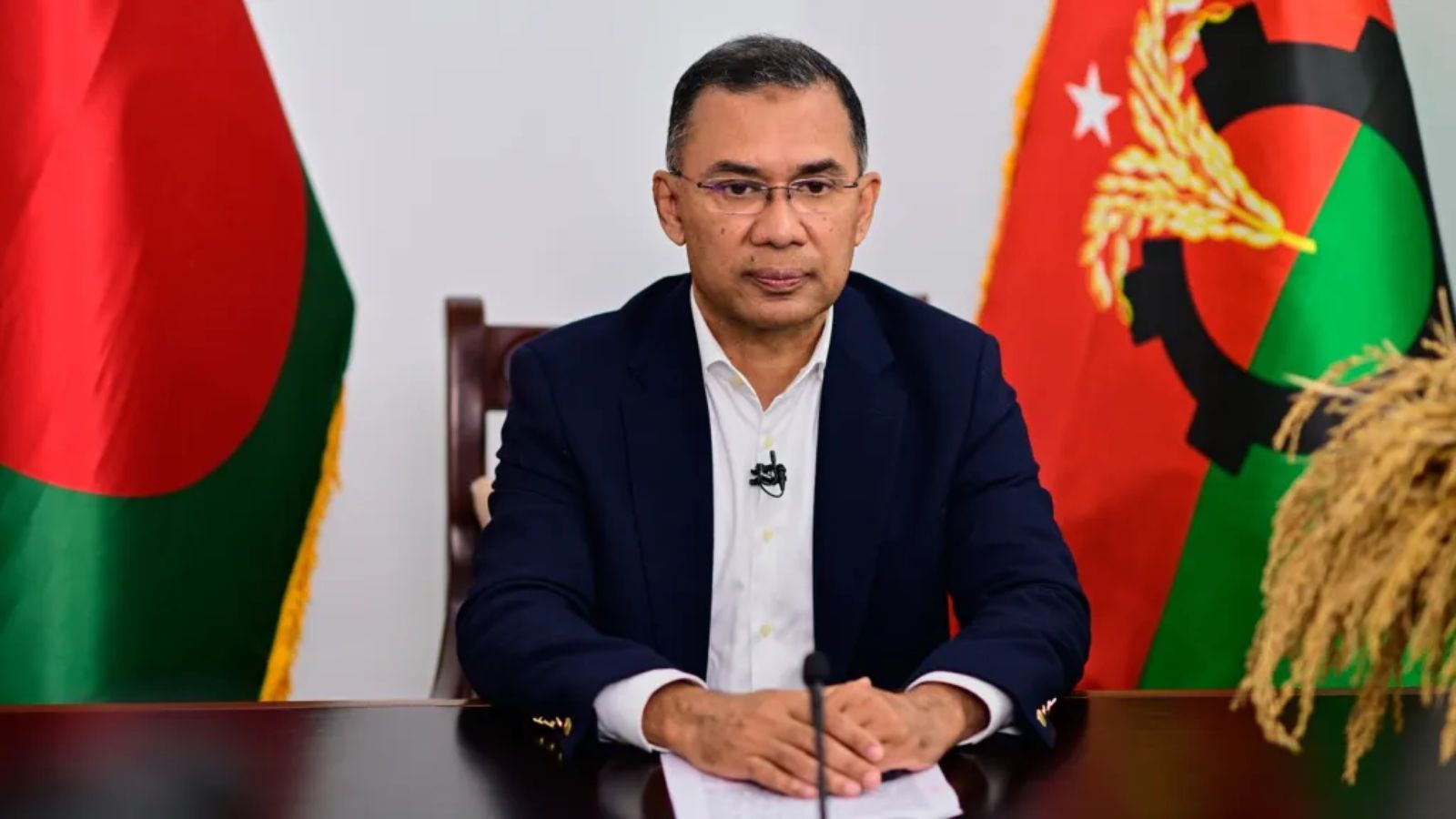
When Tarique Rahman made his recent visit to the Puja pandals, the gesture was scrutinized by millions. In politics, optics are currency. Every step is measured; every smile is calculated for the cameras. Critics are always ready to call it theater. Skeptics point to past failures and ask what has actually changed in the machinery of governance.
They are right to be skeptical. Words are cheap. Vows made under the glare of television lights tend to evaporate the moment the microphones are switched off.
But sometimes, the theater itself creates a new reality.
Imagine standing inside a pavilion draped in red and white silk. The air is thick with the smoke of camphor. The scent clings to your clothes. Around you, hundreds of faces are turned toward a makeshift altar. When a national leader steps into that space, removes his shoes, and speaks not of division, but of the fundamental, unalienable right to worship without looking over your shoulder, the atmosphere shifts.
It is not just about one man or one political party. It is about the signal it sends to the person standing in the shadows.
Equal rights are not granted by decree alone. They are forged in the small, daily choices of ordinary people refusing to hate their neighbors. But governance sets the ceiling. If the top tiers of power signal that persecution will be met with state indifference, the worst elements crawl out of the woodwork. Conversely, when the highest levels of leadership explicitly tie the legitimacy of the nation to the protection of every single citizen—regardless of whether they pray to a crescent, a cross, or a multi-armed deity—the math changes.
The rhetoric of equality is easy to write on paper. The execution is agonizingly difficult.
It requires police forces to protect temples with the same urgency they protect mosques. It requires courts to punish arsonists and vandals with swift, unyielding impartiality. It requires political parties to purge their own ranks of extremists who use religion as a blunt instrument for political gain.
Bangladesh sits at a delicate crossroads. The nation has fought fiercely for its identity, wrestling through turbulent decades of military rule, civil unrest, and democratic fragility. Identity here is a fiercely contested battleground. Who belongs? Who is an outsider? These questions have cost lives, homes, and futures.
When a prominent leader stands before a crowd of minority worshippers and vows that the state will act as a shield, he is placing a bet on a different kind of future. He is betting that the silent majority—the people who simply want to go to work, raise their children, and celebrate their festivals in peace—outweigh the violent fringes.
The test of this vow will not come today. It will come on an ordinary Tuesday six months from now, when a land dispute in a rural district threatens to take on communal colors. It will come when local police officers decide whether to enforce the law or look the other way. It will come in school textbooks, in the allocation of government funds, and in the quiet conversations held in tea stalls across the country.
Right now, the dhak drums have faded. The temporary pavilions are being dismantled, their bamboo frames stacked and carted away until next year. The scent of incense has drifted out into the open sky, replaced by the familiar dust and exhaust of Dhaka traffic.
The cameras have moved on to the next crisis.
Yet, something lingers in the spaces between the buildings. A benchmark has been set. A standard has been spoken aloud in public, recorded by a thousand lenses, and whispered about in millions of homes. The promise of equal citizenship is no longer just an abstract ideal found in constitutional law books. It is now a demand made by the people who stood in the light of the pandals, watching to see if their leaders meant what they said.
The real story is not about the politician who made the visit. It is about the people who are waiting to see if they can finally stop looking over their shoulders.