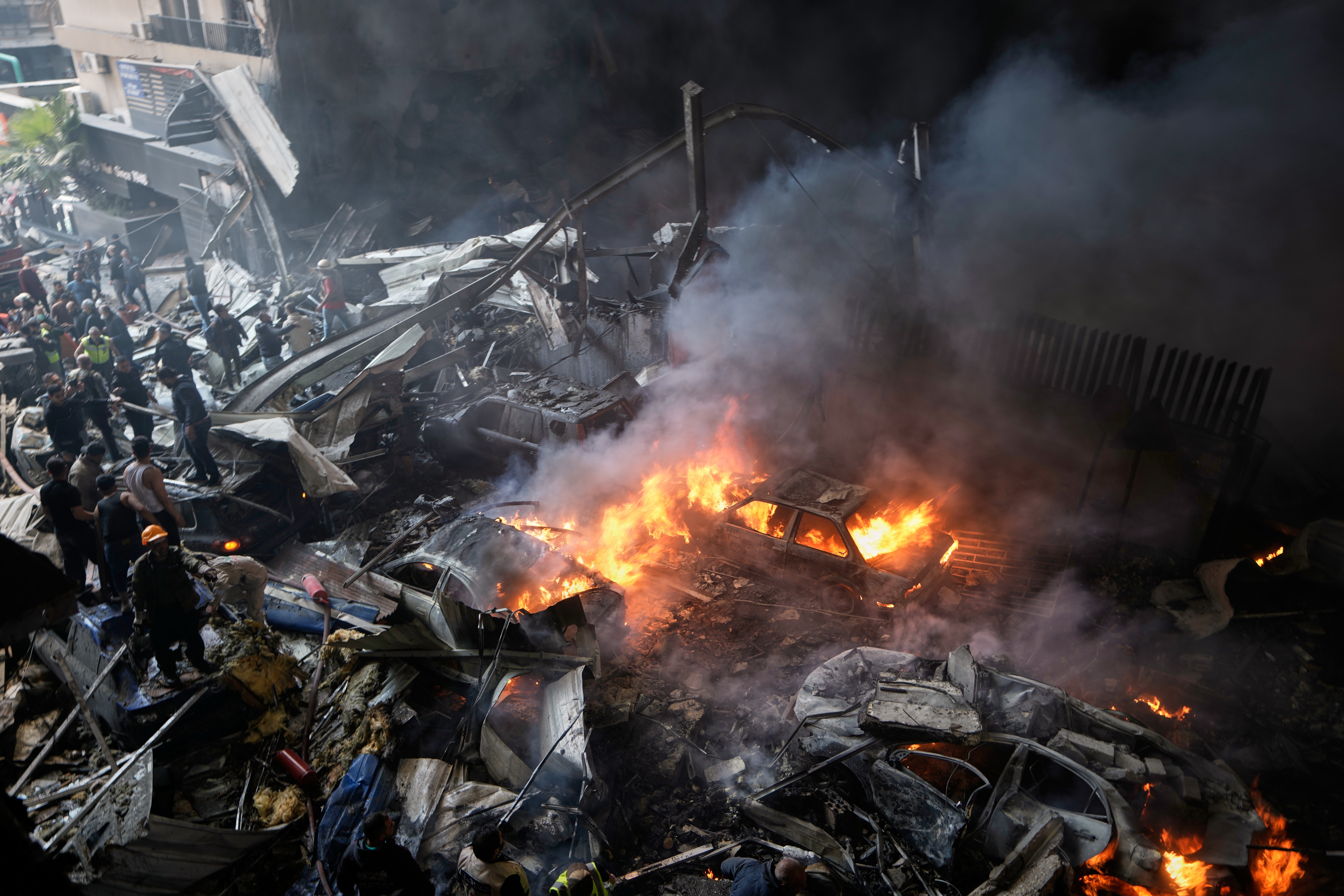
The silence in a war zone is never actually silent. It is a heavy, pressurized thing, like the air in a room just before a thunderstorm breaks. When the diplomats in their climate-controlled rooms in Geneva or Doha sign a piece of paper labeled "ceasefire," that pressure is supposed to lift. But for the people on the ground—the ones who have to decide whether it is finally safe to hang laundry on a balcony or walk a kilometer for clean water—that silence is the most terrifying sound of all.
They call it a "fragile" deal. That word is a clinical euphemism. It suggests a porcelain vase with a hairline fracture, something that might hold together if handled with care. In reality, a fragile ceasefire is a landmine. It is the agonizing space between a hopeful lie and a violent truth.
The Anatomy of a False Peace
Consider a woman named Amina. She is a composite of a thousand stories currently unfolding across the jagged borders of modern conflict zones. On the morning the "cessation of hostilities" was supposed to take effect, Amina did something she hadn't done in four months. She let her son play in the dirt outside their doorway. She watched the clock. 08:00 came and went. The sky remained a pale, empty blue. No whistling of incoming rounds. No rhythmic thud of distant artillery.
By 10:30, the first crack appeared in the porcelain.
It wasn't a full-scale offensive. It was a single drone strike, targeting a "position of interest" three miles away. To the generals, this is a tactical recalibration. To the politicians, it is a minor provocation that doesn't technically "collapse" the framework of the deal. But to Amina, the sound of that explosion—even muffled by distance—meant the contract was void. She grabbed her son by the arm, leaving his plastic truck in the dust, and retreated behind the concrete walls.
This is the psychological tax of a failing ceasefire. It isn't just about the bodies broken by the shells that continue to fall; it is about the total erosion of the concept of a promise. When a deal is signed and then immediately ignored, peace stops being a goal and starts being a taunt.
The Arithmetic of Aggression
Why does the fighting continue when the world has been told it has stopped? The answer lies in the grim logic of "the last inch."
In the hours leading up to a ceasefire deadline, combatants often engage in a frantic, bloody sprint to seize as much territory as possible. They want to maximize their "settlement footprint" before the lines are frozen. But the clock hitting the designated hour rarely stops the momentum of a moving tank or the adrenaline of a battalion that thinks they are one hill away from a strategic advantage.
Statistically, most modern ceasefires are violated within the first twelve hours. We see this pattern repeated from the Levant to the edges of Eastern Europe. The violations are rarely accidental. They are tests.
- Probing the Perimeter: An armed group fires a small mortar volley to see if the international monitors will actually report it.
- The Gray Zone: Using snipers instead of heavy artillery. It keeps the casualty count low enough to avoid a global outcry but high enough to keep the civilian population in a state of terror.
- Deniable Assets: Claiming that the "rogue" units doing the shooting aren't under central command.
These aren't glitches in the system. They are the system. By maintaining a baseline of "low-level" violence, a cautious aggressor can hollow out a ceasefire from the inside. They get the diplomatic credit for "agreeing" to peace while simultaneously achieving their military objectives through attrition.
The Invisible Stakes of the Waiting Game
While the headlines track the number of shells fired, they often miss the slower, more systemic devastation. A ceasefire isn't just about stopping bullets; it is the essential prerequisite for the machinery of life to restart.
When the "fragile" deal remains under fire, the aid trucks stay parked at the border. Logistics officers for the Red Cross or the World Food Programme cannot send drivers into a "mostly quiet" zone. "Mostly quiet" is still loud enough to kill a person behind a steering wheel. Consequently, the famine that the ceasefire was supposed to alleviate continues to deepen. The medicine for the field hospitals sits in a warehouse thirty miles away because the "safe corridor" is being used for target practice.
There is a specific kind of cruelty in a partial peace. It lures people out of their shelters. It encourages the displaced to start the long trek back to their ruined villages. Then, when the shells begin to fall again, those people are caught in the open, far from the basements and trenches that had kept them alive during the height of the blitz.
The Language of the Unheard
We often hear spokespeople use the phrase "all parties must exercise restraint." It is a hollow sentence. It implies a symmetry of blame that rarely exists and offers no path for accountability.
To understand the stakes, you have to look at the way communication breaks down. In a functional peace process, there is a "hotline"—a direct link between opposing commanders to de-escalate accidents. In a fragile, failing deal, those hotlines go dead. Silence from the top leads to chaos at the bottom. A nervous nineteen-year-old at a checkpoint, hearing a backfire from a car, opens fire. The other side responds with a grenade. Within twenty minutes, a "local incident" has spiraled into a renewed front, and the diplomats are back to blaming "miscommunications."
But it wasn't a miscommunication. It was a lack of will.
A ceasefire only works if the cost of breaking it is higher than the benefit of continuing to fight. Currently, the international community has become remarkably adept at "expressing concern" while failing to impose any real cost on those who treat a signed peace treaty as a tactical suggestion.
The Ghost of the Plastic Truck
Night falls on the village. The ceasefire is technically still in effect, according to the news tickers in New York and London. But Amina can hear the low growl of armored vehicles moving under the cover of darkness. She can hear the intermittent pop of small arms fire.
She thinks about the plastic truck she left in the dirt.
It seems like a small thing—a toy in the mud. But that truck represents the death of a specific kind of hope. It was the hope that for one day, the rules of the world might actually apply. That a signature on a document might be stronger than a finger on a trigger.
The truck will stay there. No one is going out to get it. In the morning, the "fragile" deal will likely be declared officially dead, or worse, it will be kept on life support—a fiction maintained for the sake of optics while the ground continues to drink the blood of those who believed in it.
The tragedy of a broken ceasefire isn't that the war started again. It's that, for the people trapped inside it, the war never actually stopped; they were just told to hold their breath until their lungs burned.
The dust settles on the plastic wheels. The blue sky turns to a bruised purple. Somewhere in the distance, the first rocket of the evening streaks across the stars, a bright, burning line that cancels every word written in ink.