The wind off the Pembrokeshire coast does not care about your childhood. It whips across Freshwater West, salt-bitten and relentless, scouring the golden dunes until they shift like restless ghosts.
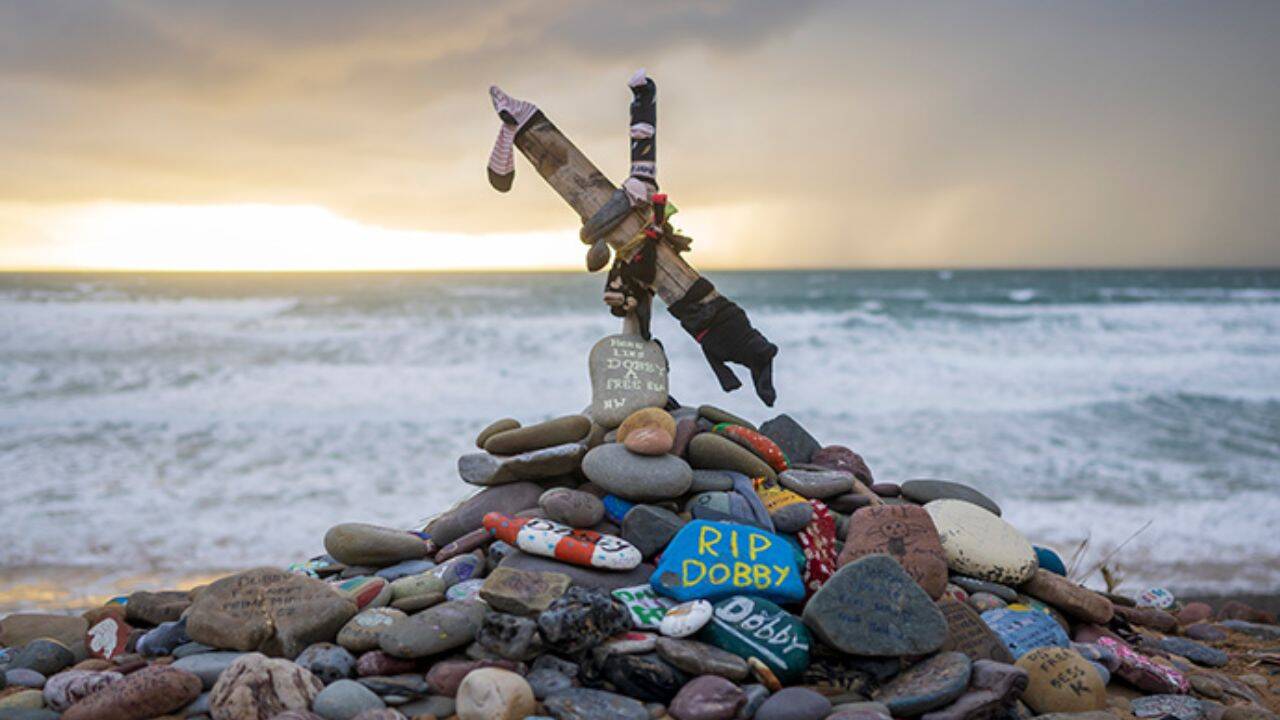
Walk down to the beach on any given Tuesday, and you will find them. Small, damp, forlorn bundles tucked into the crevices of shale and marram grass. Socks. Mismatched wool, faded cotton, argyle patterns bleached by the salt spray, and toddler-sized tubes missing their mates. They do not belong to laundry day runaways. They are offerings.
Years ago, a house-elf died here.
In the cinematic universe of Harry Potter and the Deathly Hallows, this stretch of Welsh coastline served as the desolate backdrop for Shell Cottage, the temporary refuge where Dobby drew his final breath in Harry's arms. It was a cinematic moment designed to break hearts, complete with a makeshift grave marked by a smooth white pebble bearing the inscription: Here lies Dobby, a free elf.
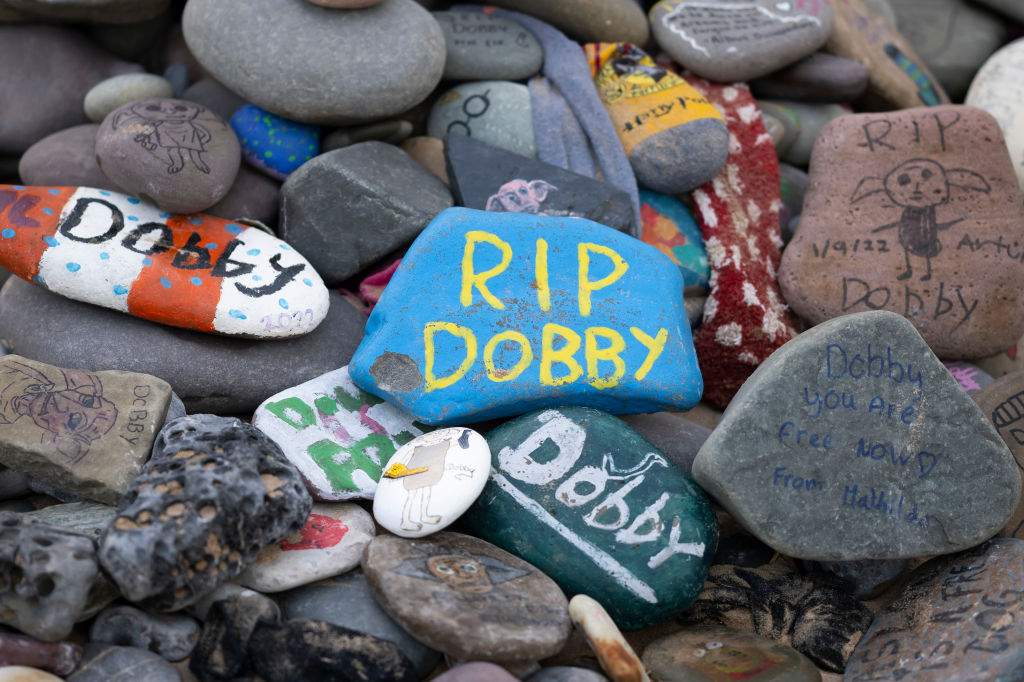
Warner Bros. packed up their cameras long ago. The lights vanished. The trailers rolled away. But the fans stayed. Or rather, they kept coming. They arrived with worn paperbacks in their backpacks and spare socks in their pockets. They built a shrine. A cairn of stones topped with hundreds of colorful foot-warmers left by strangers who needed a physical place to grieve a fictional character.
Then came the letters.
Not from Hogwarts. From the local council and environmental authorities.
Progress has a way of arriving quietly, wearing a high-visibility vest and carrying a clipboard. The National Trust, which manages the stunning coastal strip of Freshwater West, found themselves caught in a peculiar modern dilemma. How do you balance the fragile ecology of a protected sand dune ecosystem with the surging tide of pop-culture pilgrimage?
Consider what happens next: a multi-million-pound infrastructure project proposed a new power cable route. Heavy machinery, trenching, restricted access, and the very real threat of disturbing an ecosystem already strained by heavy foot traffic. Fans heard the news and panicked. To the outside observer, it looked like a ridiculous headline: Harry Potter fans revolt over power cable route near Dobby fictional grave.
People chuckled in newsrooms. Imagine getting upset over a pile of socks, the commentators muttered over morning coffee.
They missed the point entirely.
The revolt was never really about a pile of socks. It was about where we choose to put our grief when the real world gets too heavy to carry alone.
I stood on those dunes last autumn, watching a teenage girl in a oversized knitted sweater carefully place a striped purple sock beneath a flat stone. Her hands were red from the cold. Her eyes were fixed on the pebbles with a heavy, earnest intensity that adults often reserve for war memorials or cathedral altars.
She was not confused. She knew Dobby was made of computer-generated pixels and cotton stuffing played by CGI artists. That is not the secret here. The secret is that human beings have spent thousands of years building markers to anchor invisible emotions to physical geography. We need a spot on a map to point to and say, Something important happened here. I felt something real here.
Dobby's grave became a modern altar because modern life offers very few public spaces for sincere, unironic mourning. When a beloved pet dies, we bury them in the yard. When a family member passes, we visit a cemetery. But what do you do with the ache you feel when a fictional universe saved you from loneliness during middle school, only for that universe to end with a quiet grave on a Welsh beach?
You bring a sock. Because in the mythology of the books, a sock is freedom. A sock is the ultimate symbol of emancipation for a creature who spent his entire life in chains. Leaving one behind is an act of participatory storytelling. It is a way of saying: I helped him. Even now, I helped him.
When the infrastructure plans threatened the area, the local authorities faced an unprecedented public backlash. Thousands of signatures poured in. Environmental concerns mingled with cultural outrage. Fans argued that the utility work would disrupt the sacred geography of the memorial site, trampling the delicate dunes and scattering the tokens left by grieving readers.
The National Trust did something rare for a bureaucratic entity. They listened.
Instead of treating the phenomenon as a nuisance to be bulldozed or fenced off, they launched consultations. They worked with local stakeholders, conservationists, and fans to find a path forward that protected the rare dune habitats—home to ground-nesting birds and fragile dune flora—while acknowledging that the site had evolved into a cultural landmark. A review was conducted. Temporary access paths were discussed. The power cable route faced intense scrutiny to ensure the delicate balance between modern energy needs and modern emotional geography was maintained.
This is where the cold logic of engineering meets the warm, messy reality of human sentiment.
Utility companies look at a map and see lines, voltage capacity, and soil resistance. They see a logistical puzzle to be solved with trench diggers and heavy cables. But people look at that exact same patch of earth and see a story. They see a friend who died so others could live.
If you strip away the magic, the debate at Freshwater West is a microcosm of a much larger modern conflict. We are building a hyper-connected, digital world where everything is weightless, intangible, and ephemeral. Our music lives in the cloud. Our books are pixels on glass screens. Our communities are chat rooms flickering in the dark.
We are starving for weight. We are starving for things we can touch, places we can visit, and rituals we can share shoulder-to-shoulder with strangers.
That is why the socks matter. They are physical proof that millions of people independently agreed to care about the same imaginary thing.
Think about the sheer logistics of it. Someone buys a ticket to Wales, rents a car, drives down narrow country lanes, walks out into the biting wind, and leaves a clean sock under a rock. There is no monetary reward. There is no Instagram clout that justifies the effort of a rainy afternoon in Pembrokeshire. It is pure, unadulterated sincerity. In an age of cynicism, sincerity is a radical act.
When the tide comes in at Freshwater West, it washes the base of the dunes. The salt water reaches up toward the stones. Sometimes, volunteers sweep through the area, gathering the sodden socks to prevent them from choking the local wildlife or polluting the pristine beach, replacing them with sustainable alternatives or urging fans to pause the practice in favor of donations to conservation charities.
A quiet tug-of-war plays out between ecology and mythology.
The environmentalists are right: plastic-blend fabrics and synthetic yarn do not belong in a protected coastal habitat. The birds need undisturbed nesting grounds. The shifting sands need their native grasses to hold the shoreline together against rising seas.
Yet the fans are also right: you cannot simply legislate away human grief and imagination. You cannot tell people that what they feel doesn't matter just because it started in the pages of a fantasy novel.
The solution, when it finally arrived, was not a victory of bulldozers over books, nor books over biology. It was a compromise born of mutual exhaustion and respect. Visitors are now gently educated on how to honor the memory of a fictional elf without destroying the very real coastline that gave him a temporary home. Signs explain the fragility of the dunes. Volunteers monitor the site. The power cables find their alternative routes through less sensitive terrain.
The wind still blows off the Irish Sea. The gulls still wheel overhead, screaming into the gale.
If you walk down to the water's edge today, you will still see them. Tucked into the rocks, defying the cold, defying the skeptics, defying the march of time and infrastructure. Little cotton flags waving a stubborn truce between the world as it is, and the world as we wish it had been.
A single sock, heavy with salt water, holding the line against the dark.