Silence. Then the sound of a screwdriver turning against wood paneling.
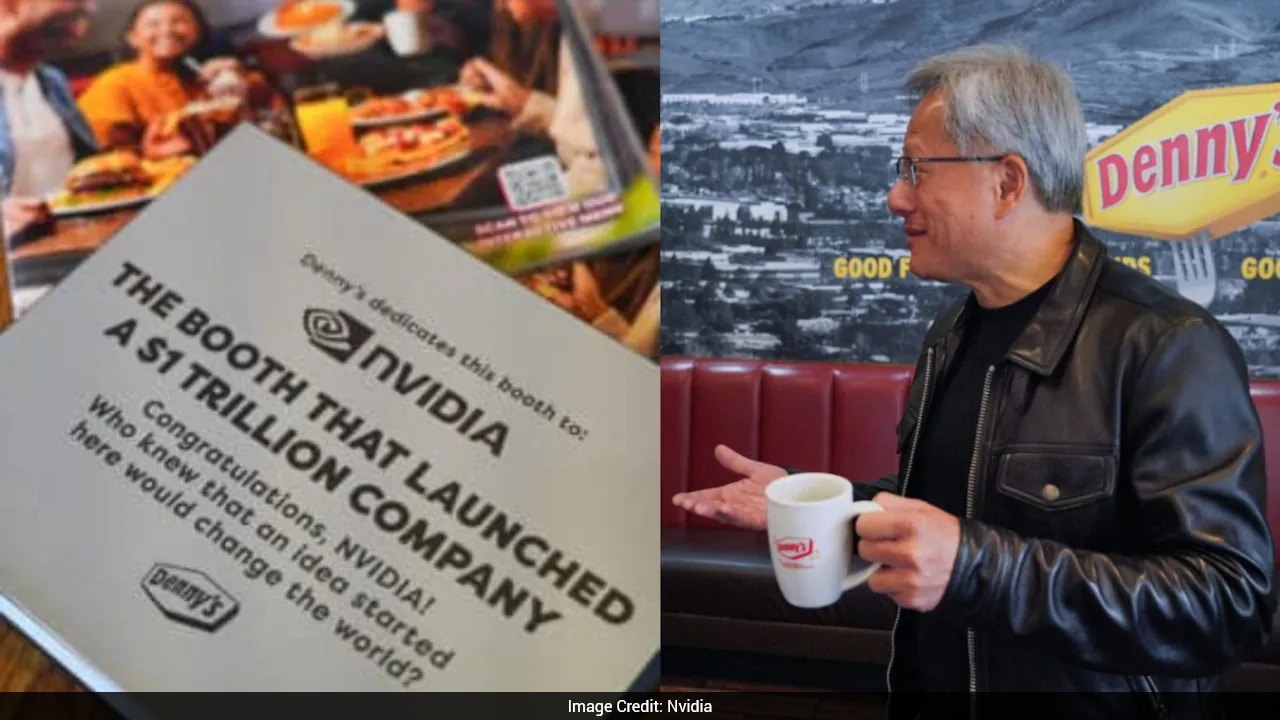
In a quiet California dining room, far from server farms and stock tickers, a small piece of tribute bearing the name of Nvidia and its co-founder Jensen Huang comes down from the wall. A few days later, after public noise cools and the room settles back into its rhythm, it goes right back up.
On paper, that is all the story says. A restaurant in California takes down an Nvidia plaque after a controversy involving Jensen Huang, then reinstates it after a brief removal. A twenty-second scan on a phone screen. A minor blip in a week crowded with big headlines.
Yet I keep thinking about the screw holes left behind in the wood.
Anyone who has worked inside a small business knows how fragile the day-to-day feels. A bad Tuesday rainstorm can empty half the tables. A supplier hikes the price of oil, flour, or electricity by twelve percent, and suddenly a dish that brought joy to regulars barely breaks even. You spend years learning the names of people who sit in the corner booth every Friday night. You learn who likes extra lemon, who celebrates anniversaries there, and who keeps coming back when times are tight.
Then a celebrity or a tech titan becomes a lightning rod online, and your quiet dining room gets pulled into a storm you did not start.
To make sense of why a restaurant owner makes that split-second choice—pull the plaque down, then put it back—it helps to look at how modern attention works. Notice I am using a metaphor here: think of a viral controversy like a sudden gust of wind blowing through an open window. It rattles the blinds and scatters napkins across the floor. Inside the room, you instinctively grab what might blow away or break, even if the wind dies down ten minutes later.
Now consider a hypothetical scenario to ground the human math of that moment. Suppose a restaurant manager named David (a hypothetical character created to illustrate the pressures of hospitality) opens his inbox at 8:00 a.m. before prep begins. Half the staff is setting out silverware; the walk-in cooler hums at thirty-seven degrees; two dozen reservation confirmations sit on the screen. Then the phone buzzes with messages about an argument swirling around Jensen Huang and Nvidia. A few angry comments mention the plaque on the wall.
What is David actually trying to protect in that moment? Not a grand political manifesto. Not a multi-billion-dollar chip valuation. He is trying to protect his cooks, his servers, his regulars, and his own sanity during dinner service.
Take-down first, breathe later. That is a deeply human reflex when a local business suddenly feels exposed to strangers shouting from miles away.
And taking something off a wall in a restaurant carries its own quiet history. Restaurants have always lived by two kinds of memory. One is the memory of the neighborhood—the family birthdays, the first dates, the long shifts after a tough week. The other is the memory of fleeting fame—a framed menu, a signed photo, a nod to a figure who represents ambition or innovation at a specific moment in time.
When a leader like Jensen Huang rises to global prominence through Nvidia, he stops being just an engineer or an executive in people's minds. He becomes a symbol. People project hopes onto him—dreams of technological breakthroughs, wealth, and speed. Others project fears onto him—anxiety over rapid change, job shifts, market swings, or how much power sits inside a handful of companies.
A plaque on a dining room wall is small, often just a few inches wide. Yet when a symbol becomes heated, even a small object can feel heavy.
Why, then, bring it back after a brief removal?
Because once the immediate rush of anger or confusion passes, owners and teams step back and ask a calmer question: what did the plaque actually mean here in the first place, and does removing it permanently fix anything? Often, a brief pause gives everyone room to cool off. The immediate pressure eases. The dining room returns to what it has always been—a place to eat, talk, and share a meal rather than a stage for every outside debate.
Reinstating the plaque does not erase whatever debate surrounded Jensen Huang. Nor does it turn a neighborhood restaurant into a corporate headquarters. Instead, it signals a return to steadiness after a brief wobble.
I admit that watching stories like this unfold makes me uneasy, and I suspect many readers feel the same way. Sometimes it is hard to tell what is real outrage, what is temporary online piling-on, and what actually matters to the people standing behind the counter. When headlines move at lightning speed, even a well-meaning business owner can feel caught in a bind: leave the plaque up and risk a wave of complaints during a busy shift, or take it down and look reactive once the dust settles.
That uncertainty is real. Nobody has a neat rulebook for navigating internet pressure while keeping soup hot and tables turned.
Still, look at the arc of the whole episode. Remove. Pause. Reinstate.
There is something oddly grounding in that sequence. It shows that reactions in real life do not have to stay frozen at peak volume. A moment of tension flares up, a decision gets made under pressure, time passes, and people adjust.
The next time you walk past a local spot and see a small tribute or sign on the wall, look past the metal or wood for a second. Think about the hands that put it up, the shift when someone worried it might draw heat, and the quiet decision to let the room settle back into itself.
A screw goes back into the wood. Dinner service begins. And the room belongs to the people inside it once more.


