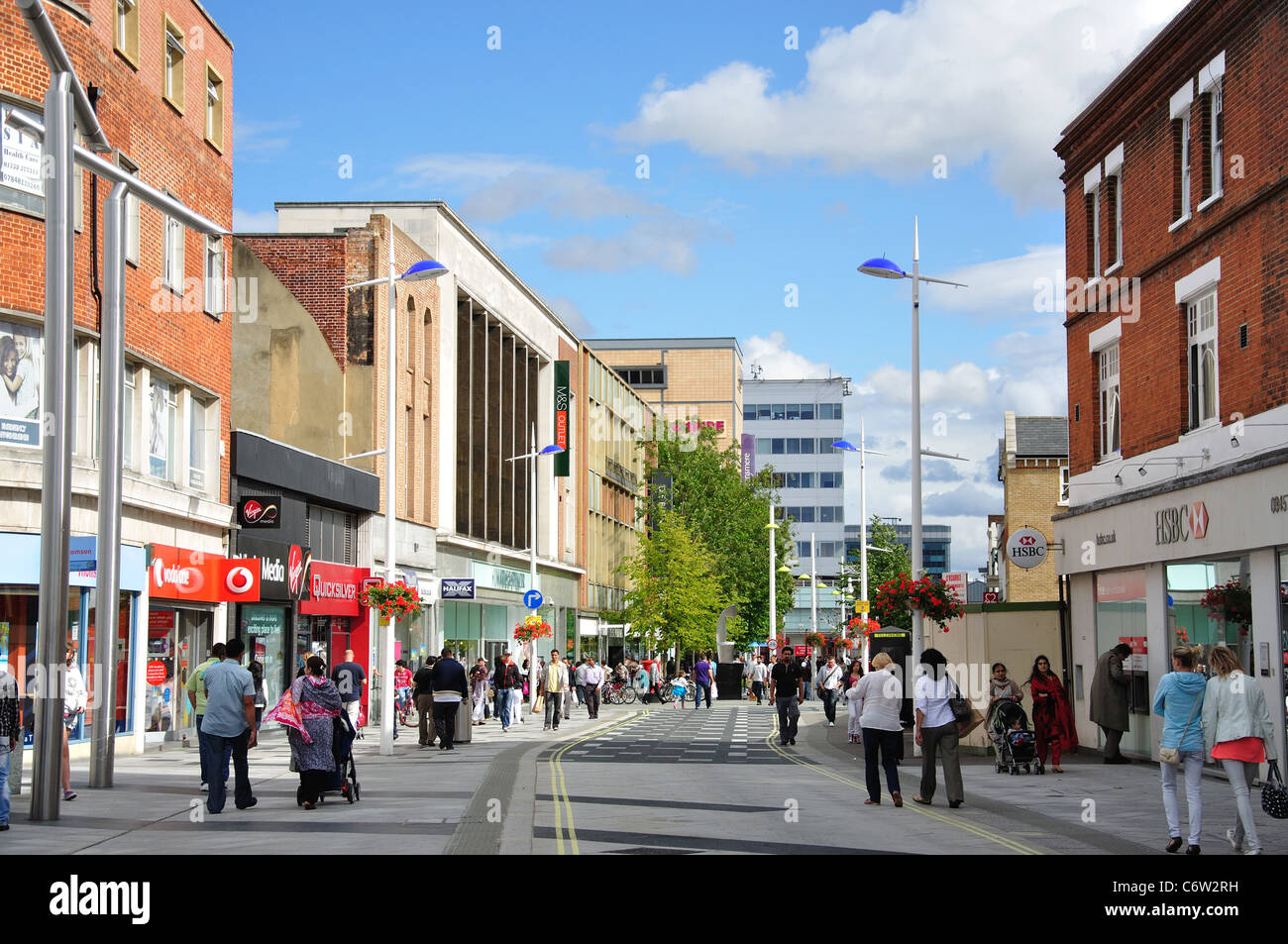
Slough hosts over 40 data centres, absorbing 65% of the town's total grid electricity—roughly 1.3 terawatt-hours annually—while capturing a fraction of the downstream economic value generated by the compute workloads running inside its industrial estates. This spatial mismatch between hyper-localized physical externalities and globally distributed digital rents represents the defining infrastructure conflict of the artificial intelligence build-out. For two decades, the Berkshire town traded industrial zoning simplicity and proximity to London's financial core for rapid capital inflows. Now, facing acute grid saturation, thermal exhaust, and low-frequency acoustic pollution, Slough Borough Council is attempting to rewrite the municipal extraction formula by demanding up to £1 million in annual community contributions from operators.
Understanding why Slough reached this inflection point—and whether its attempt to monetize local infrastructure friction will succeed—requires stripping away the civic rhetoric and analyzing the underlying physics, grid topology, and capital allocation mechanics governing hyperscale clusters.
The Three Pillars of Slough's Cluster Formation
Data centre clusters do not form randomly; they emerge at the intersection of latency physics, legacy land-use entitlements, and existing high-voltage transmission architecture. Slough accumulated Europe's highest concentration of server capacity through three compounding structural advantages:
- Speed-of-Light Latency Constraints to the City of London: Financial trading engines, cloud availability zones, and enterprise interconnection hubs require sub-millisecond round-trip times to central London. Sitting roughly 20 miles west of the City along the M4 corridor, Slough sits well inside the optical latency envelope required for synchronous replication and high-frequency financial routing while avoiding central London land valuations.
- Single-Owner Pre-Zoned Industrial Scale: The Slough Trading Estate, controlled by real estate investment trust SEGRO, operates as the largest privately owned business park in single ownership in Europe. Because the estate held legacy industrial zoning from twentieth-century manufacturing, developers bypassed the multi-year greenfield entitlement battles that stalled competing sites. In November 2024, the council reinforced this friction-free pipeline by adopting a Simplified Planning Zone (SPZ) valid through November 2034, allowing qualifying data centre builds to bypass individual planning applications entirely.
- Dense Dark Fibre and Historical Grid Headroom: The M4 corridor carries primary transatlantic and domestic fibre trunks westward out of London. Combined with heavy electrical distribution infrastructure built for twentieth-century manufacturing, early entrants like Equinix, Digital Realty, and VIRTUS secured megavolt-ampere (MVA) connections rapidly. Once Equinix established its primary London interconnection campus in Slough, network effects locked in subsequent builds; cloud hyperscalers and enterprise tenants had to co-locate within cross-connect distance to minimize transit costs.
These three factors created a classic agglomeration loop. Every new facility increased the density of fibre cross-connects, raising the switching costs for tenants and driving up the value of powered shells across the estate.
The Asymmetry of Digital Infrastructure Economics
The political friction now surfacing in Slough stems from a structural flaw in how modern compute infrastructure distributes costs and revenues. Traditional manufacturing plants—the car factories and paint works that previously occupied Slough—exhibited high local economic multipliers. A factory consuming 50 megawatts of power employed thousands of shift workers, supported local supply chains, and generated substantial payroll tax circulation within the immediate municipality.
Hyperscale and colocation data centres invert this ratio. They are capital-intensive, labor-light thermodynamic engines.
- Capital Expenditure Concentration: A 50 MVA to 100 MW campus represents hundreds of millions of pounds in civil engineering, switchgear, backup diesel or hydrotreated vegetable oil (HVO) generators, chillers, and server racks. Nearly all specialized equipment—transformers, uninterrupted power supplies (UPS), and graphics processing units (GPUs)—is manufactured outside the United Kingdom and imported directly to the site.
- Operational Labor Compression: Once commissioned, a massive data hall requires only dozens of permanent technical staff—primarily facility engineers, physical security personnel, and remote hands technicians. The software engineers, quantitative analysts, and enterprise clients monetizing the compute capacity sit in London, Dublin, Zurich, or Silicon Valley.
- Tax Base Leakage: Under the UK's centralized fiscal architecture, business rates collected on high-value commercial real estate are pooled and redistributed by central government rather than retained in full by the host borough. Local authorities absorb the infrastructure strain while central treasuries capture the corporation taxes and value-added taxes generated by cloud revenues.
This creates an acute fiscal divergence. In 2024, Slough's data centres consumed 1.3 TWh of electricity—the equivalent annual consumption of roughly 520,000 typical UK homes. Yet the municipality's direct fiscal return remained restricted to standard business rate retention formulas and one-off Section 106 planning obligations, such as SEGRO's £4.3 million commitment for highways and £2 million for local skills development.
Physical Externalities and the Thermodynamics of Density
When a cluster approaches 1 gigawatt of combined IT load, the physical footprint ceases to be benign. Compute infrastructure operates under the first law of thermodynamics: virtually 100% of the electrical energy entering a server rack is converted into low-grade waste heat.
In lower-density enterprise facilities built between 2005 and 2020, thermal dissipation dispersed easily into the surrounding atmosphere. As artificial intelligence training and inference workloads push rack densities from 8 kilowatts to upwards of 50 to 100 kilowatts per rack, cooling systems must reject massive volumes of thermal energy continuously. Research from the University of Cambridge analyzing satellite thermal data across global data centre clusters identified localized ambient temperature increases averaging 2°C near dense server concentrations, even after controlling for broader urbanization and climate trends. In Slough, local weather station readings during peak summer heatwaves have recorded measurable temperature differentials between the industrial estate perimeter and residential districts further into the town.
Acoustic and grid externalities compound the thermal load:
- Low-Frequency Acoustic Propagation: Industrial chillers, adiabatic cooling towers, and rooftop air-handling units operate 8,760 hours per year. Unlike daytime road traffic, data centre cooling arrays generate a continuous low-frequency hum between 50 Hz and 125 Hz. Low-frequency sound waves experience minimal atmospheric attenuation and penetrate standard residential double-glazing and masonry, leading to sleep disruption and structural vibration complaints in adjacent converted residential blocks.
- Distribution Network Crowding-Out: Slough sits on the West London electricity transmission and distribution network, where grid capacity warnings began restricting residential and commercial housing developments as early as 2022. When data centres lock up firm MVA capacity at local substations, they directly delay housing construction and commercial electrification projects across the M4 corridor.
- Water Stress During Peak Ambient Temperatures: While closed-loop liquid cooling systems recycle coolant internally, many legacy facilities in the cluster rely on evaporative cooling towers during summer peaks to maintain Power Usage Effectiveness (PUE) targets. This spikes municipal water draw precisely when Thames Water regional reservoirs face seasonal depletion.
The Regulatory Trap of the Simplified Planning Zone
Slough Borough Council's demand for up to £1 million per year per operator—paired with a grassroots resident petition exceeding 1,000 signatures calling for a moratorium on new approvals—exposes a self-inflicted governance bottleneck.
In November 2024, to maintain its competitive edge as a friction-free development zone, the council enacted the ten-year Simplified Planning Zone for the Slough Trading Estate. Under UK planning law, an SPZ grants blanket pre-approval for specified classes of development, stripping the local planning committee of its discretionary power to reject individual applications or attach bespoke Section 106 financial extraction conditions on a project-by-project basis.
This leaves the council in a weak negotiating position:
- Lack of Statutory Leverage on Existing and SPZ-Covered Sites: Because operators building within the SPZ perimeter already hold de facto entitlement through 2034, any annual £1 million community levy must either be negotiated as a voluntary corporate social responsibility (CSR) contribution or extracted via non-planning regulatory levers, such as environmental permitting and noise abatement enforcement.
- Central Government Preemption Risk: In 2024, the UK government designated data centres as Critical National Infrastructure (CNI) and signaled that local planning moratoria would be treated as threats to national security and economic growth. If Slough attempts to revoke its SPZ or impose punitive unilateral taxes that stall capacity delivery, the Secretary of State for Housing, Communities and Local Government holds statutory authority to call in applications and override local refusals.
- Capital Flight to Unconstrained Regions: Power, rather than floor space, is the primary valuation metric in digital infrastructure. With West London substations saturated and the national grid connection queue clogged, hyperscale capital is already dispersing toward regions with available high-voltage headroom—specifically South Wales around Cardiff, Hertfordshire, Greater Manchester, and government-backed AI Growth Zones in Lanarkshire, Scotland. Excessive municipal extraction in Slough accelerates this capital rotation toward secondary UK hubs without solving Slough's existing physical footprint.
Operationalizing Municipal Value Capture Without Triggering Capital Flight
Demanding arbitrary flat-rate cash payments of £1 million per facility is a blunt, economically inefficient mechanism. A flat fee penalizes smaller colocation edge facilities while representing a rounding error for a 100 MW hyperscale campus. To capture durable local value without triggering central government intervention or driving away anchor tenants, municipal authorities and infrastructure operators must transition from arbitrary cash levies to thermodynamic and grid-integrated compensation models.
1. District Heating Offtake Mandates
Instead of venting gigawatt-hours of 30°C to 45°C warm water and exhaust air into the Berkshire atmosphere, new high-density builds and major retrofits should be conditioned on physical heat-export interfaces. By installing heat-exchanger manifolds at the facility boundary, operators can supply baseline thermal energy to municipal district heating networks, adjacent commercial greenhouses, or local public leisure centers. While low-grade waste heat requires heat pumps to boost temperatures for residential radiator loops, transferring the thermal load removes cooling tower water consumption and directly lowers municipal heating bills for nearby social housing.
2. Behind-the-Meter Grid Flexibility and Microgrid Support
Data centres possess massive, underutilized electrical infrastructure in the form of uninterruptible power supplies, battery energy storage systems (BESS), and backup generation arrays. Rather than treating facilities purely as parasitic baseload consumers, local authorities and distribution network operators (DNOs) should structure agreements requiring operators to provide grid-balancing services. During peak winter demand events on the West London network, data centres can island from the grid using HVO-fueled backup generation or discharge on-site battery banks, freeing up tens of megawatts of substation capacity to prevent local brownouts and unlock grid connections for municipal housing developments.
3. Megawatt-Indexed Infrastructure Funds
If financial contributions are structured outside the SPZ framework, they must be indexed to contracted megavolt-amperes (MVA) rather than flat per-building fees. A tiered levy—such as £15,000 to £25,000 per contracted MVA annually—aligns municipal revenue directly with resource consumption. Under this structure, a 50 MVA campus contributes £750,000 to £1.25 million annually into a ring-fenced local infrastructure trust dedicated strictly to acoustic attenuation grants for neighboring residences, substation upgrades, and technical apprenticeship pipelines.
The Strategic Trajectory for European Compute Clusters
Slough's confrontation is the leading indicator for every mature data centre hub in Europe, including Frankfurt's Ostend district, Amsterdam's Schiphol corridor, and Dublin's West campus. The era in which hyperscalers and wholesale landlords could treat municipalities as passive hosts for industrial sheds ended the moment AI compute clusters began consuming over half of a town's total electrical supply.
Operators and real estate developers underwriting new capacity across Europe must immediately price municipal friction into their site selection models. Pure latency-driven clustering in saturated urban suburbs is hitting hard thermodynamic and political ceilings. The next decade of European compute expansion will split into two distinct tiers: high-margin, latency-sensitive inference hubs inside legacy clusters like Slough that survive only by integrating waste-heat recovery and grid-stabilization assets into their physical designs, and massive 500 MW-plus AI training campuses migrating to peripheral regions with abundant renewable generation, cold ambient air, and low population density. Municipalities that negotiate enforceable thermodynamic and grid-capacity offsets today will extract permanent civic infrastructure from the AI boom; those that rely on belated, unstructured cash demands will inherit the grid constraints while watching the next wave of capital build elsewhere.


