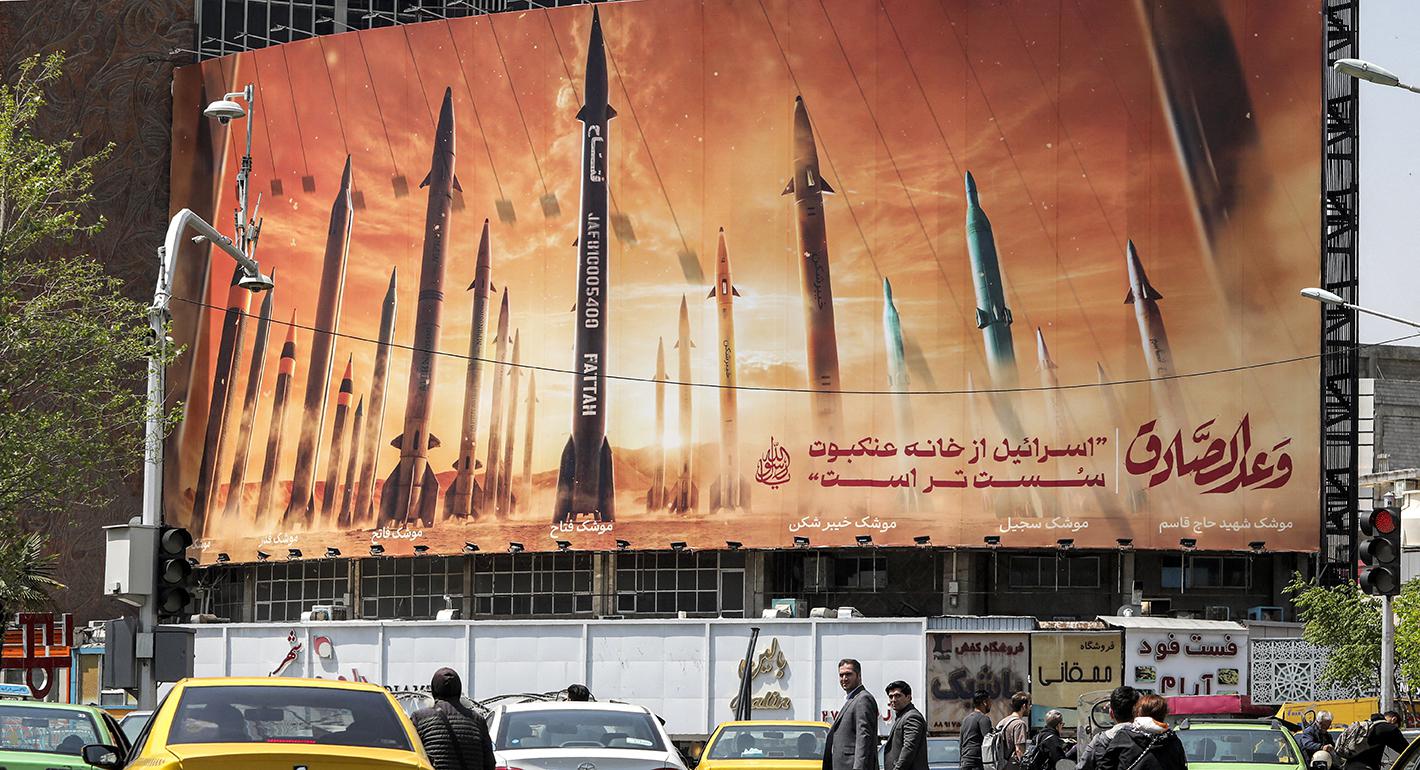
The air inside the Istanbul Expo Center usually smells of industrial carpet and overpriced espresso. But during the SAHA Expo, the scent shifts. It becomes metallic. It smells of scorched polymer and the ozone tang of high-end electronics. Under the bright, unforgiving fluorescent lights, men in sharp suits and generals with rows of ribbons lean over glass displays, speaking in the hushed, reverent tones usually reserved for cathedrals.
They aren't looking at art. They are looking at the Cenk.
For decades, the reach of a nation was measured by the length of its shadows or the depth of its purse. Today, it is measured by the arc of a flight path. Turkey has just lengthened that arc significantly. The announcement of the Cenk-2 ballistic missile didn't just rattle the display cases in Istanbul; it recalibrated the psychological map of three continents. With a reported range of 6,000 kilometers, this isn't a regional deterrent. It is a bridge built of fire and precision, spanning from the edges of Europe to the deep heart of Asia and the far reaches of Africa.
The Weight of the Hardware
To understand what 6,000 kilometers looks like, you have to stop thinking about maps and start thinking about time.
Imagine a technician named Ahmet. He has spent fifteen years working in the sterile, vibration-proof labs of Roketsan. He doesn't see a "strategic asset." He sees the tension in a specific bolt. He sees the way the thermal shielding handles the brutal, localized sun of atmospheric re-entry. When Ahmet looks at the Cenk-2, he sees a decade of late nights and the quiet pressure of a nation trying to outrun its own history of dependency.
For years, Turkey bought its security. It was a customer. It waited for shipments of engines from one country and guidance systems from another. But the world is becoming a place where "out of stock" means "out of options." The Cenk-2 represents the moment the customer decided to own the factory. It is a solid-fuel, two-stage monster designed to move faster than the eyes of most defense systems can follow.
Solid fuel is the key. Liquid-fueled rockets are temperamental. They are slow to prep, requiring a caravan of fueling trucks and hours of vulnerable exposure. They are the nervous, high-maintenance divas of the missile world. Solid fuel is different. It is stable. It sits in the tube, ready, waiting for a spark. It offers the kind of "flip-the-switch" readiness that keeps neighboring capitals awake at night.
The Geography of Anxiety
Distance is a funny thing. We treat it as a constant, but in geopolitics, distance is elastic. When a country develops a weapon that can travel 6,000 kilometers, the world shrinks. London is suddenly in the neighborhood. Beijing is a stone's throw away. Cape Town is on the horizon.
Consider the perspective of a diplomat in a neighboring state. For twenty years, the "threat landscape" was a small circle on his desk. He worried about border skirmishes and regional proxies. Now, that circle has expanded until it covers his entire world. The Cenk-2 doesn't even need to be fired to do its job. Its job is to exist. It sits in the back of the mind during every trade negotiation, every maritime dispute, and every treaty signing.
It is the silent guest at every table.
The technical leap from the Tayfun—Turkey's previous headline-maker with a 560-kilometer range—to the Cenk-2 is staggering. It is the difference between a local courier and a global logistics firm. To bridge that gap, Turkish engineers had to solve the problem of heat. When a piece of metal travels at several times the speed of sound, the air around it stops acting like gas and starts acting like a hammer. The friction is enough to melt standard alloys. To keep a warhead intact over 6,000 kilometers, you aren't just building a rocket; you are building a refrigerator that can survive a furnace.
The Invisible Stakes
Why go this far?
The answer isn't found in a physics textbook. It’s found in the collective memory of a nation that felt sidelined during the Cold War. There is a specific kind of pride that comes with indigenous production. In the cafes of Ankara, people talk about these missiles not as tools of war, but as certificates of graduation. They see them as proof that they are no longer the "sick man of Europe," but the technician of the Middle East.
But pride has a shadow.
The Cenk-2 enters a world that is already twitchy. We are living in an era where the old guardrails—the treaties that limited how many of these things you could have and where you could point them—are fraying. When a new player enters the 6,000-kilometer club, the math for everyone else changes. It triggers a chain reaction of "just in case."
- Country A builds a longer reach.
- Country B upgrades its radar.
- Country C buys a new interceptor.
It is a silent, expensive dance where no one actually moves, yet everyone ends up exhausted.
The Anatomy of a Launch
If you were to stand a few miles away from a Cenk-2 during a test, you wouldn't hear a sound at first. You would see the light—a white-hot needle stitching the sky. Then the sound would hit you. It isn't a bang. It’s a physical weight. It’s a roar that vibrates in your marrow, a reminder that humans have figured out how to bottle the energy of a small sun and point it at a coordinate.
The missile climbs. It sheds its first stage like a spent skin. The second stage takes over, pushing it higher, into the thin, black air where the sky starts to fade into the vacuum of space. At this height, the borders drawn on maps don't exist. There are no customs checkpoints at 100 kilometers up. The missile moves in a silent, mathematical arc—a parabola of terrifying beauty.
The guidance system, likely a mix of inertial navigation and satellite correction, is the brain. It has to account for the rotation of the earth beneath it. It has to compensate for the wind at every altitude. If the math is off by a fraction of a degree at the start, the missile misses by miles at the end. The Cenk-2 represents the perfection of that math.
The Human Element
Behind the steel and the propellant are people who go home to dinner and worry about their kids' grades. There are the designers at Roketsan who spent months arguing over the composition of a ceramic coating. There are the truck drivers who transport these massive tubes under the cover of darkness, feeling the weight of the cargo in the way their rigs handle the turns.
There is also the civilian on the other end of the 6,000 kilometers.
A person living in a city they previously thought was "safe" because of its distance. They read the news on their phone, see the map with the red circles, and feel a small, cold knot tighten in their stomach. The world just got smaller for them, too. They realize that the physical distance between "here" and "there" has been effectively erased by a group of engineers in a lab they will never visit.
This is the true nature of modern defense technology. It is the business of manufacturing vulnerability and security in equal measure. For the person holding the remote, it is the ultimate insurance policy. For the person in the crosshairs, it is a new variable in an already complex life.
The New Equilibrium
The SAHA Expo eventually winds down. The lights are dimmed, the espresso machines are cleaned, and the "Sold" signs are tucked away. The Cenk-2 is moved back to its secure facility, hidden away from the prying eyes of cameras and tourists.
But the world it leaves behind is not the same one that existed before the unveiling.
Turkey has signaled that its ambitions are no longer confined by its immediate geography. By stretching its reach to 6,000 kilometers, it has redefined its role on the global stage. It is a statement of intent wrapped in carbon fiber and high explosives. It tells the world that the center of gravity has shifted.
We are moving into a century where the power to protect is indistinguishable from the power to reach out and touch anyone, anywhere, at any time. The Cenk-2 is not just a missile. It is a 6,000-kilometer-long finger pointing toward a future where no one is truly out of range.
The shadow has grown. Now, the rest of the world has to figure out how to live in it.