Silence. That is the first thing you notice when a hospital ward goes from bustling chaos to held breath.
I have stood in rooms like that before—not in Lagos, perhaps, though the air smells the same: sharp chlorine over warm sweat, the faint metallic tang of latex, the low hum of an air conditioner struggling against tropical heat. When a health ministry announces a first confirmed case of Ebola and declares maximum alert, the headline reads like a switch being flipped. One moment, people are arguing about traffic on Third Mainland Bridge or haggling over plantains in a crowded market. The next, a single laboratory result has turned ordinary routines into high-stakes calculations.
What makes Ebola terrifying isn't just the biology of the virus itself, though filoviruses are ruthless enough in their own right. What makes it uniquely electric in a dense city is the math of human connection. Every greeting, every shared taxi, every bedside vigil becomes a potential thread in an invisible web.
To make sense of how one patient triggers an entire country's emergency machinery, I want to walk you through what happens behind the sirens and press briefings. Some of the scenes ahead use a hypothetical scenario to show how transmission and contact tracing unfold on the ground, while the core outbreak context—Nigeria confirming its first Ebola case and moving to maximum alert—is rooted in the documented 2014 public health crisis that tested West Africa's largest population center.
The Day the Label Changed
Before a diagnosis is confirmed, a fever is just a fever.
In a place like Nigeria, where malaria, typhoid, and everyday viral illnesses circulate constantly, a high temperature does not immediately scream hemorrhagic fever. A patient feels exhausted, achey, maybe nauseous. A family member brings water, adjusts a sheet, sits close to offer comfort. None of that is reckless. It is basic humanity.
The shift from ordinary illness to "maximum alert" happens the moment public health officials realize the chain of care has already crossed ordinary boundaries. A first confirmed case in a major urban hub changes the equation overnight because cities compress time. In a remote village, movement can be slow and localized. In a sprawling metropolis of millions, a person can pass through neighborhoods, clinics, transport hubs, and family compounds before a single alarm bell rings.
Let me sketch a hypothetical scenario to illustrate those first hours once a case is confirmed. Picture Amina, a junior nurse working triage on a busy shift—not a real person from a specific case file, just a composite stand-in for the frontline workers who carry the weight of early detection. Amina has seen dozens of febrile patients that week. Only one of them had a travel or exposure history that made the hairs on the back of her neck stand up. When the test comes back positive for Ebola, the ward doesn't erupt into movie-style panic. It goes quiet. People check their gloves twice. Someone steps into a side office to make a call that will pull epidemiologists, ambulance crews, and hospital administrators into an emergency room before the coffee in the breakroom has even cooled.
Why declare "maximum alert" right away instead of waiting to see if a second case appears? Because with Ebola, waiting is a luxury the clock won't grant. Early symptoms—fever, severe headache, muscle pain, weakness, followed later by vomiting, diarrhea, or unexplained bleeding—look deceptively familiar at first. If authorities treat the first case as an isolated curiosity, every unmonitored contact becomes a quiet fuse. Maximum alert is a blunt instrument designed to compress response time: tightening isolation protocols, activating emergency operations centers, alerting health workers across facilities, and launching aggressive contact tracing before the virus can gain momentum.
Consider what happens next: fear begins competing with rumor.
Why Panic Spreads Faster Than Pathogens
If you have ever watched a crowd react to an outbreak alert, you know the second epidemic starts in people's heads.
Rumors travel at the speed of a phone call. Within hours of an official announcement, whispered theories fill every gap left by uncertainty. Some people suspect exaggeration; others fear hospitals themselves have become traps. I have seen how quickly distrust can turn a life-saving measure—like isolating a patient or restricting visitors—into something that feels cold or punitive to a grieving family.
That emotional friction is one of the hardest parts of outbreak response to explain on paper. To an epidemiologist looking at a transmission chart, isolating a symptomatic person is a clean, logical barrier. To a mother or brother standing outside a restricted unit, it can feel like being locked out when someone you love needs you most.
Think of Ebola transmission through a simple metaphor: imagine a relay race where the baton is passed only when runners touch hands directly. Unlike airborne viruses that drift through shared indoor air across a room, Ebola spreads through direct contact with the blood or body fluids of a person who is sick with—or has died from—the disease, or through contaminated objects like needles or bedding. A person who is infected is not contagious until symptoms begin, and infectiousness tends to rise as the illness progresses and fluid loss becomes severe.
That biological detail carries both dread and hope. It is dreadful because caring for someone who is violently ill puts family members and healthcare workers right in the path of infectious fluids if protective gear is scarce or technique slips. Yet it is also a source of real strategic leverage: because transmission requires close physical contact with symptomatic illness or contaminated materials, finding sick people quickly, isolating them safely, and tracking everyone they touched can choke off chains of infection.
Still, biology doesn't operate in a vacuum. Culture, grief, and daily survival shape every single interaction.
In many West African communities, caring for a sick relative and honoring the dead with close ritual preparation are profound expressions of respect and love. Asking families to step back from a bedside or alter burial practices isn't a minor logistical tweak; it asks people to bend deeply held customs under extreme emotional duress. When public messaging sounds scolding or distant, people push back. When health workers listen first, explain why certain precautions protect the whole family, and treat the sick with visible dignity, trust has a chance to take root.
Inside the Invisible Grid of Contact Tracing
When people hear "maximum alert," they often picture hazmat suits and roadblocks. In reality, much of the decisive battle happens with clipboards, phones, bicycles, and stubborn persistence.
Contact tracing is detective work under pressure. Every person who had close contact with a confirmed patient while they were symptomatic goes onto a list. Then field teams track them down—day after day, often for 21 days, matching the known incubation period of the virus—to check for fever or other early symptoms.
Let's return to our hypothetical scenario with Amina and a contact tracer named Tunde. Tunde isn't chasing villains; he is knocking on doors and calling numbers that sometimes go straight to voicemail. One contact might be a relative who brought soup; another might be a driver who helped carry luggage; another might be a clinic worker who briefly examined the patient before anyone suspected Ebola.
Every name on Tunde's list represents a choice. If a contact develops a fever on day nine and hides it out of fear of stigma or quarantine, the chain can jump to someone else. If they report it immediately and move into safe isolation care, a potential cluster stops dead in its tracks.
That is why stigma is not a side issue. It is an epidemiological hazard. When survivors or contacts are shunned by neighbors or lose their livelihoods because people treat them like walking contagion, others hide when they get sick. Compassion, practically speaking, is part of containment.
What People Actually Want to Know in the First 48 Hours
When a country announces its first Ebola case, the questions people ask are rarely abstract. They are immediate, personal, and sometimes blunt.
Can you catch it just by walking past someone on the street? Under normal circumstances, no—casual passing contact without exposure to blood or body fluids is not how Ebola spreads. Why do healthcare workers get infected at higher rates early in an outbreak? Because they are on the front lines treating severely ill patients, often before the disease is recognized, and even tiny breaches when removing gloves or gowns carry high stakes. How long until you know if you're in the clear after a possible exposure? Up to 21 days from the last potential contact, which is why daily monitoring over three weeks matters so much.
There is also a quieter question underneath all the others: Are we actually ready for this?
Honesty demands admitting that no health system starts an emergency with zero blind spots. Supply chains get strained. Triage protocols have to be reinforced on the fly. Laboratories face sudden surges in testing demand. Admitting those vulnerabilities doesn't weaken a response—it forces leaders to fix bottlenecks fast rather than pretending everything is effortless.
The Weight Carried by the Front Line
If you want to understand the true cost of an outbreak alert, look at the people who cannot simply stay home and refresh the news.
Nurses, cleaners, ambulance drivers, lab technicians, burial teams, and community health workers absorb stress from every direction. Inside an isolation facility, wearing personal protective equipment in high heat is exhausting. Every movement feels heavier. Sweat stings your eyes; communication becomes muffled; you have to stay hyper-aware of every touch because a careless brush of a gloved hand against bare skin can haunt you for three weeks.
Outside the facility, those same workers carry another weight. Sometimes their own families worry when they come home. Sometimes neighbors look at them differently. Yet they keep showing up, shift after shift, because someone has to stand between a dangerous pathogen and a crowded city.
I have immense respect for that quiet endurance. Heroism in public health rarely looks like a grand speech. Most often, it looks like a technician double-checking a specimen seal at midnight, or a counselor sitting calmly with a frightened family explaining why a loved one needs specialized care.
How a First Case Becomes a Turning Point
Here is the paradox at the heart of a "first case" announcement: the moment that feels most alarming can also be the moment a system wakes up.
A single confirmed case forces coordination that might have moved slowly a week earlier. Ministries talk directly to hospital directors. Surveillance teams sharpen their radar. Communities get clear warnings before dozens of secondary cases have already seeded across multiple districts.
Success in moments like this isn't measured by dramatic headlines. It is measured by what doesn't happen—the clusters that never form, the clinics that catch a suspicious fever early, the contacts who stay under watch for 21 days and walk free on day 22 without a single symptom.
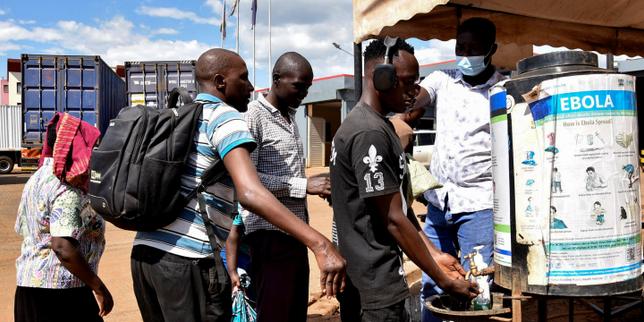
Getting there requires steady nerves, clear truth-telling from authorities, and everyday solidarity from citizens. Wash hands thoroughly and often. Don't spread unverified panic in group chats. Support health workers and treat people recovering from illness like human beings, not pariahs. When fear pulls a city apart, ordinary decency is one of the strongest defenses a community has.
Think back to that quiet hospital ward at the start of the story. The hush isn't the end of the story—it is the pause right before people decide how they will meet the test.
A single siren cuts through the afternoon heat, steady and unmistakable, as a team moves out into streets still full of life—each person carrying not just equipment and checklists, but the fragile, stubborn hope that vigilance can outrun fear.