One pile of dirt dumped on a Massachusetts dock in 1827 kicked off one of the worst ecological nightmares in North American history.
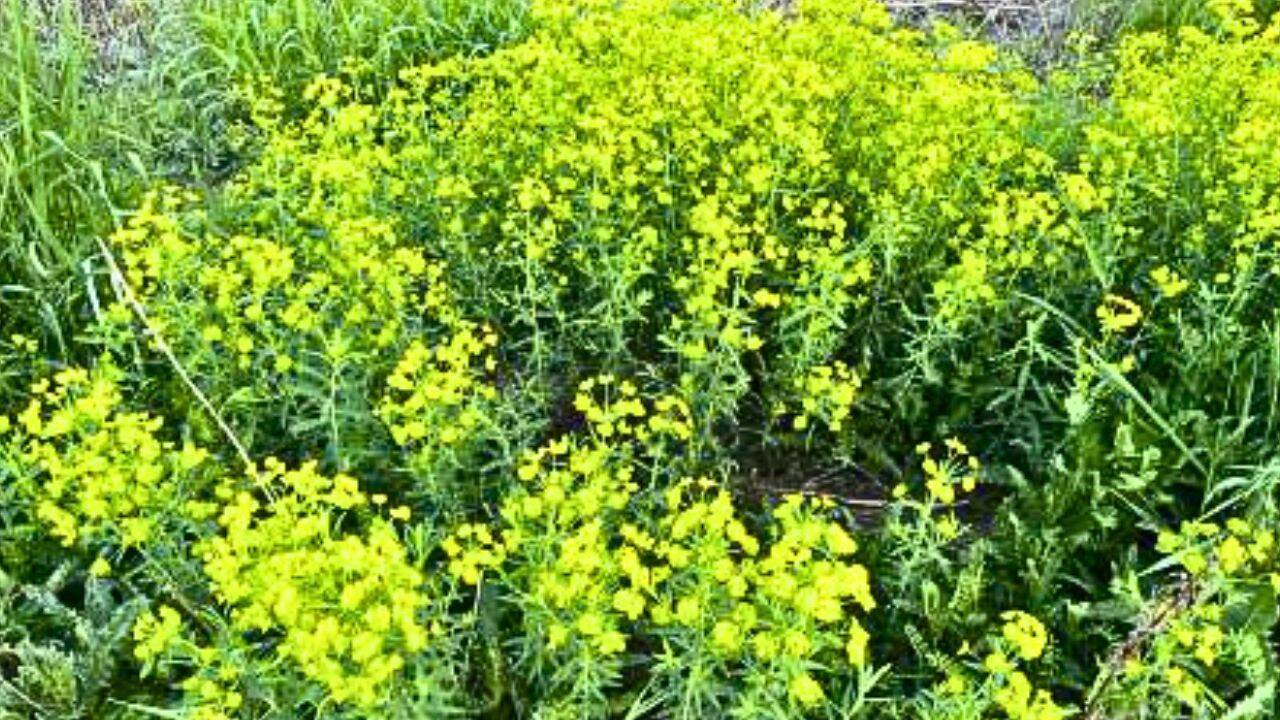
If you've ever walked through a prairie in Montana, North Dakota, or southern Canada and seen endless stretches of bright yellowish-green weeds choking out native grass, you're looking at leafy spurge (Euphorbia esula). Ranchers hate it. Land managers spend millions fighting it every single year. Yet most people assume it arrived intentionally as an ornamental garden plant or hid inside contaminated crop seeds from Europe.
The truth is way weirder.
Botanical detective work points right back to Newburyport, Massachusetts, in 1827. A merchant ship crossed the Atlantic from Eurasia, dropped its cargo, and shoveled solid ballast—rocks, gravel, and soil scooped up from a foreign shoreline to keep the vessel stable at sea—right onto the New England coast. Hiding inside that dirt were tiny, resilient seeds from a Eurasian perennial weed. Nobody noticed. Why would they? It was just dirt.
That casual dump changed the American West forever.
Why Leafy Spurge Is Such a Massive Problem
You can't just mow leafy spurge down and call it a day. That actually makes it angry.
I've seen landowners try to disk, plow, or burn small patches of Euphorbia esula only to watch it come back twice as thick the following spring. The plant operates like an underground hydra. Its root system plunges up to 15 or 20 feet deep into the soil, spreading horizontally through creeping lateral roots packed with pink buds. Chop up those roots with farm equipment, and every single fragment can sprout a brand-new plant.
Then there's the sap.
Break a stem of leafy spurge and it bleeds a thick, milky white latex. This stuff isn't just bitter—it's actively toxic. If cattle or horses brush against it or accidentally eat it while grazing, the sap causes severe blistering around their mouths, gastrointestinal distress, and sometimes death. Livestock instinctively avoid it. So while cattle eat all the nutritious native grasses around the weed, the leafy spurge grows completely unbothered, monopolizing water, sunlight, and soil nutrients.
And when the seed pods ripen in mid-summer? They literally explode.
The capsules dry out in the sun and pop open with enough force to fling seeds up to 15 feet away from the parent plant. Those seeds can sit dormant in the dirt for up to eight years, waiting for a drought, a wildfire, or a bulldozer to clear the ground so they can germinate.
Tracing the 1827 Massachusetts Ballast Theory
So how do botanists know a 19th-century ballast pile in Newburyport started this whole mess?
Early herbarium specimens tell the story. In the 1800s, naturalists obsessively collected, pressed, and cataloged plants across the eastern seaboard. The earliest confirmed North American specimen of leafy spurge was collected in Newbury, Massachusetts, in 1827 by William Oakes, a well-known local botanist.
At the time, Newburyport was a bustling maritime hub. Ships arriving from European ports without heavy cargo carried tons of soil and stone in their holds to keep from capsizing in rough Atlantic swells. Once they docked in Massachusetts to load up on American timber, rum, or manufactured goods, crews shoveled that ballast overboard onto designated coastal dumps.
Those ballast grounds became accidental botanical gardens for invasive species. Seeds from coastal Russia, Ukraine, and western Europe—regions where leafy spurge grows naturally—woke up in New England soil.
Of course, scientists don't claim the 1827 dump was the only way the plant entered the continent. Botanical records show multiple introductions likely happened throughout the 19th century. Some immigrants brought it over in contaminated sacks of wheat, oats, or smooth bromegrass seed. Mennonite settlers arriving from Russia in the late 1800s, for instance, inadvertently carried Eurasian weed seeds in their agricultural supplies when they settled in the Great Plains.
Still, that 1827 Massachusetts collection remains the smoking gun for its first foothold on the continent. From New England, it hitched rides westward on railroads, inside hay bales, and along newly plowed homesteads, exploding across the Northern Plains by the early 1900s.
What Most People Get Wrong About Ballast Contamination
When people hear the word "ballast" today, they immediately think of zebra mussels and cargo ships pumping seawater out of their hulls in the Great Lakes.
Liquid ballast is a modern invention. Before steel hulls and steam-powered pumps became standard in the late 19th century, ships used dry ballast. Crews literally hauled wheelbarrows of dirt, gravel, cobblestone, and chalk off European riverbanks and dumped them straight onto American shores.
Historians and ecologists have documented hundreds of non-native plants across North America that trace their lineage directly to 18th- and 19th-century ballast heaps in port cities like Boston, Philadelphia, New York, and Mobile. Botanists in the 1870s and 1880s actually used to visit city ballast dumps on purpose because they were guaranteed to find exotic European wildflowers growing out of the ship dirt. They thought it was fascinating. Nobody realized they were watching slow-motion ecological disasters take root.
The Real Cost of Ignoring a Patch on Your Land
If you own acreage in the northern United States or southern Canada, spotting a few yellow-green stalks in your pasture isn't something you can put off until next season.
By the time leafy spurge covers an acre, you've already lost roughly 50 to 75 percent of your grazing capacity. Cattle simply won't touch grass growing inside a dense spurge stand. According to long-term economic assessments from land-grant universities like North Dakota State University, leafy spurge costs ranchers and taxpayers in the Northern Plains tens of millions of dollars every single year in lost livestock forage, reduced land values, and chemical control expenses.
Wildlife suffers right alongside the cattle. Native prairie birds, elk, and deer lose critical habitat when diverse grasslands turn into a monoculture of toxic weeds. Soil erosion increases because leafy spurge doesn't hold topsoil together the way dense, fibrous native prairie grasses do.
How Land Managers Actually Fight Back Today
You can't eradicate a large infestation with a shovel and good intentions. Trust me, people have tried, and the plant wins every time. Effective control requires hitting the plant from multiple angles at once.
Biological Control With Flea Beetles
The biggest breakthrough in managing leafy spurge didn't come from a chemical lab—it came from Europe.
Researchers with the USDA Agricultural Research Service went back to leafy spurge's native range in Eurasia to find out what keeps it in check there. They found tiny, metallic-colored insects called Aphthona flea beetles.
Here is how they work. The adult beetles chew on the leaves and flowers during the summer, weakening the plant. Meanwhile, their larvae burrow underground and feast directly on the massive root system, creating tiny wounds that allow soil fungi to infect and rot the roots from the inside out.
Since the late 1980s, land managers have released millions of these beetles across Montana, North Dakota, Wyoming, and South Dakota. In many areas where herbicides were too expensive or impossible to spray—like steep riverbanks and rugged canyons—Aphthona beetles have knocked leafy spurge populations down by 80 to 90 percent. They don't wipe it out completely, because the beetles need some spurge to survive, but they restore natural balance so native grasses can grow back.
Targeted Grazing With Sheep and Goats
While cattle and horses refuse to eat leafy spurge, sheep and goats love it.
Their digestive systems break down the toxic compounds in the milky sap without any harm. Ranchers who run rotational grazing programs with herds of goats or sheep can strip leafy spurge down to bare stems before it goes to seed. Do that consistently for three to five years, and you slowly starve those deep underground roots of energy.
Strategic Herbicide Timing
If you're dealing with a brand-new, small patch on your property, herbicides still have a place—if you time them right.
Spraying in mid-summer when the plant is hot and dry barely scratches the surface. The chemical never reaches the deep root buds. Instead, apply systemic herbicides like picloram, aminopyralid, or imazapic either in early summer when the plant is flowering, or better yet, in the fall right before a killing frost. In autumn, leafy spurge pulls nutrients downward from its leaves into its roots to prepare for winter. Spraying then tricks the plant into dragging the herbicide straight down into its underground storage system.
What to Do If You Spot It Right Now
If you see suspicious yellowish-green plants popping up in a ditch, fence line, or pasture, don't pull them up with your bare hands. The milky sap causes severe skin rashes and can cause temporary or permanent blindness if you rub your eyes after touching it.
Put on heavy gloves, snap a clear photo of the leaves and flower bracts, and contact your local county extension office or state department of agriculture. They can confirm the identification for free and tell you whether Aphthona flea beetles are available for release in your county. Catching a patch while it's ten feet wide saves you ten years of fighting ten acres.