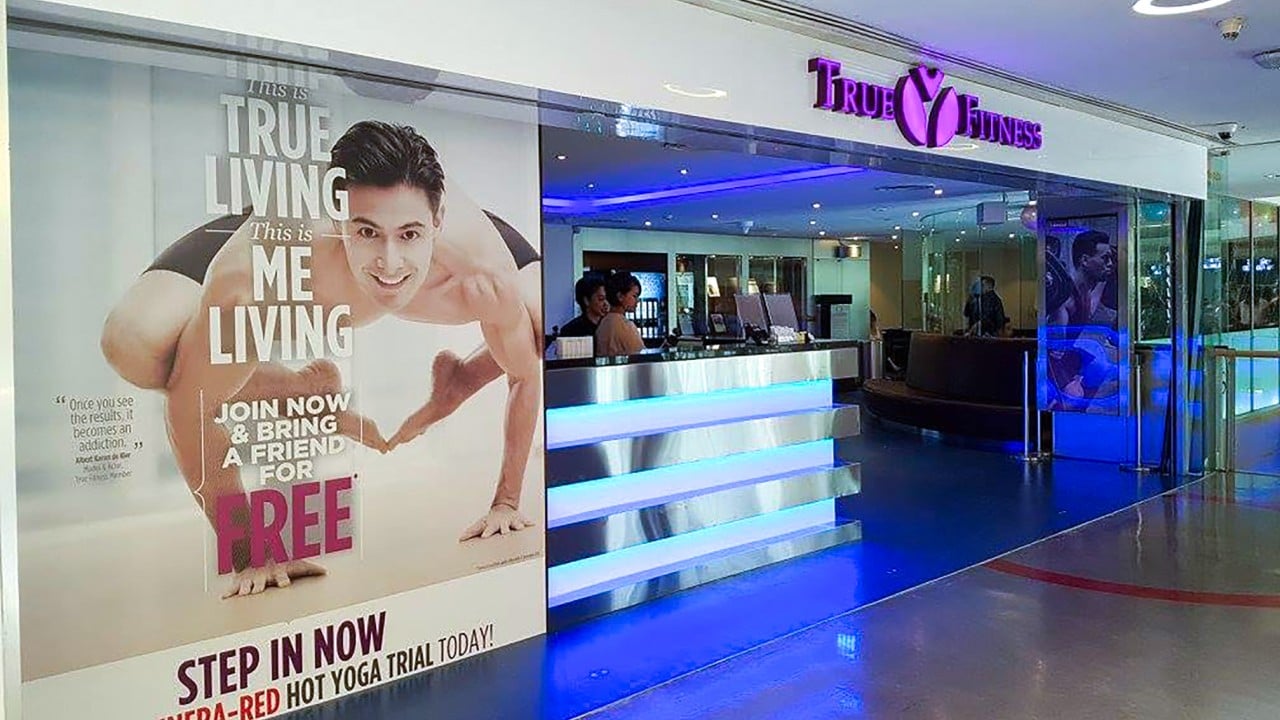
The fitness industry loves a good morality play. Boutique studios are the scrappy artisan bakeries of physical culture, charging forty dollars a class so you can sweat under neon lights to synchronized bass drops while an instructor screams about finding your inner warrior. Big-box commercial gyms are the soulless Walmart supercenters, full of rust, broken cable attachments, and indifferent teenagers wiping down benches with vinegar water.
The lazy narrative says the boutiques are winning. The pundits look at a sleek reformer pilates franchise in Duxton or a boutique boxing den on Club Street and declare that the monolithic warehouse gym is dead. They claim consumers want hyper-targeted community, aesthetic branding, and experiential exclusivity over rows of squat racks.
It is a comforting fantasy for people who prefer marketing decks to balance sheets. And it is entirely wrong.
Singapore’s big-box operators are not losing to boutique fitness studios. They are quietly eating the entire market alive, absorbing the margin, and positioning themselves for a monopoly while the boutique sector burns through its venture capital and founder stamina.
The Margin Trap of High-Rent Micro-Fitness
Let us look at the math that boutique proponents conveniently ignore. A specialized studio operating out of a prime shophouse unit in Telok Ayer or River Valley faces crushing overhead. Commercial real estate in Singapore does not forgive romanticism. When landlords demand upward of fifteen to twenty dollars per square foot, every square meter must generate cash flow constantly.
A boutique studio relies on class capacity. If a room holds twenty bikes or reformers, and five people no-show or cancel late under a punitive policy that still alienates them, the unit economics fracture. Equipment depreciation in these environments is brutal. Constant heavy use of specialized apparatus means maintenance costs scale linearly with revenue, while instructors—who hold all the leverage because clients follow the personality, not the brand—demand higher hourly rates as they build personal followings.
Eventually, the boutique owner realizes they are running an expensive hospitality business with a high attrition rate, disguised as a gym.
Meanwhile, a massive multi-level commercial facility in a heartland mall or a central office tower operates on a completely different financial architecture. They sell volume. They rely on the statistical reality of gym memberships: eighty percent of people who pay monthly will show up less than four times a month.
This is not a bug in the big-box business model; it is the engine. The casual user subsidizes the infrastructure for the hardcore lifter. That predictable, recurring subscription revenue allows big-box operators to absorb macroeconomic shocks, renegotiate leases with massive conglomerate landlords from a position of strength, and continuously upgrade heavy-duty hardware that never breaks.
The Myth of the Fragmented Consumer
The core premise of the boutique uprising assumes consumers want to live in fragmented silos. The theory goes: you do indoor cycling on Monday, barre on Wednesday, heavy compound lifting on Friday, and mobility work on Sunday at four different specialized boutiques across the island, paying four different extortionate membership fees.
Nobody outside of marketing influencers with sponsored packages actually lives like this.
Real people—busy corporate operators working seventy hours a week in the Central Business District or parents juggling careers in Marine Parade—want friction removed from their lives. They want predictability. Walking into a facility where you never have to wait forty-five minutes for a rack, where there are six different squat stations, five cable stacks, adequate ventilation, and zero pressure to perform choreography on a moving platform is a feature, not a compromise.
The boutique movement misdiagnosed a temporary lifestyle fad for a permanent cultural shift. During periods of cheap capital, consumers experimented with hyper-niche fitness as a status symbol. They bought aesthetic experiences. But as economic pressures tightened and discretionary budgets faced scrutiny, the friction of managing three different boutique subscriptions became glaringly obvious.
When people need to consolidate their lives, they return to general-purpose utility. The big-box gym offers absolute utility. You can squat heavy, sprint on an assault bike, stretch in a quiet corner, take a proper hot shower with high-pressure water, and walk out without feeling like you just auditioned for a music video.
The Scale Advantage in Equipment and Science
Let us talk about hardware, because physical fitness is ultimately an applied science, not an interpretive dance.
The physiological adaptations required for genuine strength, hypertrophy, and metabolic conditioning have not changed. You need progressive overload, mechanical tension, and adequate recovery. You achieve this through heavy axial loading, targeted resistance profiles, and precise increments of weight.
Try achieving proper progressive overload in a boutique class where the heaviest dumbbell is twelve kilograms and the instructor tells you to pulse for another thirty seconds to feel the burn. It is metabolic conditioning disguised as progress, but it rarely builds actual structural integrity or dense muscle mass.
Big-box gyms own the iron. They feature calibrated plates, specialized bars, monolifts, robust cable crossovers, and turf zones that allow for actual athletic movement rather than cramped rhythmic stepping. While boutique studios spend their capital on interior design, mood lighting, and Instagram backdrops, commercial chains invest in structural engineering floors that can handle a four-hundred-pound deadlift drop without cracking the ceiling of the restaurant downstairs.
The serious trainee—the person who actually gets results—eventually gravitates back to the warehouse of steel. And once they are there, they realize why the big-box model persists. It does not need to be trendy because it works.
The Boutique Consolidation Endgame
What happens next is already visible to anyone tracking commercial real estate and fitness acquisitions. The boutique sector is consolidating out of sheer exhaustion. Independent studios are either closing their doors or being bought up for pennies on the dollar by larger fitness conglomerates that understand how to centralize back-office operations, HR, and marketing.
The survivors will not be the independent passion projects; they will be the sterile, heavily funded chains that mimic boutique aesthetics while retaining big-box operational discipline.
Singapore fitness consumers are pragmatic. They appreciate a slick website, but they value convenience, price-to-performance ratio, and availability above all else. When the novelty of exercising in a dark room with flashing purple lights wears off, people are left with their own physical metrics. And those metrics improve faster under a heavy barbell in a well-ventilated, unpretentious commercial facility than they ever will on a synchronized rhythm bike.
Stop mourning the death of the commercial gym. It is outlasting everyone.


