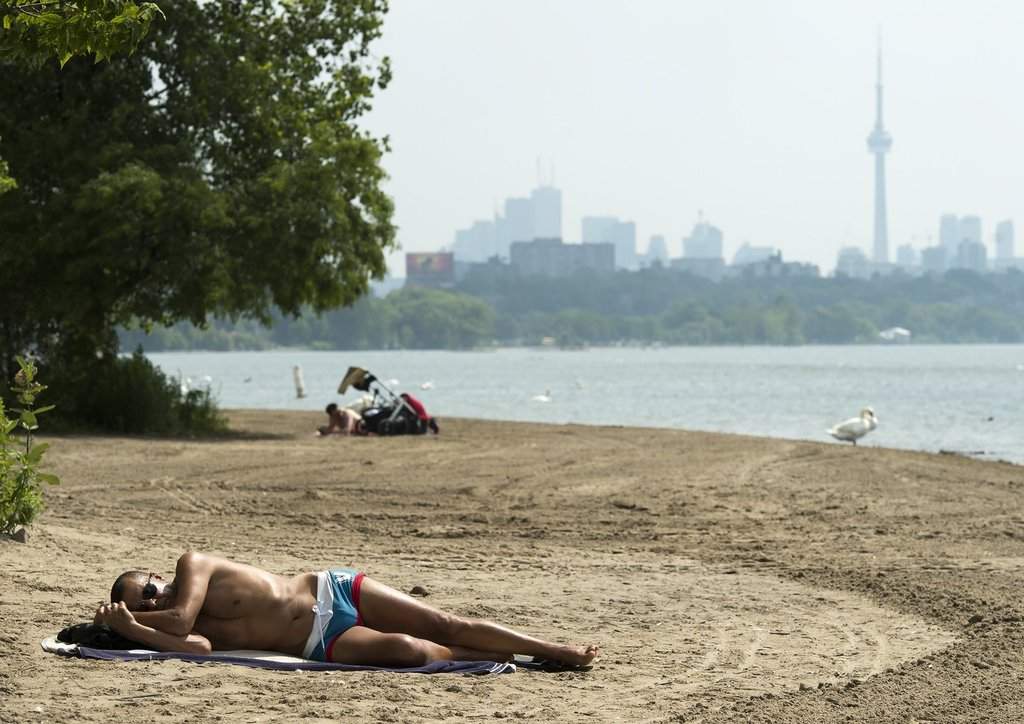
The air on a July afternoon in Ontario carries a specific, heavy sweetness. It smells of sun-baked pine needles, asphalt radiating the day’s heat, and the sharp, clean promise of freshwater. If you drive north from Toronto, or west toward the great sweeps of Huron and Erie, the highway eventually gives way to a shimmering horizon. It is a siren song. After months of gray, slush-locked winter, the water feels less like a geographic feature and more like a rescue mission.
We treat the beach as a sanctuary. We pack coolers with watermelon, untangle nylon umbrellas, and shake out towels that still hold a faint dust of last year’s sand. But water is never entirely neutral. Beneath the postcard perfection of Ontario’s lakes lies a complex, shifting environment that demands a specific kind of respect—one that goes far beyond the standard warnings posted on weather apps or faded park signs.
To understand the true nature of these waters, you have to look past the surface glare.
The Illusion of the Great Lakes
Consider a hypothetical family: Sarah, Michael, and their ten-year-old son, Leo. They find a quiet stretch of sand along Lake Huron. The water looks like glass. Leo splashes in the shallows, the water barely reaching his waist. To Sarah, sitting thirty yards away on a folding chair, the scene is a portrait of safety.
This is where the deception begins.
The Great Lakes are not oversized ponds; they are inland seas. They behave with the unpredictable moodiness of the ocean, but without the buoyancy that salt provides. Fresh water is less dense than ocean water. It requires more physical effort to stay afloat, a biological tax that saps energy quickly when panic sets in.
But the real problem lies elsewhere. It hides in the topography of the lake bed itself. Unlike a swimming pool with a predictable slope, Ontario's shorelines are sculpted by shifting sandbars. A person can wade out fifty yards with the water safely at their chest, only to step off a sudden underwater ledge into a deep trough. In an instant, the ground vanishes.
When that happens, the human brain undergoes a violent shift from recreation to survival.
The Anatomy of the Undertow
We often blame drowning on dramatic events—cramps, sudden storms, or blatant recklessness. The reality is much quieter.
On a seemingly calm day, wind blowing toward the shore pushes massive volumes of water onto the beach. That water has to go somewhere. It finds low points in the sandbars, carving out narrow channels to rush back into the deep lake. This is a rip current. It does not pull you underwater; it pulls you away from the shore at speeds that can outrun an Olympic swimmer.
Imagine the instinctual response. You are being carried away from your family. Your feet can no longer touch the bottom. Every nerve in your body screams to swim directly back toward the sand.
But swimming against a rip current is like trying to run up a descending escalator that is moving at triple speed. Exhaustion arrives in minutes. The muscles burn as lactic acid builds. The breath shortens.
The solution is counterintuitive, almost terrifying to execute when adrenaline is surging. You must swim parallel to the shore until you break free of the current's narrow grip. You have to give up the immediate goal of getting closer to safety to actually save yourself. It requires a cold, rational calculation at a moment when rationality is hardest to find.
The Invisible Threat in the Shallows
Not every danger carries a current. Sometimes, the water itself changes on a microscopic level.
Later in the summer, as the sun bakes the shallow bays of places like Lake Simcoe or the smaller lakes of Eastern Ontario, the water temperature rises. This warmth, combined with agricultural runoff and urban fertilizer tracking into the watershed, creates the perfect incubator for cyanobacteria, commonly known as blue-green algae.
It looks beautiful from a distance—a swirling, emerald-green tapestry on the water's surface, resembling spilled paint or pea soup. But this blooms are a biological minefield.
They produce toxins that can cause skin rashes, severe headaches, and acute gastrointestinal distress if swallowed. For small children and dogs, who are much more likely to ingest water while playing, the risk is significantly higher. A family dog fetching a tennis ball through an algae bloom can ingest enough toxins from licking its fur later to become critically ill within hours.
Local health units monitor these blooms, posting advisories online and at park entrances. Yet, a beach that was perfectly clean on a Tuesday can become choked with algae by Thursday if the wind shifts. It requires a habit of constant observation. Before anyone steps into the water, look at the shoreline. If the water looks thick, discolored, or smells faintly of rotting vegetation, the sanctuary is closed for the day.
The Mechanics of Cold Water Shock
There is a distinct biological phenomenon that occurs early in the season, or during deep-water excursions, that many weekend travelers fail to account for. Ontario’s lakes are deep. While the top few inches of water might feel like a swimming pool by late July, the layers beneath remain profoundly cold.
This is the thermal reality of our geography.
When a person dives from a boat or a dock into a deep lake, their body experiences cold water shock. The sudden drop in temperature triggers an involuntary gasping reflex. If your head is underwater when that gasp occurs, you inhale water directly into the lungs.
Simultaneously, the cold causes blood vessels in the extremities to constrict rapidly, driving blood toward the core to protect vital organs. This sudden spike in blood pressure can cause a rapid heart rate or, in vulnerable individuals, cardiac arrest. For even the strongest swimmers, the sudden loss of motor control in the fingers and limbs happens within minutes, making it impossible to swim or grab onto a thrown life ring.
This isn’t about being a strong swimmer. It is about physics and biology overriding willpower. Wearing a lifejacket isn't a sign of poor swimming ability; it is an acknowledgement that human physiology has strict limits when submerged in fifty-degree water.
Reading the Language of the Waves
Safety in Ontario’s waters is ultimately a matter of literacy. It is about learning to read an environment that changes hour by hour.
- The Color of the Water: Look for long, narrow strips of muddy or choppy water extending perpendicular to the shoreline. This is the visual signature of a rip current carrying sand back out to the lake.
- The Break of the Waves: Watch where the whitecaps are tumbling. If waves are breaking consistently in one area but not in another right next to it, there is likely a deep channel or a sandbar gap in the calm zone—a prime spot for currents.
- The Direction of the Wind: An offshore wind (blowing from the land out to the water) makes the shoreline look calm and inviting. However, it will push inflatables and paddleboards away from the beach with surprising speed, making it incredibly difficult to paddle back against the breeze.
The Return Journey
Late afternoon arrives. The shadows of the poplars stretch long across the sand at Grand Bend or Sandbanks. The heat of the day begins to break, replaced by that cool, damp air rising from the water’s edge.
Sarah watches Leo build a castle near the wet sand where the gentle waves lap at his ankles. He is safe because she chose a beach with a designated swimming area, checked the local health unit’s water quality report before leaving the house, and kept her eyes on him without the distraction of a phone screen. She understands that the lake is a living, breathing entity, beautiful but entirely indifferent to the humans who play within its margins.
We return to the water year after year because we need that expansiveness. We need the horizon. But the joy of the beach is entirely dependent on our willingness to see the water for what it actually is—not a playground, but a wilderness that demands our full attention.
The lake stays long after the towels are packed away, its dark surface reflecting the first stars of the evening, moving to a rhythm that was established long before we arrived, and will continue long after we leave.