The coffee in the guard shack is always bitter, and the hour is always three in the morning.
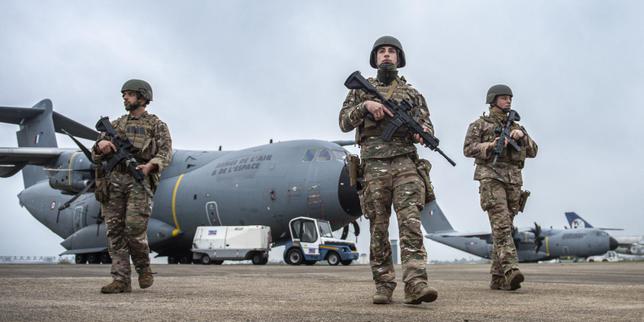
Staff Sergeant Laurent pulls his parka tighter against the damp chill rolling off the tarmac at the Saint-Dizier air base. To the casual observer, the night is dead. A few distant runway lights pulse in a dull, mechanical rhythm. The silhouette of a Rafale fighter jet rests in a reinforced concrete hangar, a sleeping dragon wrapped in canvas and sensors. But Laurent is not looking at the jet. He is watching a green-tinted monitor four inches from his right glove.
A bird crosses the perimeter radar. Then another. Then a cluster of three unverified thermal signatures hovering three hundred feet above the northern tree line.
They do not carry transponders. They do not file flight plans. They are small, commercially available quadcopters, bought off a shelf in a suburban electronics store for the price of a used television, now carrying modified payloads that could crack an aircraft fuel line or blind an optical tracking system.
This is the new front line. It is not fought in the stratosphere with supersonic dogfights or across open oceans with aircraft carriers. It is fought in the gray space between a civilian hobby and a calculated act of sabotage.
Months earlier, the wire hummed with a different kind of terror. At RAF Fairford across the English Channel, an attempted security breach shattered the comforting illusion that military installations are sacred, untouchable sanctuaries. The incident was brief, chaotic, and handled with swift precision, but its shockwaves traveled across the continent. It exposed a raw nerve in Western defense architecture. The perimeter fence, designed over half a century ago to keep out people on foot and unauthorized vehicles, is suddenly obsolete.
France listened to that warning. And now, the French Air and Space Force is undergoing a quiet, frantic metamorphosis to prepare for what military planners call hybrid warfare.
Consider what happens next when the invisible tripwire is crossed.
It is easy to think of a modern air base as a fortress of absolute steel and iron. But military installations are porous ecosystems. They rely on civilian contractors who deliver catering supplies, technicians who service the climate control systems in the radar shacks, and municipal power grids that feed electricity into the base substations. In a hybrid conflict, the enemy does not need to drop a bomb down a chimney. They just need to inject a malicious line of code into a sub-contractor’s invoice server, or fly a swarm of micro-drones over a fuel depot while an automated defense system is overwhelmed by digital noise.
We are watching the death of traditional deterrence.
For decades, military strategy rested on a clean, terrifying logic. If you strike my base, I strike yours back with overwhelming force. Mutually assured destruction kept the peace through a cold, steady calculus. But hybrid warfare eats away at the edges of that logic. It operates below the threshold of open war. It relies on plausible deniability. If a drone crashes into an ammunition locker and causes a catastrophic fire, but the government that manufactured and launched the drone claims it was operated by rogue non-state actors or independent criminal elements, does Article 5 apply? Do the jets scramble?
That ambiguity is the weapon.
Walk through the command center at a base like Mont-de-Marsan, and the atmosphere feels less like a traditional military bunker and more like a high-stakes stock exchange trading floor. Screens flash with real-time telemetry, electronic intelligence feeds, and cyber-threat matrices. Officers with decades of flight hours behind them are now staring at data streams tracking GPS spoofing attacks originating from hundreds of miles away.
The human element here is staggering. Young airmen and women are asked to make split-second decisions that blur the line between domestic law enforcement and international combat. If a civilian drone strays too close to a sensitive hangar, is it a teenager filming a TikTok video or a hostile reconnaissance asset mapping the radar blind spots? Shoot it down with a kinetic interceptor, and you risk a diplomatic incident or collateral damage in a nearby village. Do nothing, and you risk losing state secrets worth billions of dollars.
The response to the Fairford wake-up call has forced the French military to rewrite its operational doctrine from the ground up. This transformation has a name within the Ministry of Armed Forces, though it rarely makes the front page of evening news broadcasts. It is about resilience, redundancy, and paranoia.
First, the physical defenses are changing. The old chain-link fences are being reinforced with volumetric radar systems, acoustic sensors that can distinguish between a falling branch and the buzz of a carbon-fiber rotor, and directional jamming arrays designed to blind unauthorized eyes in the sky without disrupting civilian air traffic corridors outside the base.
Second, the human mindset is being overhauled. Every mechanic, every cook, and every administrative clerk is now treated as a potential sensor in a human intelligence network. Security briefings no longer focus solely on foreign spies in trench coats; they focus on phishing emails, anomalous behavior near supply depots, and unusual patterns in logistics deliveries.
Third, and perhaps most importantly, the digital nervous system of the base is being decoupled. Critical flight control and defensive systems are being walled off from the civilian networks that keep the base canteens running and the payroll flowing.
Yet, technology alone cannot solve a crisis rooted in human intent.
When you strip away the acronyms, the tactical jargon, and the political posturing, defense comes down to people standing in the dark, fighting off exhaustion, trying to anticipate a threat that has not happened yet.
Staff Sergeant Laurent blinks against the glare of his monitor. The thermal signatures on his screen have veered away, losing interest or running low on battery, dissolving back into the vast, indifferent night sky. He takes another sip of the bitter coffee. He knows the drones will be back tomorrow, perhaps faster, perhaps smarter, probing for another weakness in the armor.
The war has already begun. It is just waiting for the rest of the world to notice.