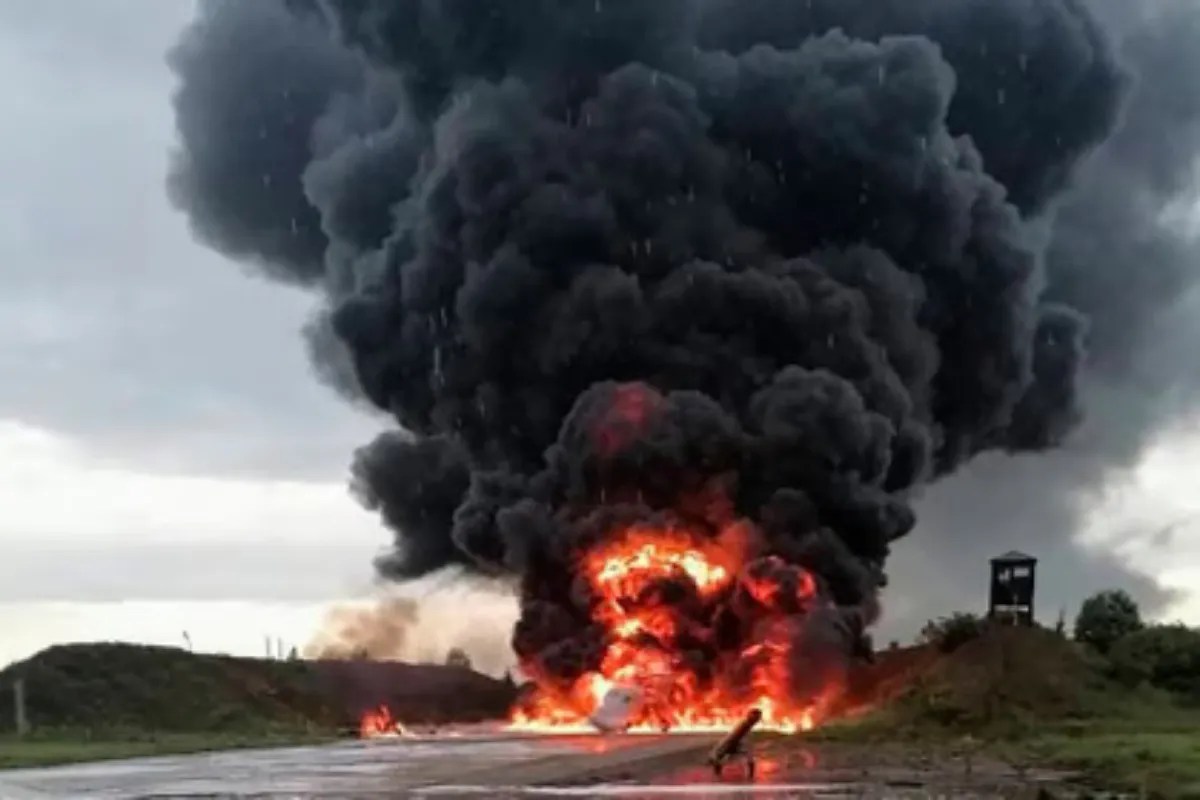
The map on the wall of the basement kitchen in Kursk looks nothing like the glossy projections printed in Moscow or Washington. Here, geography is measured not in kilometers, but in the distance between a distant rumble and the shattering of double-paned glass.
I remember the smell of wet soot lingering in the stairwells after the first week of August turned the ordinary rhythm of border towns into an erratic heartbeat. For eighty-six souls whose names now occupy terse military reports and quiet registry offices, that heartbeat stopped entirely within a span of nine days. The numbers themselves are cold, stamped onto daily briefings like inventory lists. But numbers do not bleed. They do not capture the sudden absence at a kitchen table, or the way a neighborhood dog refuses to leave a patch of scorched earth where a doorway used to stand. Learn more on a connected subject: this related article.
To understand how a localized frontier transforms into a theater of sudden, compressed mortality, we have to look past the strategic jargon. We have to look at the geometry of escalation.
Consider what happens when a war that was once content to grind slowly across the black soil of the Donbas suddenly leaps backward across an international boundary. For months, residents in Russia's western border regions lived with a strange, dissonant comfort. The war was something that happened on television screens, a distant storm flashing on the horizon. Groceries were delivered. Schools opened in September. Traffic lights changed from green to red with bureaucratic precision. Further reporting by NBC News delves into comparable views on the subject.
Then came the rupture.
When Ukrainian forces launched their unexpected push into the Kursk oblast, the psychological contract of the conflict shattered. The boundary lines that had governed two and a half years of fighting dissolved overnight. For the people living in those leafy villages and quiet provincial towns, the invasion was not a tactical maneuver on a grand chessboard; it was an abrupt eviction from normalcy.
To grasp the human cost of those nine frantic days, imagine standing in a garden where apples are heavy on the branch, only to watch the afternoon air tear open with shrapnel. According to verified regional accounts and human rights monitors, the spike in civilian casualties during that initial window was driven by the chaotic convergence of retreating units, hastily established defensive positions, and the terrifying indiscriminate reach of modern artillery and drone warfare.
Military analysts talk about operational depth and counter-offensives as if they are abstract chess moves. Let us strip away that vocabulary. Operational depth, in a civilian village, means a shell falling through a roof while a grandmother is looking for her reading glasses. It means roads blocked by burning transport vehicles, trapping families between advancing columns and retreating artillery.
The eighty-six deaths reported across that nine-day stretch are not statistical anomalies. They are the concentrated outcome of a modern mechanized military collision occurring in spaces designed for agriculture, commerce, and quiet retirement.
I spoke with a relief worker who managed to cross into the fringe zones during the height of the panic. Her voice did not shake, which was worse; it had the flat, hollow tone of someone who had seen too many equations balance out in human grief. She described elderly residents refusing to evacuate because their entire lives—every jar of preserved tomatoes, every floorboard nailed down by a grandfather—were anchored to houses that now sat in the crossfire.
"They don't understand frontlines," she told me, her hands wrapped tightly around a cold ceramic mug. "They only understand home. And when home becomes a firing zone, they stay until the walls fall down."
This is the invisible tragedy of the Kursk incursions. While international headlines focused on the geopolitical embarrassment to the Kremlin and the tactical audacity of Kyiv's commanders, the human machinery of the region ground to a violent halt. Every single one of those eighty-six lives represented a web of connections—neighbors who shared well water, children walking to local shops, teachers who knew the birthdays of half the village.
History is rarely kind to borderlands. For centuries, the earth between the Dnieper and the Volga has acted as a sponge for empires, absorbing blood with terrifying efficiency. But in the twenty-first century, the nature of that absorption has changed. It is faster. It is more precise, and yet paradoxically more indiscriminate. A drone hovering three hundred feet above a rural highway does not distinguish between a supply truck and a local civilian driving to check on an aging parent.
The friction between strategic necessity and human survival creates a moral vacuum. From a tactical standpoint, stretching the enemy's lines, forcing the reallocation of reserves, and bringing the war home to the aggressor's population may appear to be logical derivations of military doctrine. Yet, the price of that logic is paid entirely in the currency of civilian vulnerability.
As the smoke began to clear from those initial nine days, the survivors did not gather to discuss the shifting contours of sovereignty. They gathered firewood from the ruins of community centers. They buried their dead in hastily dug graves while distant artillery thudded like a dull heartbeat beneath the earth.
The map of Europe has been redrawn many times over the last century, usually in ink that looks suspiciously like blood. But long after the geopolitical analysts finish calculating the tactical gains and strategic losses of those nine days in August, the silence left behind in those frontier homes remains absolute, heavy, and unbroken.