The air in a crisis room doesn’t smell like history. It smells like stale coffee, overheated electronics, and the sharp, metallic tang of adrenaline that has nowhere to go. On a Tuesday that felt like a lifetime, the world held its breath. We have become accustomed to the low-frequency hum of geopolitical tension, a sound so constant we almost forget it’s there until it spikes into a scream. Then, suddenly, the screaming stopped.
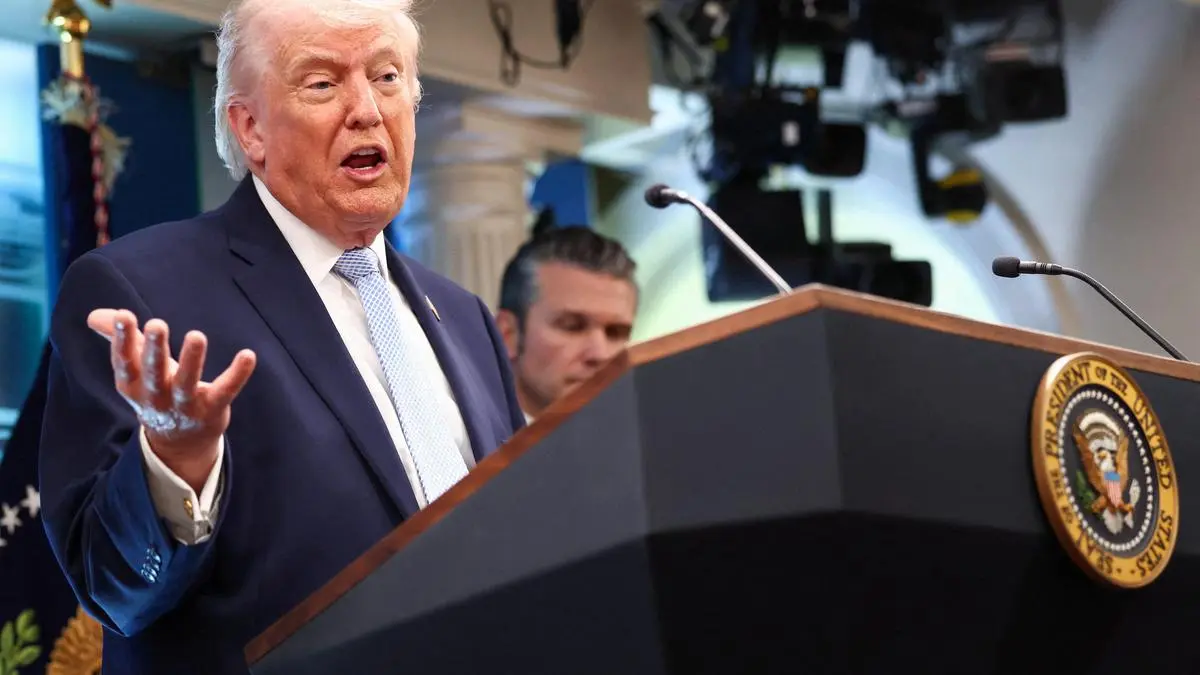
A ceasefire is a fragile thing. It is not a victory parade or a signed parchment that ends all enmity forever. It is, quite simply, the moment when people stop dying. When Donald Trump stood before the cameras to announce a "total and complete victory" following the cessation of hostilities with Iran, the words carried the weight of a man who views the world as a series of closed deals. But beneath the political theater and the triumphalism lies a much quieter, more human reality.
Consider a family in a suburb outside Haifa or a student in the bustling streets of Tehran. For them, "victory" isn't measured in diplomatic leverage or poll numbers. It is measured in the ability to sleep through the night without checking the sky. It is the sudden, jarring realization that the emergency bag packed by the door can stay closed for one more day.
The Mathematics of De-escalation
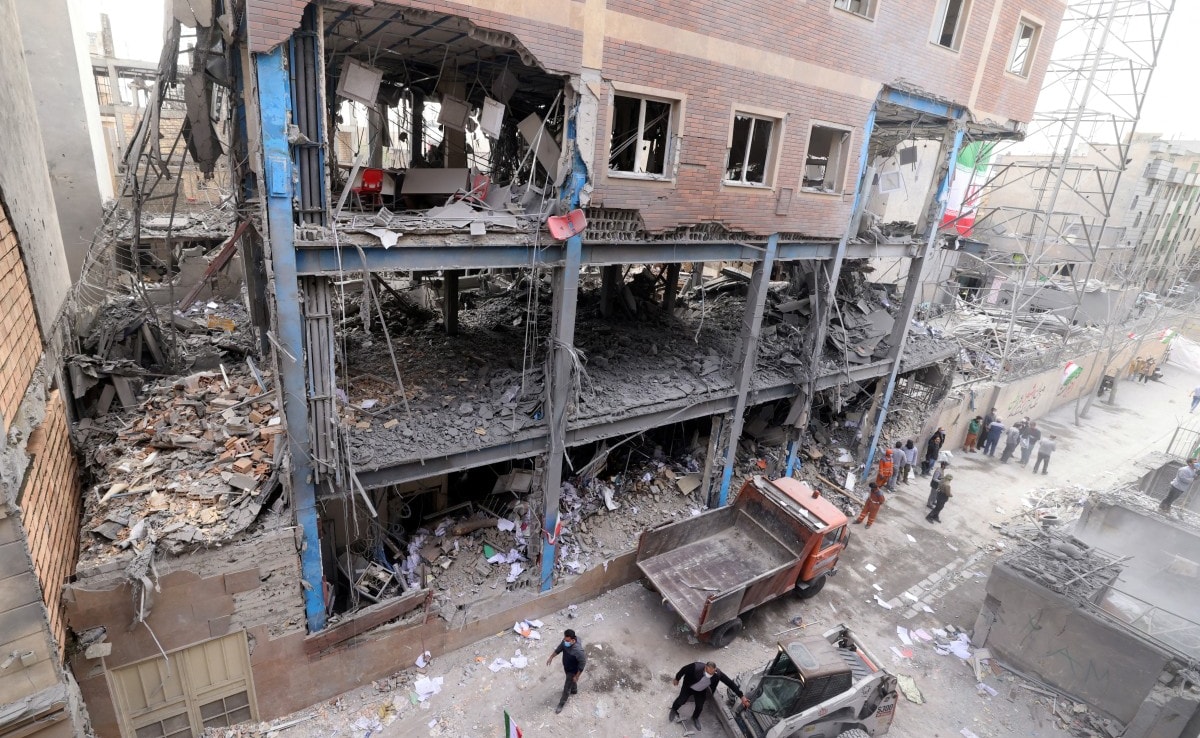
We often talk about war in the abstract. We use words like "assets," "theater," and "surgical strikes." These are antiseptic terms designed to distance us from the messiness of shattered glass and scorched earth. When the reports filtered through from AFP regarding the ceasefire, the initial reaction was a frantic scramble to parse the "who won" narrative.
In the cold logic of Washington, victory is defined by concessions. If the opponent blinks, you win. If the missiles stay in their silos, you’ve maintained the upper hand. The administration’s stance was clear: the maximum pressure campaign had reached its logical conclusion, forcing a retreat that could be framed as a total triumph.
But history is rarely a straight line.
To understand the stakes, we have to look at the invisible lines of commerce and survival that were nearly severed. The Strait of Hormuz is a narrow stretch of water, a literal choke point for the world’s energy. It is a fragile artery. When tension rises there, the price of gas at a station in Ohio doesn't just go up; the stability of entire developing economies begins to wobble. The ceasefire didn't just stop the threat of kinetic warfare; it prevented an economic cardiac arrest.
The Human Cost of the Brink
Imagine a young sailor on a destroyer in the Persian Gulf. He is twenty years old. He spends his nights staring at a radar screen, watching green blips that represent potential deaths. Every time a drone enters the airspace, his heart rate spikes. He is a proxy for all of us. His fear is the literal cost of the "brinkmanship" we discuss so casually over dinner.
When the order comes down to stand easy, the relief isn't cinematic. It’s a slow exhale. It’s the shaking hand finally steadying as it holds a plastic cup of water.
Critics of the deal argue that a ceasefire is merely a pause, a way for an adversary to regroup and lick their wounds. They suggest that "total victory" is a misnomer when the underlying ideologies and grievances remain simmering just below the surface. They aren't entirely wrong. A ceasefire is a bandage, not a cure. Yet, if you are the one bleeding, the bandage is the only thing that matters in that moment.
The geopolitical landscape is often described as a chess match, but that’s a poor metaphor. In chess, the pieces don't have mothers. The pieces don't have dreams. The reality is more like a high-stakes game of Jenga played in a windstorm. Every move vibrates through the entire structure.
The Language of the Win
The President’s choice of words—"total and complete"—is a specific kind of rhetoric. It is designed to project a finality that international relations rarely permit. By framing the ceasefire as a surrender of will, the administration sought to validate a high-risk strategy that many feared would lead to an uncontrollable conflagration.
There is a psychological component to this kind of announcement. Power, in the modern age, is as much about perception as it is about hardware. If the world believes you have won, you have, in many practical ways, won. You gain the "quiet" required to pivot to other burning fires.
However, we must be careful not to mistake the absence of noise for the presence of peace.
Real peace is a slow, agonizing process of building trust where there is none. It is the tedious work of mid-level bureaucrats verifying centrifuge counts and checking shipping manifests. It is boring. It is unglamorous. It doesn't make for a great headline or a punchy campaign slogan.
Beyond the Headlines
What the AFP reports and the official statements often miss is the psychological toll of the "almost-war." For months, the rhetoric had been escalating. The "red lines" were being drawn and redrawn until the map looked like a bloody thumbprint.
When we live in a state of perpetual high alert, our brains change. We become more reactive, less empathetic, and more prone to binary thinking. Us versus them. Total victory or total defeat. This mindset is perhaps the most dangerous casualty of modern conflict. It robs us of the nuance required to solve the problems that led to the tension in the first place.
The ceasefire buys us time.
Time is the most precious commodity in diplomacy. It is the space between the impulse to strike and the decision to talk. In that space, there is a chance for something other than destruction.
We should look at the faces of the people who didn't become casualties this week. They are the true beneficiaries of the "victory." Whether it was achieved through iron-fisted pressure or back-channel whispers, the result is a world that is slightly less on fire than it was yesterday.
The cameras will eventually move on. The news cycle will find a new crisis to devour, a new villain to cast, and a new hero to laud. The diplomats will return to their dimly lit rooms, and the sailors will return to their radar screens. But for a brief window, the sirens are silent.
In the end, maybe that is the only kind of victory that actually counts. Not the one shouted from a podium, but the one felt in the quiet kitchens of millions of homes where, for at least one more night, the sky remains empty of fire.
The sun sets over the Potomac and the Potomac reflects a sky that is, for now, remarkably still.