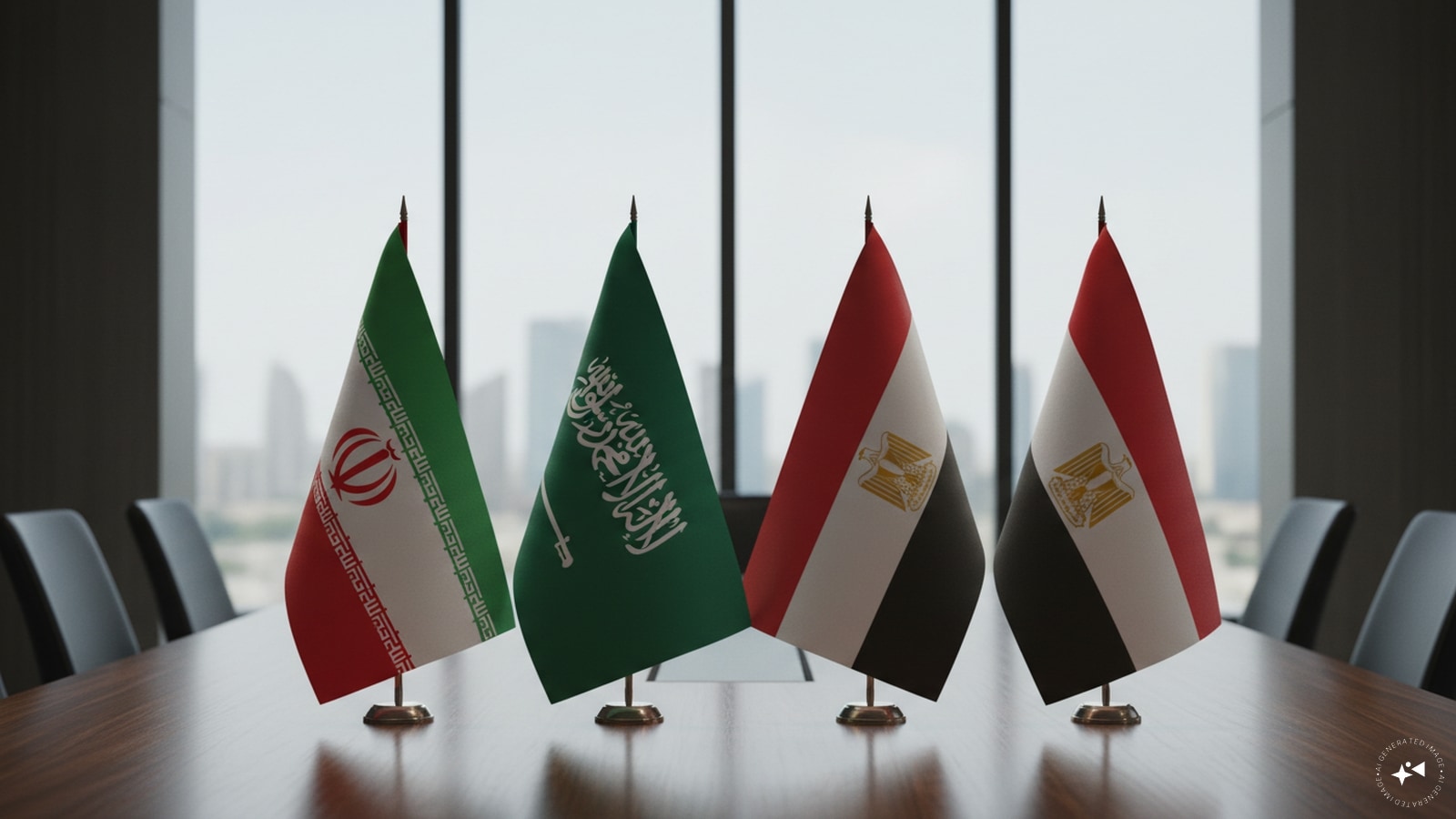
Silence.
It sounds like nothing at all until you are waiting for an answer that carries the weight of a border, a trade lane, or a child's breakfast. In diplomatic dispatches, silence is recorded as a non-response. A brief line on a wire ticker. A cold sentence noting that Tehran says Riyadh and the Houthis have not answered a mediation offer.
Read quickly, it looks like a procedural stall. Just another round of regional posturing between Iran, Saudi Arabia, and Yemen's Houthi movement.
Slow down. Look beneath the phrasing.
When a mediation offer sits unanswered between rival powers and armed factions, nobody is simply forgetting to check their inbox. Every hour of quiet is a calculation. Who benefits from waiting? Who fears looking weak if they pick up the phone first? And while diplomats weigh leverage, ordinary people live inside the gap between words and action.
To understand what an unanswered mediation offer actually means, we have to step away from the map rooms and sit with the people whose lives bend to every shift in regional security.
Three Rooms, One Quiet Room Between Them
Let's use a hypothetical scenario to make the human stakes concrete, built around real pressures that families across the region face every day.
Picture three rooms separated by desert, mountain passes, and salt water.
In the first room—let's call the family there Tariq and Samira in Riyadh—evening falls over a city racing toward a modern future. For years, cross-border attacks and regional tensions felt like distant thunder one day and sudden sirens the next. Talks between Riyadh and Tehran had brought moments of cautious relief, raising hopes that old rivalries might cool into predictable neighbors. When word spreads of a mediation offer touching on regional friction and the Houthi conflict, Samira doesn't read a policy brief. She checks fuel prices, listens for news along the southern frontier, and wonders whether fragile calm will hold or fray again.
In the second room, high in the stone-and-mud architecture of Sanaa, imagine a young teacher named Zaid. Years of war in Yemen have turned daily life into a series of improvisations: rationed electricity, inflated food costs, clinics stretched thin, and borders that feel both porous and sealed. To Zaid, the Houthis aren't an abstract headline; they are the authorities governing daily order and wartime defiance, while Saudi Arabia and Iran represent distant capitals pulling levers that shape whether aid trucks move, salaries get paid, or skies stay quiet. When Tehran announces that a mediation offer has gone unanswered, Zaid feels a familiar knot in his stomach. Hope, in a place battered this long, is expensive. Nobody wants to spend it on a false alarm.
In the third room, out on the water where the Red Sea narrows toward the Bab el-Mandeb strait, picture a ship's chief engineer listening to the hum of diesel engines at midnight. Maritime corridors carry global goods, energy shipments, and basic imports that keep markets steady thousands of miles away. When regional tensions flare or mediation stalls, shipping routes shift, insurance premiums climb, and delays ripple outward. A delay in a port or a detour around a chokepoint doesn't stay on the ocean. It shows up weeks later in grocery aisles in Cairo, Madrid, or Mumbai.
These characters are hypothetical, grounded in real human conditions rather than private records. Yet their anxieties are real. Diplomacy is often talked about as chess between capitals, yet every move on that board reaches into kitchens, classrooms, and engine rooms.
Why Mediation Offers Stall When Everyone Claims to Want Calm
If peace or de-escalation helps trade, safety, and stability, why does an offer sit unanswered?
Because trust in conflict zones is scarce, and timing is a weapon.
Think of two neighbors who have argued over a shared fence for a decade. One day, a third person offers to hold the hammer while they talk. On paper, that sounds helpful. In practice, each neighbor asks a sharper set of questions. Why now? Does accepting the offer lock in concessions I haven't agreed to? If I answer too quickly, do I look eager because I'm hurting? If I ignore it, do I force the other side to sweeten the terms?
That dynamic sits right at the heart of friction involving Iran, Saudi Arabia, and the Houthis.
Saudi Arabia and Iran have already experienced how delicate—and transactional—regional diplomacy can be. Re-establishing ties and trading diplomatic signals does not erase decades of competing influence, security fears, or mistrust over regional proxies. Meanwhile, the Houthis operate with their own political calculations, domestic legitimacy narratives, and leverage tied to regional flashpoints and maritime pressure.
When Tehran states that Riyadh and the Houthis have not answered a mediation offer, that statement serves more than one purpose at once. It puts a marker on the table. It signals initiative while shifting the burden of silence onto others. Yet silence from Riyadh or the Houthis does not automatically mean a door is bolted shut. Sometimes a mediation proposal arrives through channels that one side views as incomplete, premature, or tilted. Sometimes capitals consult partners, test reactions, or wait until domestic and regional conditions align.
I have spent years following how conflicts twist and turn in the Middle East, and one pattern repeats until it feels almost etched in stone: public statements rarely tell the whole story of private bargaining. What looks like a dead end in the morning press can shift quietly behind closed doors by nightfall—or stall for months over a single phrasing dispute.
I will admit something candidly: even for people who watch these dynamics closely, reading the signals can be maddening. A quiet period can mean serious backchannel work is underway. It can also mean positions are hardening before another storm. Anyone looking for neat certainty in a statement about an unanswered offer will walk away frustrated.
The Invisible Ledger of Delay
What happens while the offer sits on the table?
Nothing stays frozen. Time charges interest in a conflict.
For families in Yemen, every week without a durable political opening keeps humanitarian needs acute and economic recovery out of reach. Basic essentials cost more when supply chains face friction or uncertainty. Even when fighting eases in certain pockets, unresolved disputes leave communities suspended between war and real peace.
For Saudi planners and residents, unresolved regional flashpoints keep security costs high and temper the predictability needed for long-term economic transformation. A calm neighborhood is worth billions; a tense one demands constant vigilance.
For global commerce, the Red Sea and surrounding waterways remain vital arteries linking Asia, Europe, and Africa. Even the risk of escalation—let alone active disruption—forces companies to reroute vessels, stretch transit times, and absorb higher freight costs. Those extra days at sea and extra dollars in insurance don't vanish into thin air. They diffuse through global supply chains like ink in water.
Consider what happens next: if mediation falters or drags out without traction, incentives to test pressure often grow louder than incentives to compromise. Yet if quiet dialogue eventually finds footing, even modest steps—like prisoner releases, humanitarian access, or clearer rules of engagement—can lower the temperature faster than sweeping treaties.
Reading Between the Lines Without Losing Your Bearings
When headlines announce that a mediation offer hasn't been answered, how should an attentive reader make sense of it?
First, separate the offer from the outcome. An unanswered proposal is a stage in negotiation, not the final verdict on whether talks are possible. Parties routinely let trial balloons hang in the air to see who reacts and how.
Second, look for who stands to gain from the narrative. Announcing an unanswered offer frames one side as constructive or engaged while casting hesitation elsewhere. That framing is part of the contest itself.
Third, watch the practical indicators, not just the rhetoric. Are aid corridors moving? Are diplomatic envoys meeting quietly? Are maritime and border incidents rising or falling? Concrete actions speak louder than press lines.
History offers plenty of reminders that breakthroughs in bitter rivalries rarely arrive in a single dramatic flourish. More often, they emerge out of awkward pauses, rejected drafts, bruised pride, and incremental trade-offs after everyone involved realizes the cost of staying stuck.
Back in our three hypothetical rooms, night deepens.
Samira locks the front door in Riyadh, checking a news alert before turning out the lamp. Zaid sits by a dim bulb in Sanaa, grading notebooks for a classroom where paper is scarce and futures feel uncertain. Far offshore, the ship's engineer logs another watch as dark waves roll past the hull.
None of them holds a seat at a negotiating table. Yet every one of them lives inside the answer that hasn't arrived yet.
A single unanswered message in a capital can echo across a thousand miles of desert and sea, measured not in diplomatic minutes, but in human breath held in the dark.



