The rain in the deep south of Thailand does not merely fall; it arrives with the heavy, suffocating weight of a wet wool blanket dropped from a gray sky. It smells of damp laterite soil, diesel exhaust, and the sharp, ferrous tang of anticipation. When the monsoon breaks over Narathiwat, Patani, and Yala, the roads turn to grease. Motorbikes stall. Headlights smear into orange smears against the gloom.
And then, the sound cuts through the thunder. If you liked this piece, you might want to look at: this related article.
It is a dry, stuttering crack. Not firecrackers. Never firecrackers. Everyone here knows the acoustic signature of a homemade explosive or a military-issue rifle long before they learn how to spell their own names in the local dialect of Malay.
To understand what is happening in Thailand’s southernmost provinces, you have to unlearn the geography taught in Bangkok textbooks. This is not a tropical playground of limestone karsts and emerald bays. This is a fractured theater of history, where the rubber trees bleed white latex into tin cups under the watchful, nervous eyes of teenage conscripts holding assault rifles. For another look on this story, refer to the latest coverage from Reuters.
Let me introduce you to a hypothetical composite, though every single detail is pulled from the registry of the bruised. Call him Ismail. Ismail owns a small provision shop in a district where the electricity blinks out more often than it stays on. He sells dried fish, sweet condensed milk, plastic sandals, and sacks of jasmine rice. Every morning at five, before the muezzin calls the faithful to prayer, Ismail sweeps his concrete veranda. He watches the mist lift off the paddy fields. He looks for changes. A discarded cigarette butt where no one usually smokes. A motorbike parked with its front wheel turned toward the escape route. A neighbor who avoids his eye.
Fear in the deep south is not an explosion. It is the architecture of hesitation.
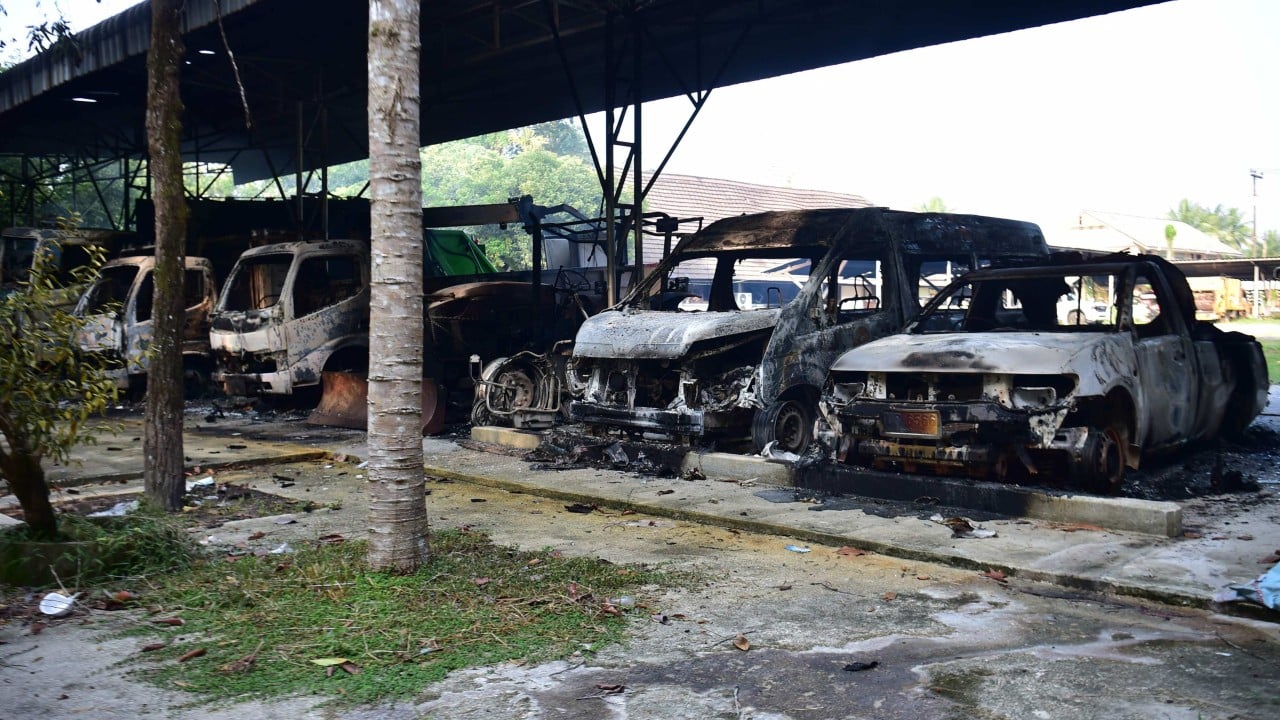
For two decades, this territory has burned in a low-intensity civil conflict that the rest of the world mostly forgets between headline cycles. Waves of coordinated attacks—ambushes on military patrols, nighttime arson at rural schools, drive-by shootings targeting Buddhist monks and Muslim village leaders alike—have woven a tight, invisible net over everyday life. Ismail does not care about the geopolitical manifestos of shadowy separatist factions like the Barisan Revolusi Nasional. He cares that his youngest daughter, Maya, has to walk past a sandbagged security bunker just to reach her third-grade classroom. He cares that the local market closes at four in the afternoon because dusk belongs to the ghosts.
Silence.
That is the weapon that does the heaviest lifting here. When a bomb detonates near a railway station in Yala, it makes the international news wire for precisely forty-eight hours. Pundits in comfortable studios in central Thailand talk about peace dialogues, decentralization, and martial law decrees. They use clean, bloodless bureaucratic terminology. They speak of security frameworks and counter-insurgency protocols.
They do not smell the burning rubber. They do not watch a mother sit on a plastic stool outside a provincial hospital, clutching a pair of pink sneakers because her daughter’s feet will never need them again.
To grasp the mechanics of this trap, you have to look at the psychology of the villagers caught in the crossfire. On one side stand the insurgents, fighting for a ethno-nationalist identity rooted in the historical Sultanate of Patani, distinct from the Buddhist-majority Thai state. On the other side stand the security forces—soldiers and paramilitary rangers deployed from the northern plains, speaking a different dialect, wearing uniforms that mark them as outsiders in a region that has historically viewed Bangkok with deep suspicion.
And in the middle? The ordinary people.
If Ismail feeds a wounded insurgent who knocks on his back door at midnight bleeding from a shrapnel wound, the state intelligence agents will drag him away for interrogation under emergency laws that suspend normal judicial safeguards. If Ismail refuses, the insurgent's cell brothers will return under the cover of a moonless night to burn his shop to ash or worse. There is no neutrality. Neutrality is treated by both sides as treason.
Consider what happens next in a society structured entirely around mutual terror.
Communities fracture along ideological and religious lines that were once porous and neighborly. A village that has lived in harmony for generations suddenly finds itself dissecting every gesture. Who is collaborating with the military informants? Who is paying the revolutionary tax? The cycle feeds on itself, generation after generation, turning children into trauma survivors before they have lost their first teeth.
I have walked these roads. I have felt the sudden drop in temperature that occurs when you cross into a district known as a red zone. The checkpoints are everywhere—sandbags stacked high, corrugated tin roofs rusting in the equatorial sun, young soldiers squinting through tinted visors, their fingers never more than a fraction of an inch away from the safety switches of their M16s. You slow down. You turn on the interior lights of your car if it is dusk. You offer your ID card with hands that betray your city-bred innocence.
The soldiers are terrified, too. That is the secret nobody wants to talk about. A nineteen-year-old conscript from Chiang Mai, sitting in a bunker three feet by three feet, surrounded by unfamiliar language and dense rubber plantations where every shadow looks like an ambush waiting to happen—he is just as trapped as Ismail. He is waiting for a bomb to detonate beneath his patrol truck. He is homesick, exhausted, and fundamentally alienated from the population he is supposedly there to protect.
This is the real trap of the deep south. It is not just about violence; it is about the systematic erosion of human agency.
When you strip people of their ability to predict tomorrow, you steal their future. Farmers stop tending their orchards after midday. Teachers carry sidearms inside canvas handbags alongside lesson plans. Weddings are held in hurried, afternoon ceremonies to ensure everyone is home before the unofficial curfew imposed by invisible gunmen takes effect.
The human cost cannot be quantified by spreadsheets tracking annual casualty counts or ruined infrastructure. It lives in the quiet moments. It lives in the way a grandmother flinches when a car backfires down the lane. It lives in the silence of a classroom where half the desks are empty because families have fled north toward Songkhla or Hat Yai, seeking refuge in the anonymity of bigger cities where no one knows their surname or asks which side of the invisible line they belong on.
We talk about peace processes as if they are signed treaties dropped from the sky by diplomats in suits. But peace is not a document. Peace is the absence of that cold knot in Ismail’s stomach every time a motorbike idles too long outside his shop. Peace is Maya walking to school without looking at the rooftops for snipers.
Until the state addresses the root causes of alienation—the cultural erasure, the lack of linguistic recognition, the heavy-handed military tactics that treat an entire civilian population as enemy combatants—and until the insurgent leadership recognizes that burning down schools and slaughtering market vendors will never build a sovereign homeland, the trap will remain shut.
The rain continues to fall over the southern provinces. It washes away the blood from the asphalt, but it cannot wash away the memory. In the distance, another engine revs, and a village holds its collective breath, waiting to see which way the wind blows.