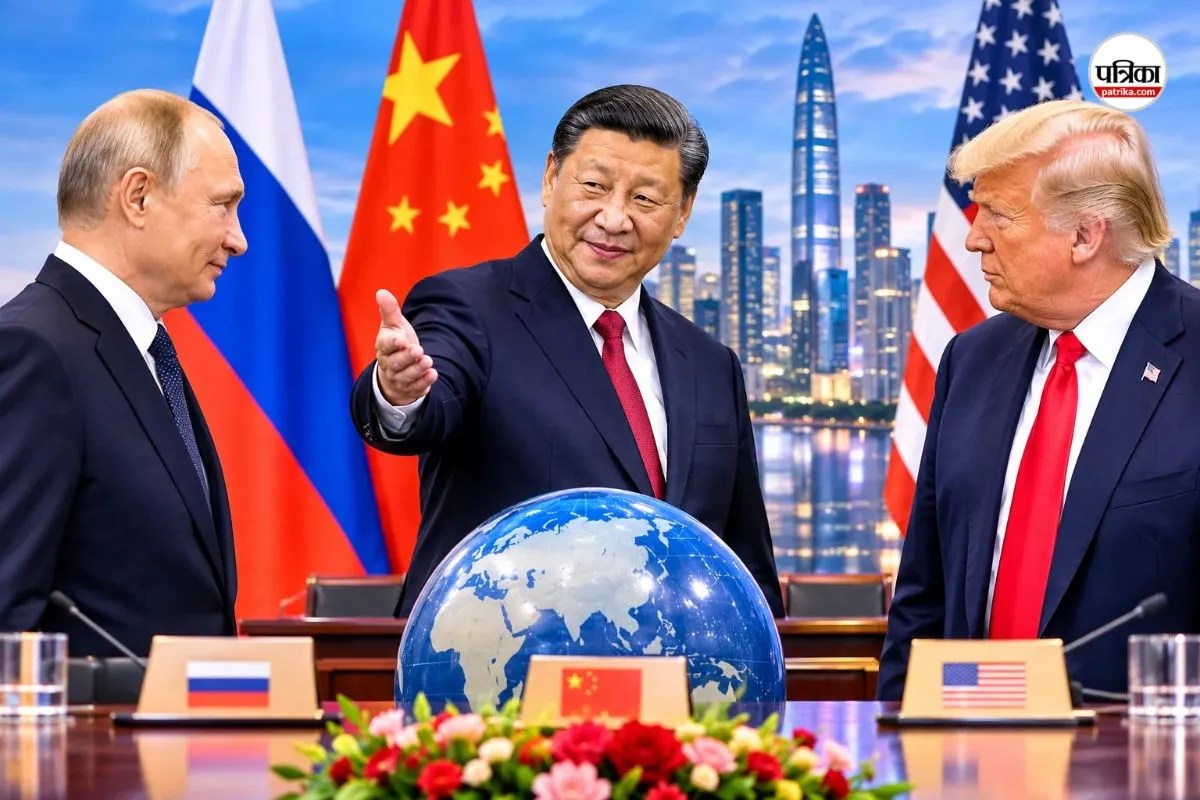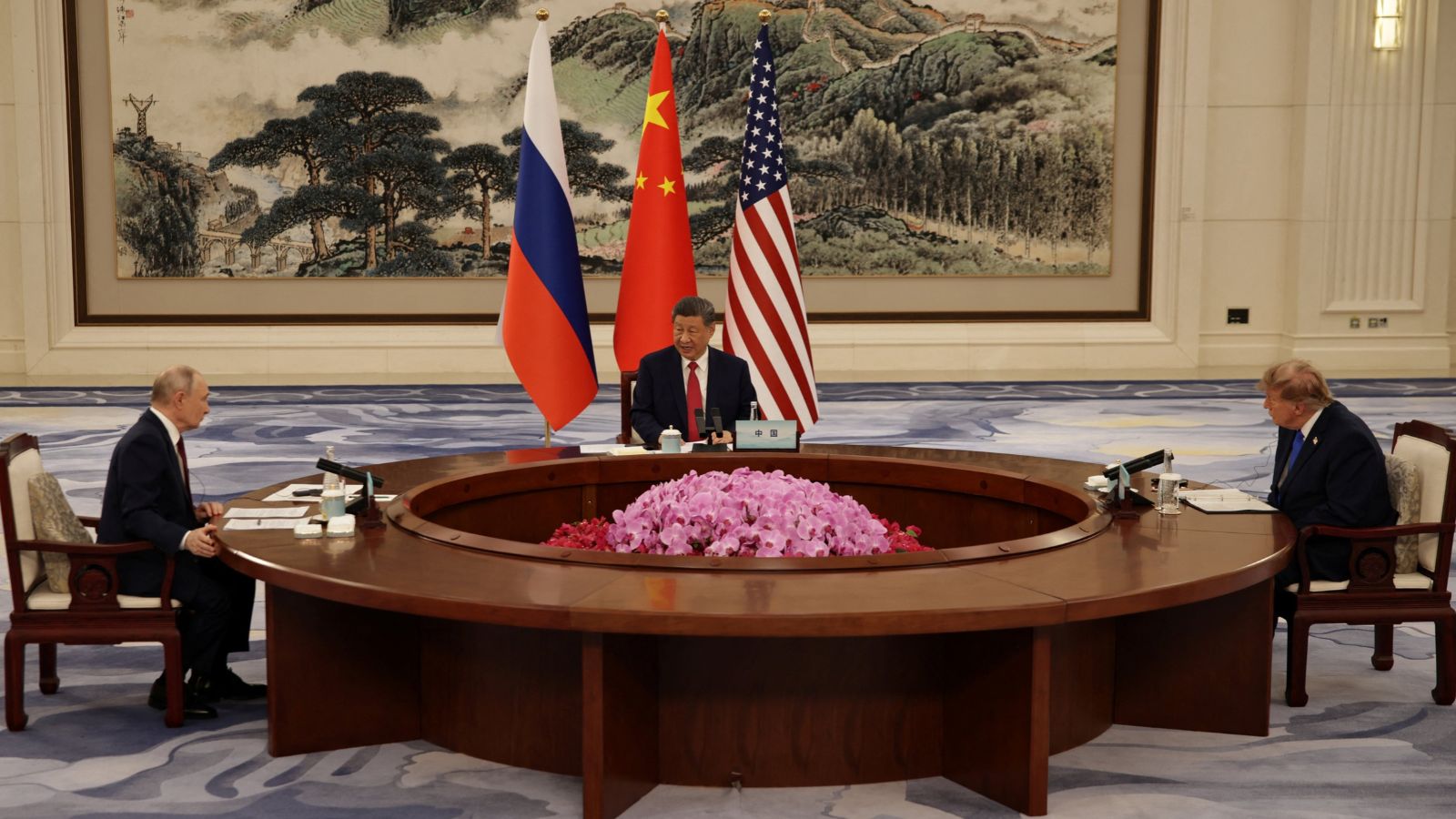
Donald Trump, Xi Jinping, and Vladimir Putin held their first-ever trilateral summit on November 19, 2026, in Shenzhen on the sidelines of APEC, issuing a four-point declaration on nuclear risk reduction, energy supplies, United Nations reform, and international courts. Yet the ninety-minute gathering produced zero binding arms control limits, left Ukraine and Iran out of the joint statement, and masked deep strategic divergence among three powers that together hold roughly 92 percent of global nuclear warhead capacity. Calling the meeting a breakthrough misses the real mechanics at work. Each leader came for optics, leverage, and domestic cover rather than enforceable security guarantees.
Why Trilateral Nuclear Talks Hit a Wall
Arms control looks neat on paper when three leaders sit at the same table. In reality, asymmetrical arsenals and incompatible doctrines turn three-way negotiations into a stall.
Washington has spent years pressing Beijing to join formal nuclear limits as China expands its warhead stockpile. Moscow and Washington once negotiated sweeping strategic limits under New START, capping deployed strategic warheads at 1,550 per side before that treaty expired in February 2026. China has consistently rejected binding trilateral caps while its arsenal remains much smaller than American and Russian totals, framing nuclear restraint around "risk reduction" and crisis communication rather than numerical parity.
Even Trump acknowledged days after the summit how hard true disarmament is. Telling reporters at the White House that cutting arsenals in half or getting rid of nuclear weapons is very difficult to demand, he pivoted toward deterrence, nuclear risk reduction, and leaning on Beijing and Moscow to help cap North Korea's nuclear program. A pledge to talk about risk reduction is not a treaty. Without verification rules, delivery-vehicle definitions, or agreed baselines, a joint statement on nuclear stability functions more like a diplomatic guardrail than a binding check on warhead growth.
Consider a hypothetical example to see how asymmetry distorts bargaining. Suppose Washington offers a freeze on long-range bomber deployments in exchange for a cap on Chinese silo construction. Beijing can argue that a freeze locks in American and Russian numerical superiority while constraining China's modernization before it reaches a level Beijing deems sufficient for assured retaliation. Moscow, meanwhile, can pocket diplomatic credit for talking about "stability" while keeping its own tactical and strategic options intact. Nobody signs away core leverage under those conditions.
What Each Leader Actually Bought in Shenzhen
Xi Jinping Bought Convening Power and Parity
Hosting the summit in Shenzhen let Xi stage a picture of global multipolarity with China at the center. For Beijing, sitting alongside both the American and Russian presidents during an APEC week carried unmistakable weight.
Chinese state commentary and officials framed the meeting as historic and grounded in mutual respect, even while pushing back against comparisons to the 1945 Yalta conference, where major powers carved out spheres of influence. Protocol details drew intense scrutiny—from Xi greeting Trump at the airport to shifts in who stood on Xi's right in group photographs—because visual hierarchy is currency in great-power diplomacy. Yet beneath the choreography lies hard economic friction over export controls, chip enforcement, and supply chains ahead of the G20 gathering in Florida and a U.S.-China trade truce set to expire on January 10, 2027.
Vladimir Putin Bought Status Despite Strain
For Putin, sharing the frame with Trump and Xi projected great-power stature at a moment when Russia's war in Ukraine drags into its fifth year, its economy carries heavy defense spending, and Ukrainian strikes have hit targets including the Kerch Bridge. Standing shoulder to shoulder with two major leaders helps Moscow counter arguments that it is isolated or a declining power.
The joint declaration's swipe at international courts—warning against overreach and stressing state consent and official immunity—also served Moscow's interest given the International Criminal Court arrest warrant against Putin. At the same time, Moscow's push for a broad European security conversation alongside talks on Ukraine worries Kyiv and European capitals, who fear broader talks can dilute accountability and territorial sovereignty.
Donald Trump Bought Leverage and Narrative Control
Trump entered Shenzhen fighting a costly, uncertain conflict involving Iran while seeking ways to wind down or reshape entangled commitments elsewhere. His central argument—that leaders solve nothing by refusing to talk—gave him a clear rationale for engaging both rivals directly and claiming historic momentum.
Recent U.S. moves around Ukraine have already stirred friction with allies, including waiving certain sanctions, striking a fuel arrangement tied to refined petroleum flows, urging restraint on refinery strikes, and drawing scrutiny over military satellite access. Critics argue those shifts hand Moscow breathing room without securing a durable settlement. Supporters counter that direct pressure and back-channel dealmaking are the only way to test whether Beijing or Moscow will move on regional flashpoints like Iran or North Korea.
The Blind Spots the Joint Declaration Left Behind
A four-point peace declaration sounds sweeping until you read what it omits. Ukraine was left out of the joint statement. The war involving Iran was left out. Concrete timelines, verification mechanisms, and enforcement steps were left out.
- Allied reassurance: When Washington talks over the heads of allies about global security and nuclear risk, partners in Europe and the Indo-Pacific watch closely to see whether extended deterrence and defense guarantees remain firm.
- UN Security Council friction: Calling for UN reform sounds cooperative in theory, yet Washington, Moscow, and Beijing have sharply different views on who should gain influence and how veto power and regional blocs operate.
- Economic and tech coercion: Nuclear talks do not happen in a vacuum; disputes over semiconductors, rare earths, and sanctions can easily override polite diplomatic language within weeks.
- Crisis hotlines versus real restraint: Agreeing to talk about lowering nuclear risks can reduce accidental escalation, yet it does not stop missile modernization or regional brinkmanship.
| Dimension | Shenzhen Declaration | Practical Reality |
|---|---|---|
| Nuclear weapons | Calls for dialogue on risk reduction and non-proliferation | No warhead caps, inspections, or treaty replacement for New START |
| Regional wars | Mentions peace and UN reform broadly | Omits Ukraine and Iran; prior talks remain deadlocked |
| Energy and trade | Pledges steady refined fuel flows and cooperation | Chip controls, sanctions, and trade truce deadlines remain live pressure points |
| International law | Criticizes court overreach and stresses state consent | Reflects shared pushback against external legal constraints on major powers |
What Comes Next After the Photo Op
Diplomacy at the summit level rarely resolves deep structural rivalries in ninety minutes. Real progress will show up in mundane details—whether working-level nuclear hotlines actually get built, whether G20 meetings in Florida move past posturing, and whether trade and battlefield pressures cool or harden before early 2027.
Watch the follow-through rather than the podium rhetoric. A photo of three leaders together changes the optics overnight, but nuclear safety depends on verifiable restraint long after the cameras pack up.