The rain in Manhattan does not care about geopolitics. It falls on concrete and cab roof alike, washing over the pavement outside auditoriums where thousands gather to listen, to debate, to seek a piece of home thousands of miles away. But tonight, the rain shares space with a very different kind of climate. A climate of tension. A heavy, electric anticipation that has nothing to do with the weather and everything to do with fear.
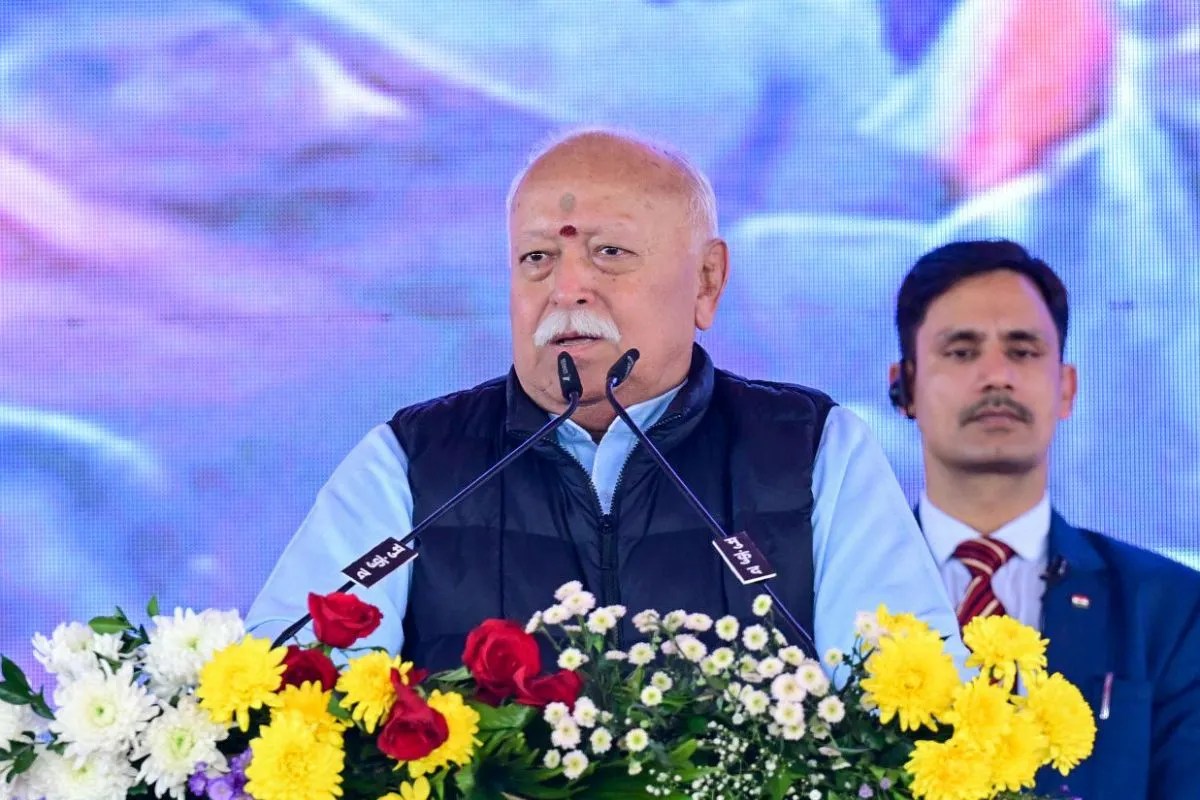
Security sirens cut through the damp evening air. Metal barriers snake along the sidewalks, dividing the street into zones of exclusion. Inside these barricades stand ordinary people—men and women wearing heavy coats, clutching warm cups of coffee, waiting to enter a gathering featuring Mohan Bhagwat, the leader of the Rashtriya Swayamsevak Sangh. Outside, the atmosphere thickens. Voices rise. Banners snap in the wind.
This is New York. A city built on the promise that anyone can belong, yet constantly tested by the ghosts of conflicts born oceans away.
Consider Aarav.
(Note: Aarav is a hypothetical composite character, built from the shared experiences of community organizers and diaspora members navigating these fraught intersections.)
Aarav stands three blocks away from the venue, checking his phone for the tenth time. He is a second-generation software engineer living in Queens. To him, the news alerts buzzing on his screen are not abstract headlines about foreign dignitaries or overseas political machines. They are personal. When security alerts flash across local news feeds, warning of potential unrest and heightened threat levels, Aarav feels a cold knot tighten in his stomach. He knows what comes next. The sideways glances on the subway. The sudden, suffocating need to justify his heritage, his identity, and his right to walk down an American street without being cast as a villain or a threat.
The anxiety gripping the city's diaspora communities is palpable. When high-profile figures from India travel to the United States, they carry with them the weight of centuries-old debates, modern political polarization, and deeply polarized ideologies. For millions of expatriates, these visits offer a rare touchstone of cultural continuity. For others, they represent the importation of hyper-nationalism into neighborhoods that pride themselves on pluralism.
And that collision point is precisely where the friction ignites.
In the days leading up to this event, the Hindu American Foundation took a decisive step. They reached out directly to New York City officials, including Mayor Zohran Mamdani, pressing for enhanced security measures and vigilant oversight. Their appeal was straightforward yet fraught with urgency: protect the safety of attendees, prevent targeted harassment, and draw a hard line against escalating rhetoric that could spill over into violence.
Why was this appeal necessary? Because the distance between political disagreement and physical danger has grown dangerously thin.
We live in an era where words do not stay on pages or television screens. They migrate across digital platforms, morph into rage, and manifest on physical street corners. When an organization like the Hindu American Foundation steps forward to demand protection, they are walking a razor-thin tightrope. On one side lies the fundamental right to peaceful assembly and free expression. On the other lies the immediate, terrifying reality of targeted intimidation.
To understand this dynamic, imagine a pendulum.
One swing represents the desire for cultural visibility and connection to roots left behind. Millions of immigrants grapple with a profound, quiet grief—the loss of the familiar scents, sounds, and communal rhythms of their homeland. When a major leader or cultural figure visits, that pendulum swings toward comfort, a chance to feel anchored.
Then, the pendulum violently swings back.
Critics and advocacy groups point to the ideological lineage of the RSS, citing concerns over minority rights, secularism, and the rise of majoritarian politics in India. They argue that providing a platform to such figures normalizes exclusionary ideologies on American soil. Protesters gather with megaphones, their anger justified by real grievances and genuine fears of rising intolerance globally.
And in the middle stands Aarav. And thousands like him. Caught between a heritage they love and a political reality that often demands they pick a side in a war they never enlisted in.
The city government faces an impossible balancing act. Mayor Mamdani’s administration and local law enforcement are tasked with an agonizing calculus: how do you uphold the First Amendment rights of both those who wish to assemble and those who wish to protest, while ensuring that neither side tips the scales into lawlessness?
History teaches us that polarization is a wildfire. It thrives on dry brush—suspicion, historical grievance, and the absolute certainty that one's own narrative is the only valid truth. When that fire crosses international borders and lands in the melting pot of New York City, the stakes are no longer confined to parliamentary debates in New Delhi or ideological skirmishes on cable news. They happen right here. On asphalt. Under streetlamps. Within earshot of subway stations where nurses, cab drivers, and students are just trying to get home.
As the night deepens, the crowd outside the New York venue begins to thin. The speeches conclude. The applause fades. The metal barricades are dismantled by tired crews in high-visibility vests, stacking the steel infrastructure until the next time the world's conflicts come knocking at our door.
Aarav finally boards his train back to Queens. The carriage is quiet, save for the rhythmic clatter of the tracks against iron. He looks at his reflection in the dark glass of the subway window—a tired face, framed by the flickering lights of the tunnel. The alerts on his phone have stopped buzzing. The immediate crisis has passed without catastrophe.
Yet, the questions remain, hanging silently in the damp subterranean air, waiting for the next time the world decides to collide on our streets.


