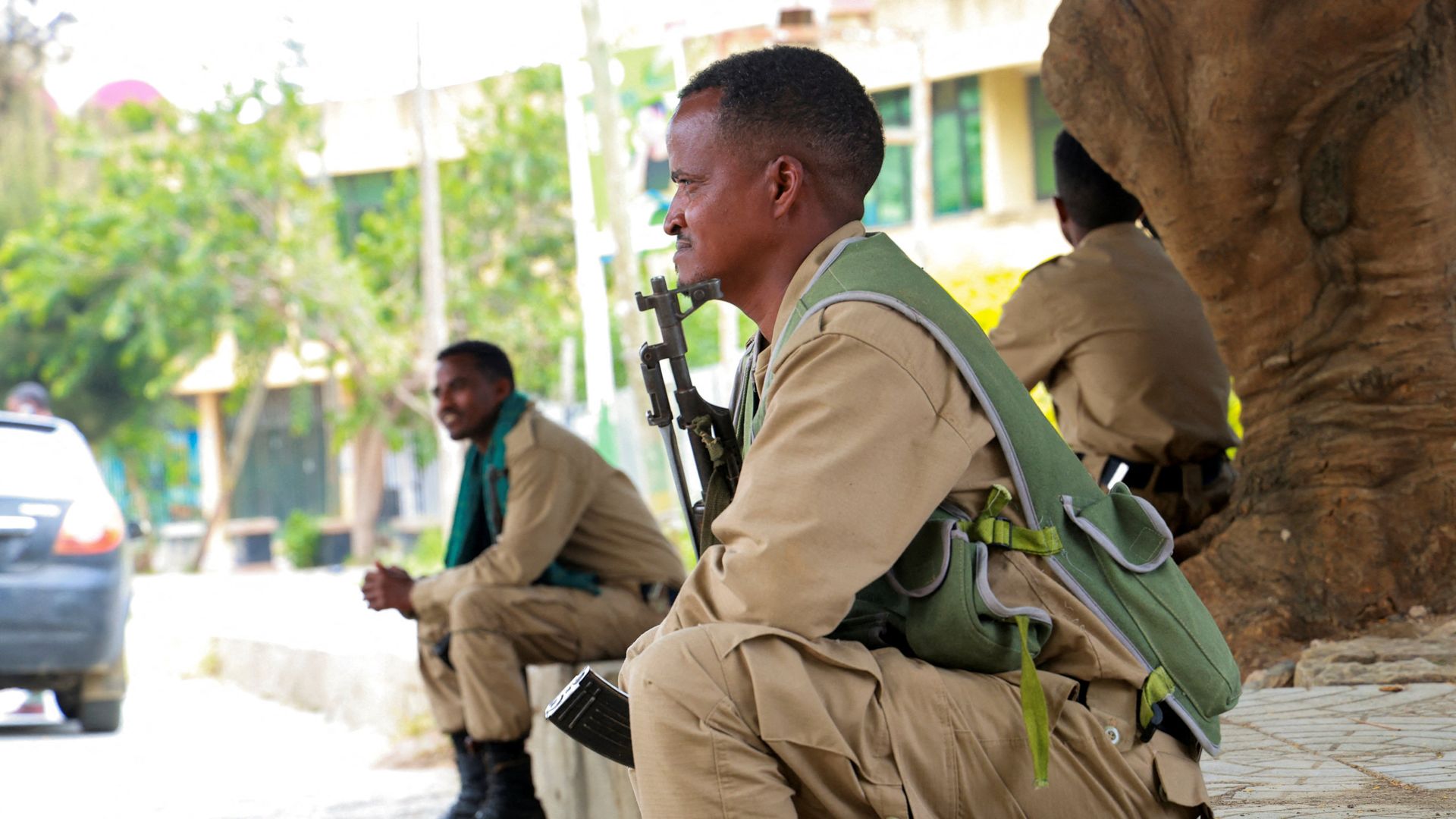
The diplomatic cables do not capture the smell of woodsmoke hanging over the escarpments of the Tigray region, nor do they reflect the exact weight of a fragile peace signed on paper while the structural foundations of a society remain cracked. Four years have passed since the Pretoria Agreement silenced the heavy artillery that turned northern Ethiopia into a graveyard of the modern era. Yet, when the United Kingdom issues a sudden condemnation regarding fresh security violations and ongoing abuses in Tigray, it serves as an uncomfortable awakening for an international community that preferred to file the conflict away as resolved.
Diplomacy loves a clean ending. Wars, however, rarely expire simply because generals sign documents in luxury hotels.
To understand why London is speaking out now, one must look beyond the sterile language of ministerial press releases and examine the structural realities on the ground. The Tigray conflict was never merely a domestic squabble over federal power. It was a violent collision of competing historical narratives, ethnic federalism, and geostrategic ambitions involving regional actors who view stability through the lens of their own survival. When the guns stopped in November 2022, millions of displaced people faced a landscape stripped of hospitals, schools, and agricultural machinery.
The silence that followed was mistaken for recovery. It was actually exhaustion.
Beneath the surface of the Pretoria framework, the mechanics of transitional justice have stalled. Disputed territories in western and southern Tigray remain under the control of forces and allied administrations whose presence directly contradicts the constitutional arrangements meant to restore the status quo. These are not trivial administrative boundary disputes. They are demographic battlegrounds where displacement is weaponized, and the return of hundreds of thousands of refugees is blocked by political calculation.
When foreign ministries in Western capitals issue condemnations, local populations hear echoes of a familiar abandonment. The international response to the initial outbreak of hostilities was marked by months of hesitation, followed by rhetorical outrage, and ultimately, a rush to normalize relations once the immediate slaughter subsided. Foreign policy pragmatism frequently demands normalization with sovereign states regardless of their internal governance deficits. However, the cost of this pragmatism is paid in the currency of unaddressed impunity.
Accountability cannot be negotiated away in a backroom compromise designed to satisfy geopolitical interests in the Horn of Africa.
The economic strangulation of Tigray has not entirely lifted. While telecommunications and banking services trickled back online after the peace deal, the reconstruction funds promised by international donors have largely trickled into a bureaucratic void. Bureaucracy kills faster than bullets when hospitals lack basic antibiotics and children suffer from acute malnutrition. The humanitarian architecture is chronically underfunded, pushed aside by newer, more media-grabbing global crises in Europe and the Middle East.
Ethiopia as a whole is navigating an extraordinary high-wire act. Prime Minister Abiy Ahmed’s administration faces multiple fronts of instability, from the persistent low-intensity conflict in the Amhara region to deep-seated economic inflation that erodes the purchasing power of ordinary citizens. The temptation in Addis Ababa is to view regional dissent through a security lens rather than a political one. Every expression of grievance is treated as treason, and every foreign critique is dismissed as imperialist meddling.
This defensive posture creates a dangerous feedback loop.
When the UK or any other international partner condemns violations in Tigray, they are rarely operating out of pure altruism. Diplomacy is an exercise in leverage. By highlighting ongoing abuses, external actors remind the federal government of its financial and diplomatic vulnerabilities. Yet, megaphone diplomacy often achieves the opposite of its intended effect. It hardens nationalist sentiment within the urban core of Ethiopia, where many citizens feel the West ignored Tigrayan atrocities against federal troops in 2020 while obsessing exclusively over the federal counter-offensive.
History is rarely viewed through a single lens in the Horn of Africa. Every community carries a distinct inventory of historical grievances, stretching from the imperial era through the Derg dictatorship to the decades of EPRDF dominance.
To break this cycle, the international community must move past cyclical statements of concern. Condemnations without consequences are merely background noise for leaders skilled at weathering diplomatic storms. Real engagement requires sustained, quiet pressure coupled with transparent, unconditional financial support for independent investigative mechanisms and victim-centered reconciliation programs.
The shadow of the civil war stretches long across the valleys and highlands of northern Ethiopia. Four years of nominal peace have proven that silencing the cannons is only the first step in a very long descent back from the abyss. Until the fundamental questions of land, security, and justice are resolved through genuine political will rather than tactical expedience, the peace in Tigray will remain nothing more than an intermission.