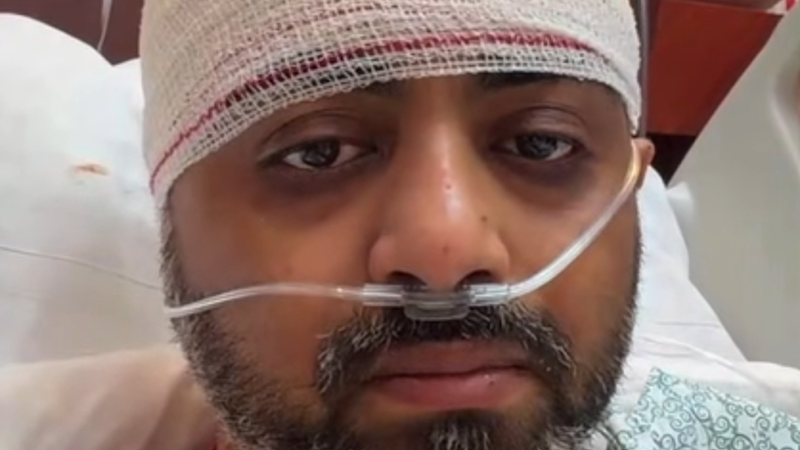
The official narrative arrived with predictable velocity. Following a catastrophic aviation incident, statements from high-ranking political offices moved quickly to frame the disaster not as a mechanical failure or systemic blind spot, but as an act born of radical Islamist indoctrination. For anyone who has spent decades covering security briefings and military intelligence, this pivot is instantly recognizable. It is a reflex. When complex aviation safety protocols, psychological screening limits, and geopolitical tensions intersect in a tragedy, assigning a tidy ideological label to the pilot provides an immediate political shield.
Yet reality resists neat categorization.
Strip away the political posturing, and a much darker, far more mundane set of vulnerabilities emerges. Modern commercial aviation rests on a brittle premise. We place absolute trust in individuals operating behind locked doors, isolated from oversight for hours at a time, while subjecting them to grinding psychological pressures, medical stigma regarding mental health, and institutional opacity. When an authority figure claims ideological radicalization drove a tragedy without presenting verifiable telemetry, flight data recorders, or peer-reviewed forensic psychological autopsies, journalists and analysts have an obligation to demand proof rather than echo talking points.
The Anatomy of the Official Pivot
Governments under pressure require fast explanations. In the immediate aftermath of a major transport disaster, uncertainty creates a vacuum. Political leaders abhor vacuums. By introducing claims of radicalization early in the news cycle, officials achieve two distinct objectives. First, they externalize the blame. A rogue actor influenced by external extremism suggests a foreign or ideological threat rather than an institutional failure of internal screening. Second, it short-circuits deeper inquiries into airline labor practices, cockpit security doors reinforced after historical attacks, and the severe stigma surrounding pilot mental health reporting.
Consider how airline screening actually functions. Commercial pilots undergo rigorous physical examinations and periodic simulator checks. Their technical proficiency is measured to the second. Their psychological evaluations, however, rely heavily on self-reporting and blunt diagnostic tools that often fail to catch acute stress reactions, burnout, or idiosyncratic psychological deterioration. If a pilot begins to experience severe psychological distress, stepping forward can mean immediate grounding, loss of livelihood, and profound social embarrassment.
When institutions punish vulnerability, individuals learn to mask their deterioration.
To label a pilot as radically indoctrinated without public forensic evidence is a convenient way to bypass uncomfortable questions about why warning signs were missed by employers, medical examiners, and colleagues. It transforms a systemic failure into an isolated anomaly.
The Security Blind Spot Behind Closed Doors
The post-September 11 aviation architecture fundamentally altered the physical layout of the flight deck. Heavy, reinforced security doors were installed to prevent unauthorized physical entry. These doors saved countless lives by keeping hijackers out of the cabin. But they also created an unprecedented
Shadows In The Cockpit The Dangerous Rhetoric Behind Political Narrative Control
news, technology
The statement landed with predictable weight across wire services and broadcast tickers. Israeli Prime Minister Benjamin Netanyahu asserted publicly that a pilot responsible for a major security incident or high-stakes operational breakdown had undergone radical Islamist indoctrination. In the standard rhythm of modern crisis management, the accusation served an immediate political function. It externalized threat, simplified a complex institutional failure into a binary cultural conflict, and redirected public scrutiny away from systemic oversight gaps.
Yet beneath the polished rhetoric of political posturing lies a far more troubling reality. When leadership attributes technical, operational, or behavioral anomalies to sudden ideological conversion, intelligence apparatuses risk blinding themselves to ordinary human vulnerabilities. Mental fatigue, operational stress, psychological strain, and bureaucratic blind spots routinely eclipse grand conspiracy theories. By diagnosing a complex crisis through the narrow lens of radicalization, state actors often obscure structural flaws within their own screening and monitoring protocols.
Security analysts and military historians recognize a recurring pattern in these public proclamations. Whenever an organization experiences an unexpected breach or catastrophic error from within its own ranks, the initial institutional reflex leans toward alienation. Labeling an insider threat as an external ideological contagion protects the integrity of the institution at the expense of empirical truth. It tells the public that the system itself is sound, resilient, and pure, while the individual component was merely corrupted by outside forces.
This mechanism of narrative defense relies heavily on pre-existing societal anxieties. In an era marked by heightened geopolitical tensions and persistent security threats, invoking radical Islamist indoctrination triggers immediate emotional resonance. It bypasses skeptical inquiry by attaching a familiar, highly feared label to an unfamiliar and uncomfortable event. The public receives a neat, easily digestible explanation for an otherwise chaotic occurrence.
However, professional investigative work requires moving past the political gloss to examine the machinery of recruitment, vetting, and psychological support inside high-security sectors. Modern military and aviation personnel operate under extreme psychological pressures. Chronic sleep deprivation, constant threat environments, administrative isolation, and the crushing weight of institutional expectations create fertile ground for psychological distress. When an individual breaks under these pressures, the manifestation of their collapse rarely aligns with clean ideological categories.
Instead, human breakdown often mimics ideological shifts, or worse, gets retroactively fitted into a political narrative by investigators eager to satisfy leadership's preferred hypothesis. A pilot experiencing severe depressive episodes, cognitive burnout, or personal grievances may exhibit erratic behaviors that officials later reinterpret through an ideological framework. This retroactive framing distorts the historical record and prevents agencies from implementing the actual mental health reforms needed to protect other personnel.
The mechanics of institutional denial are remarkably consistent across global superpowers and regional powers alike. When systems fail, they defend their boundaries. Admitting that a multi-million-dollar vetting process missed a routine psychological vulnerability is an institutional admission of failure. Admitting that operational stress management programs are inadequate requires budgetary reallocation and cultural reform. Conversely, blaming an externalized ideology requires nothing more than a press conference and a cooperative media cycle.
Consider the historical precedent of insider threat investigations over the past three decades. Time and again, initial reports from government spokespeople emphasize radicalization, foreign handlers, or sudden ideological transformations. Subsequent independent inquiries frequently reveal a different sequence of events. Financial desperation, untreated trauma, administrative grievances, or domestic instability usually form the actual backbone of the tragedy. Ideology often serves as the wrapper rather than the engine.
When political leaders seize upon unverified psychological labels during the opening hours of an investigation, they poison the well of objective analysis. Subordinate investigators understand the implicit mandate. They begin hunting for evidence that confirms the leadership's preferred narrative while discarding anomalies that point toward institutional negligence. The investigation ceases to be a search for truth and becomes an exercise in narrative reinforcement.
The danger of this approach extends far beyond the immediate political news cycle. By misidentifying the root causes of internal security failures, states deploy the wrong countermeasures. If an operational breakdown stems from chronic overwork and a toxic command climate, implementing stricter ideological monitoring will yield zero preventative value. It alienates loyal personnel, creates an atmosphere of paranoia, and leaves the actual vulnerabilities wide open.
True security requires a willingness to confront uncomfortable internal metrics. It demands an audit of command structures, an honest appraisal of personnel support systems, and a strict separation between political communication and forensic investigation. Until intelligence and defense agencies prioritize empirical reality over convenient public narratives, the institutional blind spots that invite these crises will remain firmly in place. The shadow in the cockpit is rarely an imported ideology; more often, it is the quiet, cumulative weight of a system that pushes human beings past their breaking point and refuses to watch them fall.