Global energy markets should have collapsed months ago. When conflict erupted around the Persian Gulf and choked off standard shipping through the world's most critical energy chokepoint, analysts braced for Brent crude to test one hundred fifty dollars a barrel. Instead, prices hovered stubbornly between eighty and ninety dollars through much of August.
The market didn't dodge a bullet through sheer luck. It survived because a shadow shipping network stepped in to fill the void. State-backed producers in the Middle East quietly built an underground logistics machine, turning off transponders and sending tankers sliding past hostile waters in the dark. Meanwhile, you can explore similar developments here: Chinamaxxing as a Metric of Institutional Decay.
How the Shadow Fleet Operates
You won't find these voyages on standard public tracking platforms. Tankers operated by national energy firms in countries like the United Arab Emirates, Iraq, Qatar, and Kuwait routinely load up inside the Persian Gulf, slip their tracking signals, and crawl through narrow maritime lanes hugging the Omani coast.
The logistics require incredible precision and a massive appetite for risk. In some stretches, the transit corridor narrows dramatically, forcing heavily laden supertankers to navigate tight paths at night with their lights and identification signals disabled. To see the bigger picture, we recommend the detailed report by CNBC.
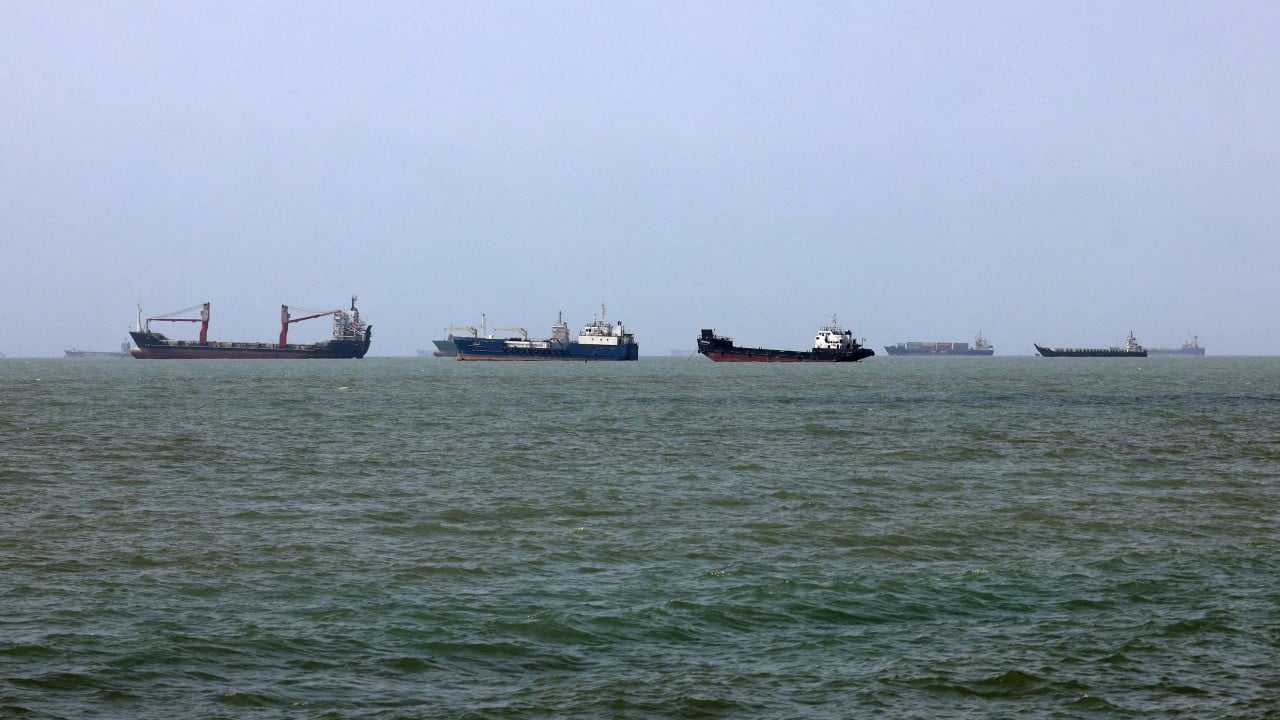
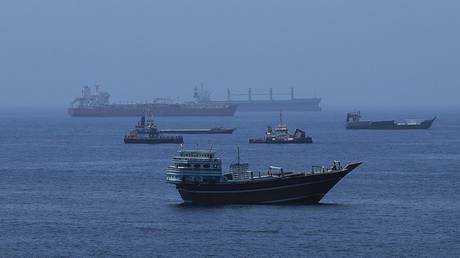
Once these vessels clear the riskiest segments of the waterway and reach the Gulf of Oman, they rendezvous with waiting ships. Crew members execute rapid ship-to-ship transfers, pumping crude from the shadow shuttles onto larger commercial vessels anchored near ports like Sohar. Satellite data shows the scale of this operation clearly. The number of idle ships staging off the coast of Oman surged from roughly forty vessels early in the year to around one hundred fifty.
The Human and Financial Cost
Hiding a multi-million-barrel supply chain comes with severe consequences. This is not a bloodless economic workaround. Tankers moving through these contested lanes remain primary targets for regional attacks and militant strikes.
Take the United Arab Emirates' state oil company, Adnoc. Despite pushing roughly 135 million barrels of crude through this covert channel, the company reported that twenty-three of its vessels suffered direct attacks. Those incidents cost twenty crew members their injuries and at least one life. Seafarers face constant danger, and satellite imagery regularly captures mysterious oil spills bleeding into regional waters with no clear origin.
Insurance executives and shipping syndicates hate these variables. Traditional underwriters refuse to touch routes carrying high military risk, forcing state producers to self-insure or rely on alternative financial backing. Yet, the economics still win out. The profit margins on a single successful supertanker cargo easily outweigh the steep insurance penalties and operational hazards.
Why Markets Underestimate the Risk
Official public statements often mask the true fragility of global supply lines. Recent disclosures from energy officials, including US Energy Secretary Chris Wright, revealed that roughly 9 million barrels per day crossed through the strait during peak weeks—nearly half of the pre-war volume of 20 million barrels.
Traders heard those numbers and breathed a sigh of relief, assuming normal trade routes were recovering. That assumption misses the reality on the ground. A massive portion of that volume consists of dark transits and clandestine shuttle runs rather than open, predictable commerce.
Saudi Arabia, traditionally cautious about deploying its massive fleet into active conflict zones, is showing clear signs of joining the setup. State shipping arm Bahri has begun massing supertankers off the Omani coastline, positioning more than a dozen massive vessels ready to receive transferred crude. When Riyadh fully normalizes this shadow strategy, it signals that major producers expect maritime disruptions to stretch far into the future.
Energy consumers enjoy relative price stability at the pump right now, but that stability rests on a knife-edge. The global economy is heavily dependent on a fleet running blind in the dark, where a single major collision or escalation could instantly shatter illusions of security. Monitor the anchorage data off the Gulf of Oman closely if you want an accurate read on where energy prices are heading next.