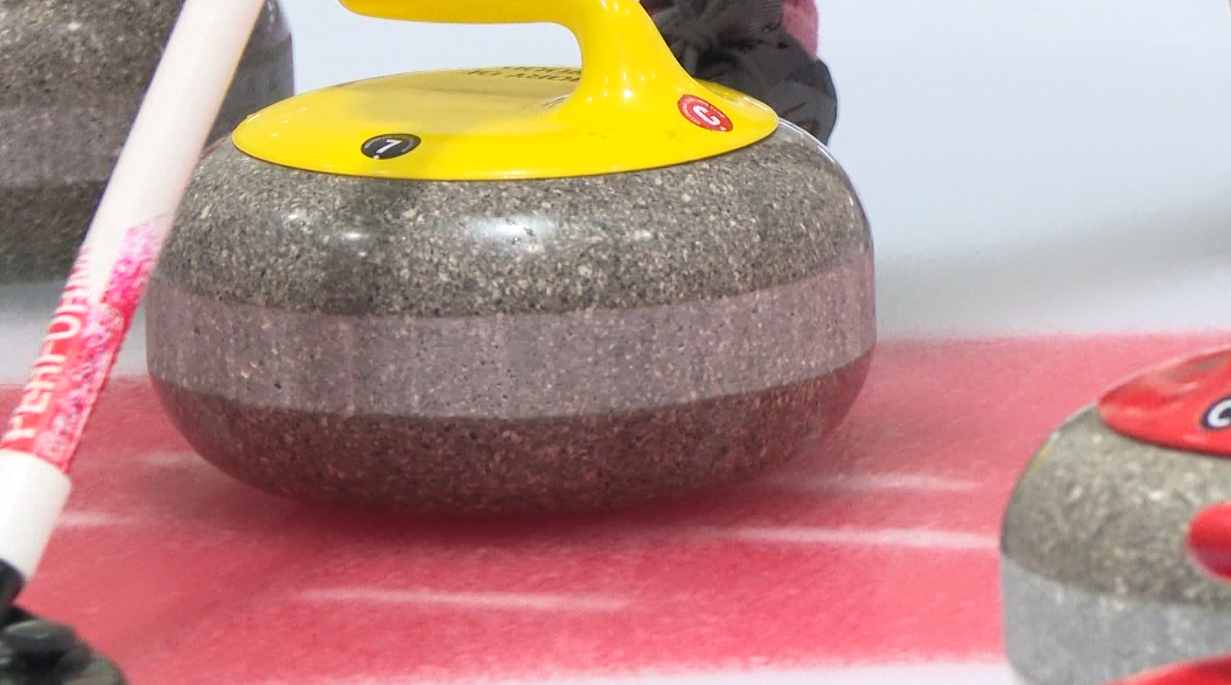
Forty-two pounds of polished Scottish granite makes a very specific sound when it leaves a human hand and meets pebbled ice. It is not a crash. It is a low, hollow purr, like a distant train rolling across a frozen valley floor.
For thirty years, I have stood in cold arenas listening to that sound, my breath fogging the air, my knees aching from the concrete floors beneath the bleachers. Most people watch Olympic curling once every four years, marveling at the twenty-somethings with their athletic lunges and ferocious sweeping, and then forget the sport exists until the next winter games roll around. They think of curling as a young person’s sprint, or else they dismiss it as a casual Friday night pastime for retirees looking for an excuse to share a pitcher of beer.
They miss the entire point.
When World Curling officially announced that Kelowna, British Columbia, will host the World Senior Curling Championships in both 2027 and 2029, the press releases read like municipal accounting ledgers. They talked about venue capacities, tourism revenue projections, and international scheduling blocks. They missed the thunder beneath the surface. Because what happens when the world’s best curlers over the age of fifty descend on the Okanagan Valley has nothing to do with polite nostalgia. It is a fierce, desperate, magnificent refusal to fade quietly into the background.
The Myth of the Graceful Exit
We live in a culture obsessed with biological expiration dates. In almost every professional sport, turning thirty-five makes you an elder statesman; turning forty makes you a medical miracle; turning fifty makes you a spectator. You are expected to trade your competitive fire for a lawn chair, a golf handicap, and a polite smile while younger bodies take your place under the bright lights.
Consider a hypothetical competitor—let us call her Margaret, a fifty-six-year-old third from Scotland who missed out on an Olympic berth by a single millimeter twenty years ago. For two decades, Margaret raised children, worked forty-hour weeks in an accounting firm, and swallowed the quiet, gnawing regret of an unfinished chapter. Her knees pop when she climbs stairs now. Her lower back stiffens if she drives for more than an hour. Yet every Tuesday and Thursday night, she drives to a freezing local rink, laces up her sliding shoes, and throws forty rocks into an empty house while the janitor mops the lobby.
Why? Because curling is the rare arena where accumulated wisdom actually outweighs raw twitch-muscle speed.
In tennis or hockey, youth can brute-force its way out of a tactical mistake. On a sheet of curling ice, brute force is useless. You cannot throw a granite stone harder to make it curl more; in fact, the physics work in reverse. A stone traveling slowly bites the microscopic pebbles on the ice surface, hooking sharply around guards in ways that defy casual intuition. Think of it like parallel parking a luxury sedan on a sheet of black ice using only a gentle nudge from the rear bumper and two friends frantically polishing the asphalt ahead of the tires. A twenty-two-year-old relies on explosive leg drive and violent sweeping to muscle a rock into position. A fifty-eight-year-old relies on thirty years of reading subtle frost patterns, feeling microscopic shifts in air humidity, and possessing the ice-cold nerve to throw a draw to the button when the entire building is dead silent.
When World Curling awarded both the 2027 and 2029 World Senior Curling Championships to Kelowna, they did not merely book a venue. They built a coliseum for people like Margaret—athletes from more than twenty-five nations who refused to accept that their best moments were behind them.
Why Kelowna Carries the Weight of the Ice
To understand why this specific announcement matters, you have to understand the geography of Canadian curling. Every small town on the Canadian prairies has a curling rink, usually tucked beside the grain elevator or the community hall, smelling faintly of damp wool, floor wax, and fried onions. Those rinks are the sport's soul.
Kelowna is something else entirely.
Nestled along the eastern shore of Okanagan Lake, surrounded by orchards, vineyards, and steep pine-covered hills, Kelowna sits at the crossroads of serious athletic infrastructure and genuine destination allure. Most people picture British Columbia's interior as a summer playground—houseboats on warm water, cherry stands along Highway 97, hikers winding through dusty trails. Yet beneath that sun-drenched reputation lies a deeply entrenched winter sports culture that knows precisely how to stage global competitions without losing its small-town warmth.
The Kelowna Curling Club is not just another municipal facility; it is one of the largest curling clubs in the world, boasting twelve sheets of ice under a single roof. Ask anyone who has ever organized an international bonspiel what twelve contiguous sheets mean, and watch their eyes light up. In smaller venues, tournament schedules stretch from seven in the morning until midnight, forcing older athletes to play on inconsistent ice conditions while surviving on vending-machine coffee. Twelve sheets allow dozens of national teams—men’s and women’s divisions running simultaneously—to compete in rhythm, preserving the integrity of the ice surface and giving international visitors an authentic club atmosphere rather than a sterile, cavernous hockey arena where spectators sit fifty yards away from the action.
At a club-level world championship, you do not watch from the nosebleeds. You stand behind the glass, close enough to see the beads of sweat on a skip’s forehead, close enough to hear the quiet debate over whether a stone needs three more feet of weight or a feather-light touch of the broom.
The Invisible Stakes of a Two-Year Commitment
Awarding a single championship to a city is standard operating procedure. Awarding both the 2027 and 2029 editions to Kelowna in a single stroke is a deliberate, strategic gamble—and a massive vote of confidence.
Hosting an international event requires an army of unpaid perfectionists. Before a single foreign stone touches the ice, ice technicians spend weeks purifying water through reverse-osmosis systems, stripping out every trace of calcium and magnesium that might cause a rock to drift unpredictably. They flood the concrete floor in paper-thin layers, paint the white base coat, lay down the red and blue rings by hand, and spray warm water droplets from a specialized backpack nozzle to create the signature "pebble" that reduces friction.
It is exhausting, obsessive labor. Usually, a host committee spends two years learning the ropes, pulls off a single week of glory, and then disbands, taking all that hard-won institutional memory with them into retirement.
By locking in 2027 and 2029 simultaneously, Kelowna avoids that tragic amnesia. The volunteers who figure out airport shuttles, hotel blocks, live-streaming camera angles, and international flag protocols in April 2027 will still have the playbook open on their desks when the world returns twenty-four months later. Local businesses along Bernard Avenue and the waterfront will not treat visiting fans from Sweden, Japan, Switzerland, and Scotland as a one-week novelty; they will build lasting hospitality partnerships.
For the athletes themselves, that two-year rhythm creates a rare sense of continuity. Many curlers who compete in 2027 will spend the following twenty-four months retooling their teams, rehabbing sore shoulders, and fighting through grueling national playdowns just to earn a return ticket to the Okanagan Valley in 2029.
What Happens Inside the Quiet
I will admit something that used to embarrass me when I first started covering curling: there were moments when I found the pace excruciating. In a world addicted to six-second video clips and nonstop scoreboard explosions, watching two teams spend two and a half hours sliding sixteen rocks back and forth down a narrow corridor of ice can feel maddeningly slow.
Then I watched a senior championship tie-breaker, and everything shifted.
Imagine two skips—both in their early sixties, both former national champions who had spent forty years studying every angle of the game—locked in a tied eighth end. There is no shouting. There is no trash-talking. Instead, there is a conversation happening entirely through geometry. One skip places a center guard, daring the opponent to come around it. The opponent responds not by blasting the guard away, but by freezing a stone millimeters in front of it, building a fortress that demands surgical precision to dismantle.
The tension in that room was heavier than anything I have ever felt in a packed football stadium. Because there is no clock to run out. You cannot stall in curling. You cannot hide behind a defensive formation and wait for the buzzer. Every single person on that four-player team has to step into the hack, look down a hundred and fifty feet of gleaming ice, and execute under total public scrutiny. If your hand trembles by a fraction of an inch at the point of release, forty-two pounds of granite will drift six inches wide, and two hours of brilliant strategy evaporates in silence.
When you are twenty-five, missing a shot like that hurts your pride. When you are fifty-eight, knowing how few chances you have left to wear your country’s crest on your back, missing that shot cuts right to the bone.
Beyond the Medals and the Economic Reports
Tourism boards love numbers. They will tell you that the World Senior Curling Championships bring thousands of room nights to Kelowna during the shoulder season of spring—a critical bridge between winter ski traffic at Big White and the summer rush on the lake. They will calculate restaurant tabs, winery tours, and retail spending down to the decimal point.
Those numbers are real, and they matter to the people who keep Kelowna’s lights on. Yet if you walk into the Kelowna Curling Club lounge on a Wednesday evening during the tournament, after the last rocks have been parked in the corners and the ice shed doors have swung shut, you will see the real return on investment.
You will see a retired schoolteacher from Switzerland sharing a table with a former machinist from Northern Ontario and a real estate agent from Tokyo. None of them speaks the others' language fluently. They communicate by sliding salt shakers and beer coasters across the tabletop, recreating the fifth-end double takeout that turned the afternoon draw upside down. Their knees are wrapped in ice packs beneath the table. Their shoulders are sore from sweeping forty-pound stones across stubborn frost.
And they are grinning like kids who just skipped school.
That is what Kelowna actually secured when it won the bids for 2027 and 2029. Not just a pair of dates on an international sporting calendar, and not just a boost for local hotels. It claimed a front-row seat to one of the fiercest, most joyful rebellions in modern sport—the stubborn refusal of human beings to stop chasing perfection just because the calendar says they are supposed to slow down.
Two years from now, the doors of the Kelowna Curling Club will swing open to the world. The ice will be freshly pebbled, the stones freshly textured, and the scoreboard blank. Somewhere out on Sheet 4, a player with silver hair and a steady hand will settle into the hack, exhale a cloud of white breath into the cold air, and send forty-two pounds of Scottish granite gliding softly into the quiet.