The air over the launch site tasted of copper and burning ozone long before the first spark touched the metal.
Down in the concrete trenches of the control center, miles away from the pad, the monitors hummed with a quiet, terrifying indifference. Rows of green numbers cascaded down dark glass, charting telemetry, pressure gradients, fuel flow rates, and vector calculations. To an outsider, it looked like code. To the men and women staring into those screens for thirty-six hours straight, it looked like a pulse.
Consider the engineer who spent four years of his life designing a single valve no larger than a human fist. He missed his daughter's first steps for that valve. He slept under a metal desk with a crumpled jacket for a pillow while winter winds rattled the corrugated siding of the assembly hangar. That valve had one job: to open on command, allowing liquid oxygen and kerosene to flood the thrust chamber in a hypergolic marriage of fire and physics.
When the countdown hit zero, the earth did not just shake; it groaned.
Sound travels at roughly seven hundred and sixty miles per hour in warm air, but the shockwave of a heavy-lift rocket hits your chest before your ears can even register the roar. It is a physical weight, a fist of compressed atmosphere slamming against glass and bone. You feel it in your teeth. You feel it in the marrow of your thighs.
And then, for a breathless two minutes and forty seconds, everything went according to script.
The vehicle punched through the troposphere, leaving a jagged, chalk-white scar across the pale blue morning. Telemetry data confirmed staging separation. The first stage boosters dropped away, tumbling back toward the earth in a brilliant shower of thermal friction, while the upper stage ignited its main engine to push deeper into the cold, black vacuum of low Earth orbit. Tucked safely inside the protective payload fairing rode the satellite, a compact, high-resolution Earth-observation instrument designed to monitor agricultural drought patterns across developing continents.
Hundreds of millions of dollars of hardware, yes. But more than that: thousands of human hours, crystallized into silicon, gold plating, and carbon fiber.
At T-plus three minutes and twelve seconds, the telemetry stream flatlined.
Not a stutter. Not a warning cascade of yellow caution flags. Just a sudden, absolute silence from the tracking stations downrange.
In the control room, the hum of the air conditioning suddenly sounded deafening.
Chief flight director Sarah Miller—hypothetical in name, but forged from the exact crucible of every aerospace engineer who has ever watched a dream disintegrate—did not scream. She didn't drop her head into her hands. When you work in orbital mechanics, you learn early that space is an apex predator that tolerates no sloppy math. You train for anomalies. You run simulations where engines blow, where guidance systems drift, where command links sever in the blinding interference of solar radiation.
She leaned closer to her primary monitor, her knuckles whitening as she gripped the edge of the console.
"Telemetry drop on stage two," she said. Her voice was remarkably steady, stripped of all emotion save for a cold, clinical focus. "Check radar tracking."
Ten miles above the ocean, out of sight of the cheering crowds gathered along the distant coastline, the rocket had ceased to exist as a single cohesive machine.
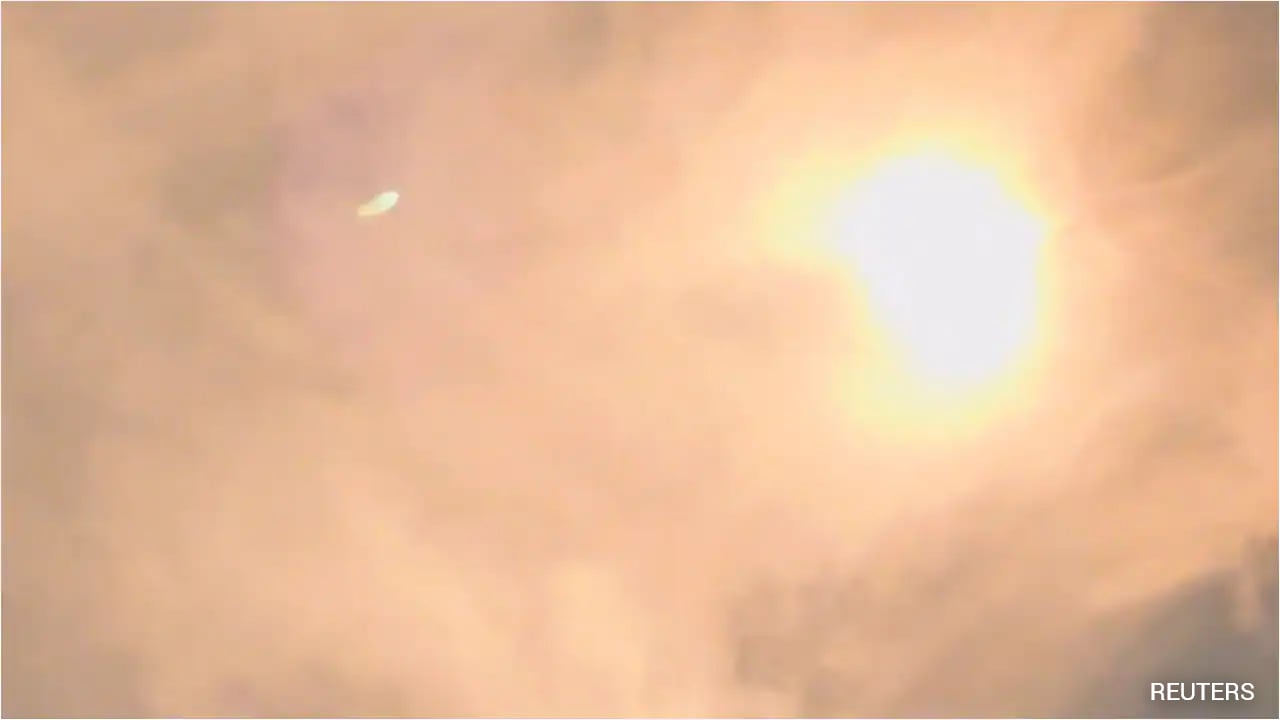
What the high-speed tracking cameras caught a fraction of a second later was a sudden, violent bloom of orange fire blossoming against the stratosphere. The vehicle did not drift off course; it fractured. A cascading structural failure—likely originating near the oxidizer feed line where stress fractures are notoriously difficult to predict under extreme acoustic vibration—tore the airframe apart from the inside out.
Debris didn't just fall. It rained.
Chunks of titanium alloy, unspent propellant, and pulverized composite materials scattered across a wide maritime safety zone. The satellite, designed to gaze down upon the green fields of Earth, never made it to the vantage point it deserved. It burned up in a brilliant, fleeting streak of unauthorized reentry, its sensitive optics melting into slag before they ever cleared the stratosphere.
We treat space exploration today with a dangerous casualness.
We watch rocket launches on our phones while waiting for a coffee, scrolling past breathtaking feats of engineering with the same distracted thumb-flick we use for cat videos. We talk about payloads and launch cadences and market shares as if putting tons of metal into orbit were as routine as shipping a package via overnight courier.
It is not routine. It is a violent negotiation with gravity, and gravity wins most of the arguments.
Think about what it takes to launch a rocket. You are strapping a sophisticated computer system to millions of pounds of chemical explosive, lighting a match underneath it, and hoping that every single one of the three hundred thousand individual components—manufactured by dozens of different subcontractors in different towns across different states—behaves with absolute, flawless synchronization.
When one bolt fails to hold torque, when one weld has a microscopic air bubble invisible to X-ray inspection, the sky opens up and swallows it all.
Back in the control room, the post-mortem began before the smoke over the recovery zone had even begun to dissipate.
No one left the building. The screens were still glowing, now populated not by live telemetry, but by millions of lines of historical data captured in the final milliseconds before the signal died. Engineers crowded around a single workstation, their shoulders touching, pointing at microscopic spikes in pressure charts.
"Right here," a young propulsion analyst whispered, pointing a trembling finger at a jagged dip in the graph. "Look at the hydraulic pressure drop. That’s not a sensor failure. That’s a rupture."
This is the hidden cost of the space age. It is not measured strictly in dollars, though insurance underwriters will spend months arguing over liability clauses and multi-million-dollar losses. It is measured in the quiet devastation of people who poured their youth into a titanium shell that now rests quietly on the ocean floor.
We forget that behind every fiery explosion on a morning news broadcast lies an ecosystem of human ambition. People who postponed weddings. People who missed the births of their children. People who stared at computer monitors until their eyes bled, trying to outsmart a universe that does not care about our deadlines or our budgets.
The investigation will take months. Independent boards will be formed. Fault trees will be drawn, connecting stray variables to catastrophic outcomes with the brutal clarity of hindsight. The design will be modified. The valve—or whatever part ultimately triggered the cascade—will be redesigned, reinforced, and tested under pressures that would crush a submarine.
And eventually, someone will wheel another rocket out to the pad.
The gantry will retract. The frost will form along the sides of the fuel tanks, crackling in the morning light. The countdown will resume, ticking down from ten with the slow, agonizing precision of a heartbeat.
Because for reasons that defy pure economic logic, we cannot stop looking up. We build our failures into monuments of data, learn the hard lessons written in ash and falling metal, and try again.
The sky remains open, waiting for the next attempt.