Midnight in Mid-Levels smells like damp stone and stale air conditioning.
Grace sits at her kitchen table, the blue light of a smartphone screen washing her face in an exhausted, ghostly pallor. Across the room, her father coughs—a dry, hacking rattle that has kept the apartment awake for three nights straight. He refuses to go to the hospital. He hates the fluorescent purgatory of the Accident and Emergency department, the four-hour waits on plastic chairs, the risk of catching something worse from the coughing stranger in the next cubule.
So Grace does what a growing number of people in Hong Kong do when panic outpaces convenience. She taps an app.
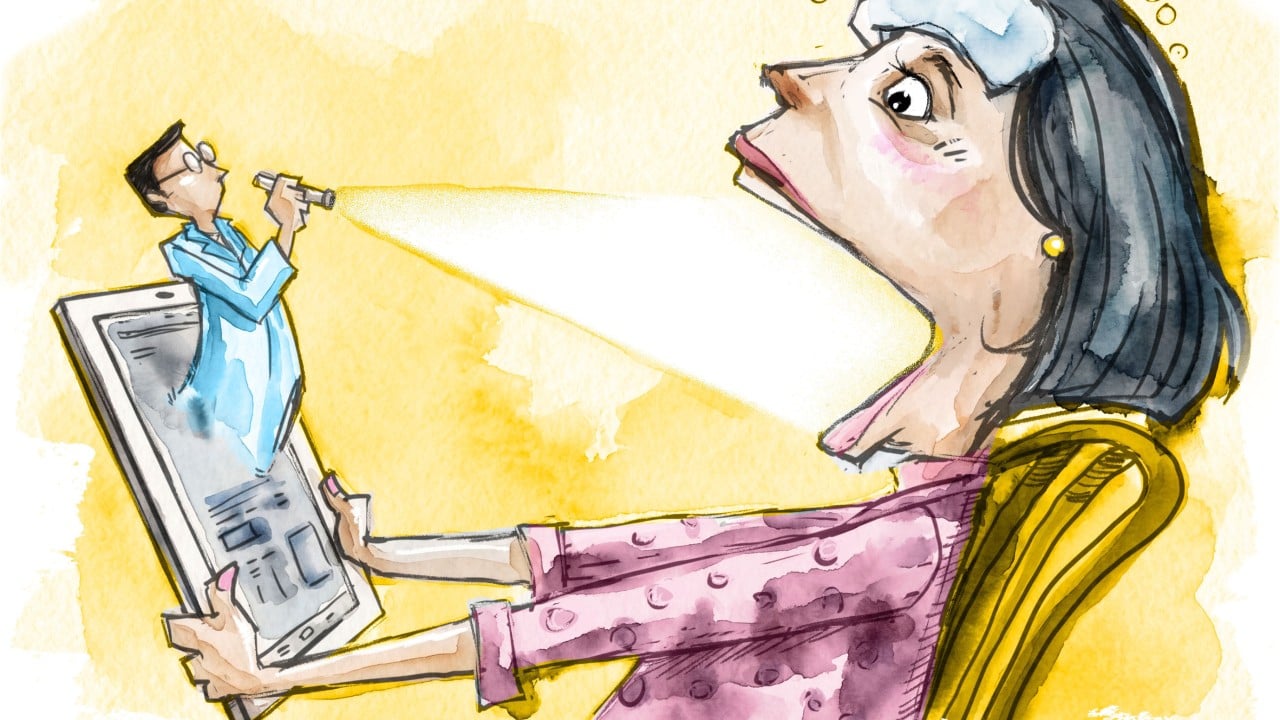
Within minutes, a face appears in a grid square. A doctor, sitting in a quiet office somewhere across the harbor, looks out through the lens with tired, professional eyes. No waiting room. No taxi fare in the rain. Just a digital bridge built across the chasm of a sleepless night.
Yet, as Grace tries to describe her father’s wheezing breath through the tinny speaker, a quiet unease settles in her stomach. Can a doctor four miles away truly hear the subtle whistle in a failing lung through compressed audio? Can a digital prescription replace the reassuring weight of a stethoscope pressed against a frail ribcage?
There are trade-offs. Always. And in a city wired for maximum speed, understanding those trade-offs is no longer optional. It is a matter of survival.
The Velocity of Convenience
Hong Kong runs on velocity. We tap cards to board trains that arrive every ninety seconds. We order meals that appear at our door before we have hung up our coats. Efficiency is our civic religion.
It was only a matter of time before healthcare bowed to the same rhythm. Telemedicine arrived here not as a gentle evolution, but as a compressed necessity during the crucible of pandemic waves. Suddenly, video consultations transformed from a futuristic novelty into an everyday utility. For busy executives chained to desks in Central and elderly residents navigating crowded public clinics, virtual care promised a frictionless escape from the friction of modern life.
The benefits are undeniable. Consider the geography of chronic illness. If you manage hypertension or type 2 diabetes, visiting a doctor every three months often means burning half a day on transit, sitting in waiting rooms, and interacting with a physician for precisely seven minutes. Telemedicine hands that time back. It allows a doctor to review blood sugar logs, adjust dosages, and issue electronic sick leave certificates without requiring a physical pilgrimage.
But friction serves a purpose in medicine.
When you strip away the physical presence, you lose the subtle cues that do not translate across a fiber-optic cable. A doctor cannot smell the acetone on a patient’s breath that signals diabetic ketoacidosis. They cannot feel the abdominal rigidity of an appendix on the verge of rupture. They cannot read the micro-expression of hesitation in a patient's eyes when asked about emotional distress.
Technology bridges distance, but it also creates distance.
The Invisible Boundary Lines
To use telemedicine wisely, one must first recognize its hard edges. Think of virtual care not as a replacement for traditional medicine, but as a specialized tool—like a scalpel meant for a specific depth of cut.
The rules governing this digital frontier in Hong Kong are still catching up to its practice. The Medical Council provides guidelines, but the burden of discernment falls squarely on the patient. When is a screen enough, and when is it a dangerous gamble?
Fever, minor skin rashes, routine medication refills, and stable chronic condition follow-ups live comfortably in the virtual realm. These are encounters where history matters more than physical palpation. A doctor can look at a localized eczema flare through a high-definition camera, ask about triggers, and prescribe a topical steroid with confidence.
Chest pain does not. Sudden neurological deficits do not. Severe shortness of breath, acute abdominal trauma, and unexplained fainting spells demand the crude, irreplaceable reality of an emergency room.
(To be clear: when a symptom threatens life or limb, the screen must go black immediately. Hesitating for the sake of digital convenience is a gamble no algorithm can win.)
The danger lies in the gray zones. What about a persistent cough that might be bronchitis or might be the early whisper of something malignant? What about a lingering dizziness that could stem from dehydration or a brewing stroke? In these moments, telemedicine becomes a high-stakes guessing game if both doctor and patient mistake convenience for completeness.
The Human Cost of the Digital Divide
There is another, quieter tragedy woven into the rise of digital health: the people it leaves behind.
Grace knows how to navigate an app interface, upload insurance documents, and troubleshoot a failing Wi-Fi connection. Her father does not. For him, a smartphone is a glass labyrinth of tiny fonts and invisible buttons.
When virtual care becomes the default option for efficiency-obsessed providers, it risks building a healthcare system that serves the digitally fluent while abandoning the digitally stranded. Ageism in the digital age is rarely malicious; it is simply baked into the design of user interfaces that assume everyone possesses steady hands, sharp eyesight, and a high-speed broadband connection.
Furthermore, privacy casts a long shadow across the virtual exam room. When you consult a doctor from your office cubicle, a noisy coffee shop, or a cramped subdivided flat shared with extended family, the sacred confidentiality of the doctor-patient relationship fractures. Who else is listening through the thin walls? What happens to the encrypted video data once the call disconnects?
Trust requires a container. In traditional medicine, that container is the four-walled examination room. In telemedicine, that container is fragile, easily breached by a dropped connection or an unsecured network.
Finding the Balance
Grace’s father did not end up in the hospital that night. The virtual doctor listened carefully, observed the labored breathing, and immediately advised an ambulance trip. It was the right call, delivered through a digital medium that ultimately served to point them back toward physical reality.
That is the paradox of telemedicine. Its greatest utility often lies in knowing when to abandon it.
We cannot unring the bell of digital innovation. The convenience is too sweet, the efficiency too necessary for a city stretched to its limits. But we can change how we wield it. We can stop treating the screen as a magic portal and start treating it for what it is: a triage tool, a bridge for routine care, a supplement to—not a substitute for—the human touch.
The next time you find yourself staring at a glowing app interface at midnight, remember that healing is not just a transaction of data points. It is an act of witness.
Choose the screen when the miles are too many and the condition is clear. But when the body speaks in riddles of pain and uncertainty, demand the room. Demand the presence. Demand the quiet, uncompressed reality of another human being standing right beside you in the dark.