John Swinney says he apologized. The families who lost children to a hospital infection scandal say he didn't. It’s a mess. Honestly, it’s more than a mess—it’s a total breakdown in trust that no amount of political spin can fix. When you’re dealing with the death of a child or a spouse due to contaminated water in a billion-pound "superhospital," words aren't just words. They're everything. And right now, those words are being called into question.
The fallout from a high-stakes meeting between the First Minister and the families affected by the Queen Elizabeth University Hospital (QEUH) crisis has spilled into the public eye. Swinney told the BBC’s Laura Kuenssberg that he offered an apology during a private call last Thursday. The families, however, hit back immediately. They told Sky News and other outlets that nobody on that call heard the word "sorry."
The gap between regret and responsibility
There’s a massive difference between saying you feel "sorrow" and actually apologizing for a failure. Swinney’s later clarification—where he admitted he might not have "communicated effectively"—basically highlights the problem. He says he is "deeply sorry," but to the families who have been fighting for eight years, this feels like damage control after getting caught in a contradiction.
Why does this matter? Because the QEUH scandal isn't some historical footnote. It’s an ongoing trauma. We’re talking about 84 children infected between 2017 and 2021. We’re talking about Milly Main, a 10-year-old who was in remission for leukemia before a waterborne infection took her life. When a politician says they apologized and the victims say they didn't, it suggests the government is still more worried about its image than its accountability.
A hospital built on shaky ground
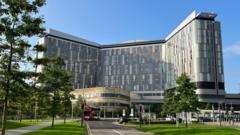
The QEUH was supposed to be the crown jewel of Scottish healthcare. Instead, it’s become a case study in what happens when you rush a project to meet a deadline. Recent testimony at the Scottish Hospitals Inquiry has been brutal. Health bosses finally admitted—after years of denying it—that there was likely a "causal connection" between the hospital's water system and the infections that harmed those kids.
Even more damning is the revelation that "pressure" was applied to open the hospital on time and on budget in 2015, despite warnings about the water supply. Swinney and the SNP have spent weeks dodging questions about where that pressure came from. Was it political? Was it internal? Either way, the hospital opened its doors when it wasn't ready.
The safety myth that won't die
The most frustrating part for many is that Swinney continues to insist the hospital is "fundamentally safe." He says he’s basing that on the data he has. But just days ago, a high-risk cancer ward (Ward 4B) had to be partially closed because of mould and water ingress. This triggered a "red alert"—the highest level of infection warning in the NHS.
If you're a parent with an immunocompromised child, hearing that the hospital is "safe" while air scrubbers are being deployed in the corridors feels like a slap in the face. It’s gaslighting. You can’t tell people a building is fine while you’re simultaneously investigating it for corporate homicide.
- 84 children infected by environmental issues.
- Corporate homicide investigations into at least four deaths (and possibly more).
- Public Inquiry still digging through thousands of documents.
- Red alerts issued as recently as March 2026.
What needs to happen next
The Scottish Government needs to stop hiding behind the ongoing inquiry as an excuse for silence. Lord Brodie will eventually release his report, but the families need honesty now. A real apology isn't just a PR statement issued after a bad TV interview. It’s an admission of specific failures.
You can't fix a "cultural problem" by pretending it doesn't exist. If the government wants to move forward, they need to stop the defensive posturing.
Stop telling families what they heard or didn't hear. Start by acknowledging that the "red flags" were ignored for years. That’s the only way to rebuild even a fraction of the trust that’s been torched over the last decade. If you're following this, watch the upcoming Scottish Hospitals Inquiry findings closely—they'll be the ultimate test of whether anyone actually faces a reckoning for what happened in Glasgow.