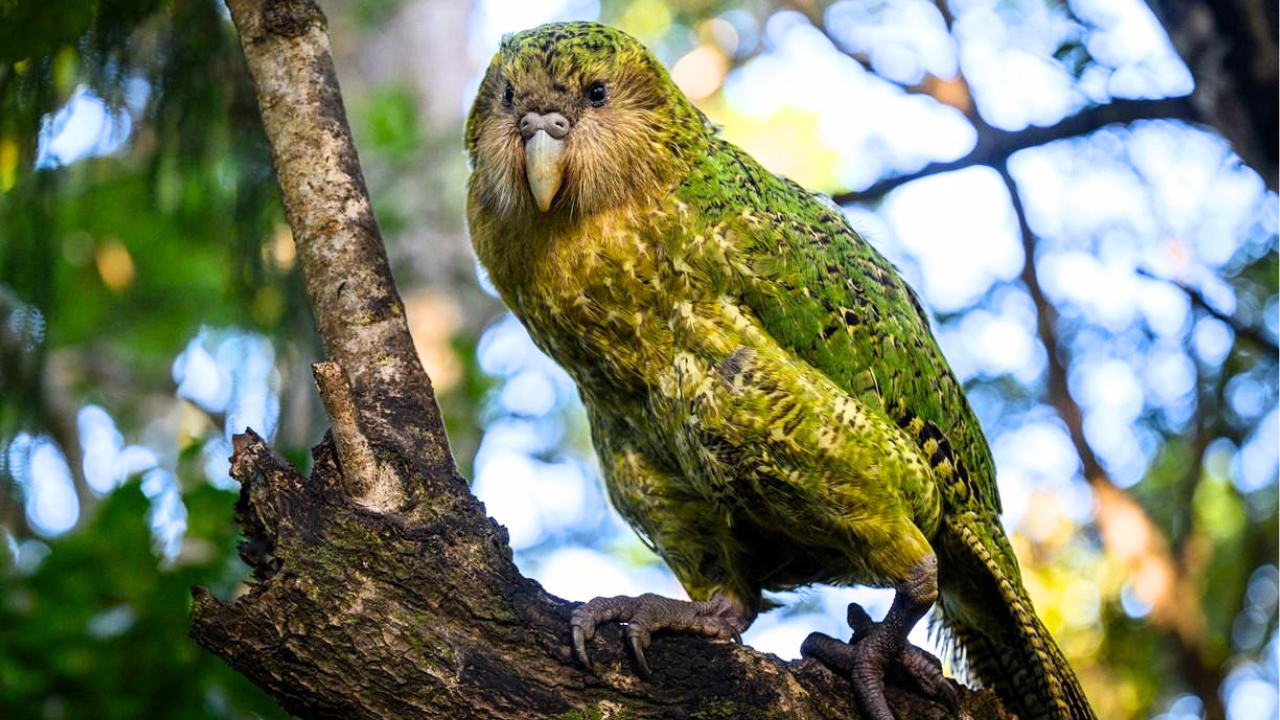
You can't talk about stubborn wildlife comebacks without looking at New Zealand's eccentric, flightless night parrot. Weighing up to five pounds, the kākāpō is built like a bowling ball with feathers and smells faintly of honey and damp moss. It's ridiculous. It's charming. And for a long time, it was nearly extinct.
Back in 1995, the entire known population hit an alarming low of just 51 individuals, split into 31 males and a measly 20 females. Extinction felt like a mathematical certainty. Fast forward to today, and the numbers tell a completely different story. Thanks to a monumental breeding season that added 90 surviving chicks to the tally, the official population has surged to 325.
Crossing the 300-mark breaks a 75-year ceiling for the species. It’s a massive win, but it didn't happen by accident. It took decades of obsessive, hands-on intervention to drag these birds back from the absolute edge.
Why the Kākāpō Crashed So Hard
Before humans arrived with rats, stoats, and cats, New Zealand was a mammalian-free paradise. Birds didn't need to fly to escape danger. Why bother when your main threats came from the sky? The kākāpō evolved into a heavy, ground-dwelling herbivore that relied on freezing in place when spooked.
That strategy works great against a giant hauling hawk. It fails completely against an introduced ferret or rat that hunts by scent.
When European settlers cleared the forests and brought predators along, the collapse was swift. By the late twentieth century, the birds had vanished from the mainland entirely. If conservationists hadn't scraped together the last surviving handful from Stewart Island, this weird parrot would be nothing more than a museum specimen today.
The Brutal Math of Rimu Mast Breeding
Saving a species is hard enough when they breed like rabbits. Kākāpō do the exact opposite.
These birds depend almost entirely on the mast fruiting of native rimu trees, which only happens every two to four years. When the rimu trees dump loads of nutrient-rich fruit, the parrots get a biological green light to mate. When the trees don't fruit, reproduction flatlines.
The recent surge happened because a massive rimu fruiting season triggered an unprecedented reproductive boom. Ninety chicks successfully reached the critical 150-day independence milestone. To put that in perspective, it took the recovery program sixteen long years in its early days to produce that exact same number of chicks.
Shifting From Intensive ICU to Hands-Off Trust
For decades, the Kākāpō Recovery Programme operated like a high-stakes neonatal intensive care unit. Every single egg was tracked, swapped, and sometimes artificially incubated. Rangers fed chicks by hand, monitored nests around the clock, and treated the birds like fragile porcelain.
That micro-management saved them from dying out, but it’s not a permanent lifestyle. You can't manage a wild animal population forever like a zoo enclosure.
Conservationists are stepping back. Thanks to advanced remote monitoring technology, experts can keep tabs on nests without constantly stepping into the birds' habitat. Mothers are finally being trusted to raise multiple chicks on their own. The goal is shifting from artificial preservation to letting these heavy parrots figure out how to sustain themselves.
The Real Estate Problem
Success brings its own headaches. Having 325 kākāpō sounds great until you realize they are crammed onto a handful of predator-free offshore islands. Those sanctuaries are getting crowded.
Finding safe, predator-free real estate is the next massive hurdle. Wildlife authorities are actively looking at expanding habitats, potentially eyeing parts of mainland sanctuaries or Stewart Island for future reintroductions.
Protecting a species isn't just about hatching cute chicks. It requires securing entire ecosystems so they have room to actually live. The kākāpō beat the odds once, but keeping them safe means staying relentless.