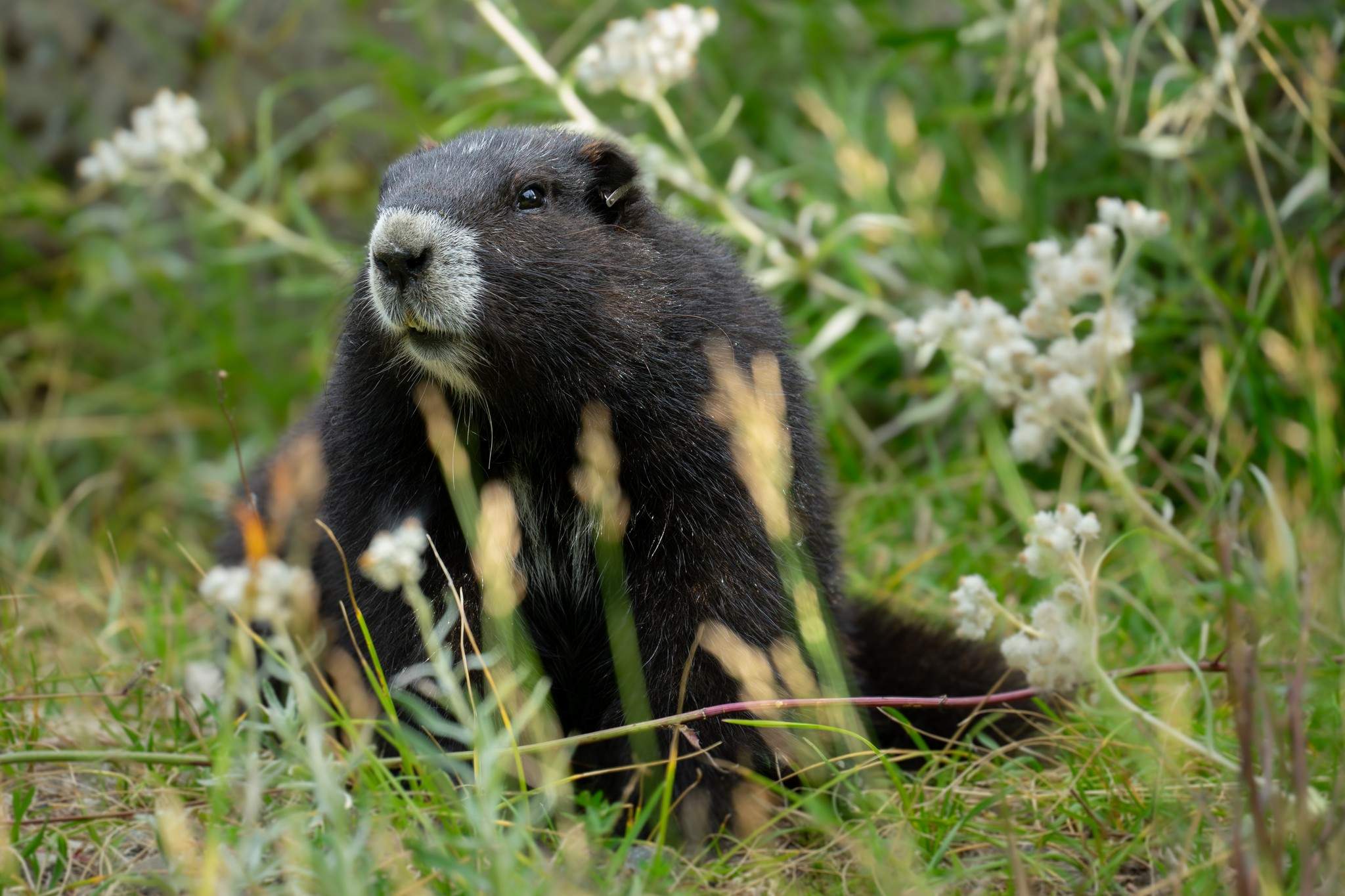
The High Cost of Biological Stasis
We love a comeback story. We love the narrative of the underdog—or in this case, the under-rodent—clawing its way back from the brink of extinction. The recent news of Gob, the Vancouver Island marmot returned to a breeding center after a stint in the wild, is being framed as a bittersweet logistical necessity. It is treated as a minor setback in a noble crusade.
It isn't. It is an admission of systemic failure.
The "lazy consensus" among conservationists is that every species must be saved at any cost, regardless of whether the ecosystem that birthed them still exists. We are obsessed with biological taxidermy—trying to keep a species alive in a world that has moved on. We spend millions on captive breeding programs for the Marmota vancouverensis while the actual stressors that decimated them—habitat fragmentation and shifting predator-prey dynamics—remain largely unaddressed or unfixable.
If a species cannot survive in the wild without a human chaperone and a round-trip ticket to a breeding facility, it is no longer a wild animal. It is a ward of the state.
The Taxonomy of a Money Pit
Let’s talk about the math that nobody wants to touch. Conservation is a zero-sum game. Every dollar funneled into the intensive, hands-on management of a few hundred marmots is a dollar not spent on preserving massive tracts of old-growth forest or mitigating the broad-spectrum collapse of insect populations.
I have seen organizations burn through grants to save "charismatic megafauna" (or in this case, "charismatic micro-fauna") because they look good on a donation brochure. The Vancouver Island marmot is cute. It whistles. It’s the perfect poster child. But from a purely functional standpoint, is it a keystone species? Does the entire sub-alpine ecosystem of British Columbia hinge on its presence?
The uncomfortable truth is that it doesn't.
We are engaged in managed persistence. We aren't restoring a population; we are curate-housing a relic. When we celebrate Gob’s return to the facility "for his own safety," we are celebrating the fact that we have turned a mountain-dwelling mammal into a high-maintenance pet.
The Predator-Prey Fallacy
The argument for saving the marmot usually rests on "restoring the balance." This is a fundamental misunderstanding of how ecology works. Ecosystems are not static snapshots from 1950. They are fluid, chaotic systems.
The primary threats to these marmots are cougars and wolves. Why are there more predators in marmot territory now? Because clear-cutting created "edge habitats" and early-seral forests that attracted deer. The deer brought the predators. The predators found the marmots to be an easy snack.
To "save" the marmot, you have to do one of two things:
- Re-engineer the entire landscape of Vancouver Island back to a pre-industrial state (impossible).
- Kill an endless stream of native predators to protect a species that can’t protect itself (ethically dubious and ecologically disruptive).
By choosing captive breeding, we choose a third, more expensive option: the biological treadmill. We pump out marmots, release them, watch them get eaten or fail to adapt, and then pull the "successes" back into cages to start the cycle over. This isn't conservation. It’s an expensive hobby.
The Darwinian Debt
We are accidentally breeding the "wild" out of the marmot. This is a documented phenomenon in captive breeding programs globally. When you select for individuals that thrive in a cage, you are inadvertently selecting against the very traits needed to survive a winter on a rock face.
Imagine a scenario where we successfully reach a population of 1,000 marmots, but 80% of them lack the instinctual fear of a shadow overhead because their ancestors spent three generations being fed by humans in tan vests. You haven't saved a species. You’ve created a new, dependent subspecies that is functionally extinct the moment the funding dries up.
This is the Darwinian Debt. We are shielding these animals from natural selection, and eventually, that debt will be called in. When it is, the species will vanish anyway, and we will have nothing to show for it but a mountain of empty pellets and some very expensive spreadsheets.
Stop Asking if We Can Save Them
The question "Can we save the Vancouver Island marmot?" is the wrong question. It’s a technical question with a technical answer: Yes, if you spend enough money.
The right question is: "Should we be prioritizing the survival of a specific DNA sequence over the health of the broader environment?"
If we redirected the resources used for individual tracking, helicopter transports, and specialized veterinary care for marmots toward aggressive land acquisition and the decommissioning of logging roads, we might actually save the landscape. The landscape can support thousands of species. The breeding center supports one.
We are so afraid of the "extinction" label that we refuse to admit when a species has reached a dead end. We treat extinction as a moral failure of the present generation rather than a natural, albeit accelerated, process of a changing planet.
The Hard Truth About Gob
Gob’s journey isn't a success story. It’s a warning. It shows that despite decades of effort and millions of dollars, the wild is still a place where this species cannot thrive.
We need to move away from "boutique conservation." We need to stop picking favorites based on how "relatable" an animal is. If we can't let a marmot be a marmot—which includes the risk of being eaten or failing to find a mate—then we aren't protecting nature. We are building a museum.
Quit the sentimentalism. Stop the treadmill. If the marmot can't live on the mountain without a leash, let the mountain find a new tenant.
Nature doesn't care about your breeding quotas. Move the money to the soil, the water, and the forests. That’s where the real fight is. Under the current model, Gob isn't a survivor; he's just a guest who can't leave.
The wild doesn't need more pampered inhabitants. It needs us to get out of the way.


