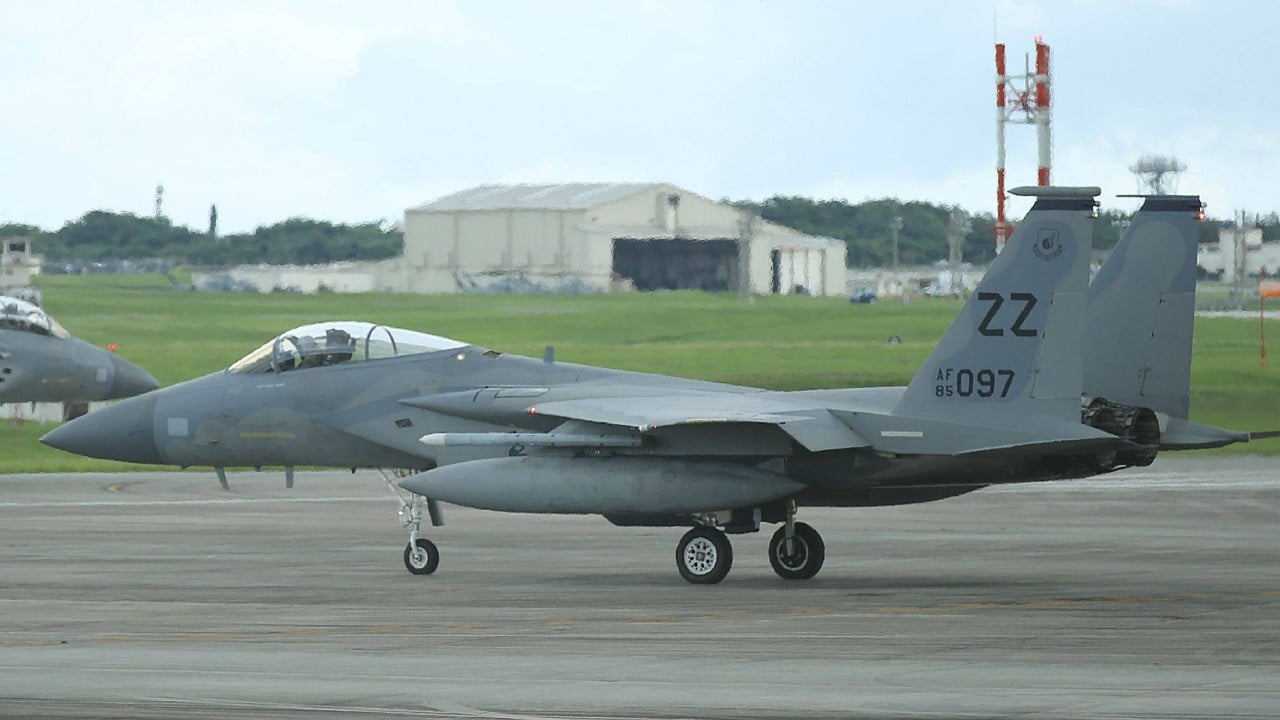
Salt air has a way of eating a machine from the inside out.
If you stand long enough on the wind-scoured concrete of a Pacific flight line, you can hear it. It is not the roar of a jet engine or the sharp snap of a communications relay. It is a slow, chronic hiss. It is the sound of moisture biting into steel, of paint bubbling away from bulkheads, of moisture settling deep into the wiring harnesses of aircraft that cost more than small towns. If you found value in this post, you should check out: this related article.
I know that smell. It is the sharp, metallic tang of hydraulic fluid mixed with the humid rot of old barracks where the air conditioning died three summers ago and never came back.
Out here, thousands of miles from the industrial heartland that forged them, America's military installations are quietly coming apart at the seams. For another perspective on this story, check out the latest coverage from Associated Press.
We talk endlessly about geopolitics in abstractions. We draw neat little lines on television maps, arguing over freedom of navigation, air defense identification zones, and the shifting balance of global power. We treat national security like a board game played by men in tailored suits in air-conditioned rooms in Washington. But national security is not an abstraction. It is physical. It weighs tons. It runs on diesel fuel, spare parts, and the stamina of nineteen-year-old mechanics who spend twelve-hour shifts coughing up jet exhaust under a tropical sun.
And right now, the physical foundation of that security is rotting.
Consider what happens when a roof leaks for four years.
To a budget analyst in a Capitol Hill office, a roof leak is a line item. It is a few thousand dollars of deferred maintenance. It is a spreadsheet entry that can be pushed to the next fiscal quarter to free up funds for a new missile defense sensor.
To a sergeant stationed at an installation scattered across the vast blue expanse of the Pacific, that same roof leak is a disaster.
Let us walk through a hypothetical barracks room at a forward operating base to understand the reality behind the reports. Imagine Specialist Miller. He is twenty-one years old, three thousand miles away from home, working twelve-hour shifts turning wrenches on a flight line. He walks back to his room after a grueling night shift, praying for six hours of uninterrupted sleep.
He opens the door. The humidity hits him like a physical blow. The mold creeps up the corners of the drywall in thick, black veins, a living testament to a drainage system that hasn't functioned correctly since the previous decade. Water is dripping steadily from the ceiling fixture into a plastic trash can. His mattress is damp. The air smells like wet earth and ancient dust.
Miller does not complain. He dumps his gear, wrings out a towel, and tries to sleep through the rhythmic ping of water hitting plastic.
Multiply Miller by tens of thousands.
Recent investigations by the Department of Defense Inspector General have pulled back the curtain on what is happening across these strategic island outposts. The findings are not subtle. They point to widespread infrastructure decay that goes far beyond peeling paint or cosmetic flaws. We are talking about critical facilities—aircraft hangars, fuel storage bladders, electrical grids, and maintenance shops—that are failing under the combined weight of extreme weather, corrosive maritime environments, and decades of neglect.
Why does this happen? The answer is as old as bureaucracy itself.
Budgets are finite. When choices have to be made between buying high-tech munitions that look good in a congressional hearing and fixing a sewage treatment plant on an isolated island that nobody back home can find on a map, the sewage plant loses every single time. It is a slow-motion trap. You rob Peter's plumbing to pay Paul's radar system, assuming the infrastructure will just hold on for one more year.
Then a typhoon hits.
It is not just wind. It is an assault. Salt spray gets driven horizontally, forcing its way past seals that were designed to keep out rain, not a category-four hurricane. Power lines snap like dry twigs. Generators, running on salt-corroded linkages, choke and die.
I remember the aftermath of one such storm on a remote atoll. The sky was an unnatural, bruised purple. The heat was immediate and absolute, turning every building into a brick oven within hours. The base lost commercial power instantly. That was expected. What wasn't expected was the backup generator failing because the salt air had pitted the fuel injectors past the point of recovery.
For seventy-two hours, the command post operated on flashlights and hope.
That is the hidden vulnerability of modern military power. You can have the most advanced stealth fighter ever built parked on the tarmac, but if the hangar roof collapses onto its tail assembly during a winter storm, or if the electrical grid powering its diagnostic computers fries because of corroded wiring, that multi-million-dollar asset is nothing more than an expensive paperweight.
The Pentagon watchdog reports paint a grim picture of deferred maintenance backlogs totaling billions of dollars across the Indo-Pacific region. These are not numbers on a page. Every single dollar of that backlog represents a cracked foundation, a rusted water pipe, a failing fire suppression system, or a radar site running on borrowed time.
We have built a global posture that depends on forward presence. The entire strategy of deterrence in the Pacific relies on the simple fact that America is already there, embedded in the region, ready to respond. But presence without preservation is an illusion.
If our bases become untenable from the inside out, we won't need an adversary to push us back. Gravity, rust, and neglect will do the job for them.
There is a strange disconnect in how we view military power. We love the hardware. We celebrate the rollouts of new ships, the maiden flights of new aircraft, the crisp uniforms and the solemn ceremonies. We consume defense news like sports fans tracking statistics.
We rarely talk about the drainpipes.
We rarely talk about the corrosion control officers who spend their entire careers fighting a losing battle against iron oxide. We don't write songs about the maintenance sergeants who spend their weekends rigging makeshift canvas tarps over critical communications gear because the procurement request for a new shelter has been sitting in an administrative queue for fourteen months.
This is the human cost of neglect. It wears people down. It sends a silent, corrosive message to the service members living in these conditions: You are not worth the cost of a new roof.
Retention plummets not just because of deployment tempos, but because of the grinding misery of daily life in failing facilities. When a young airman looks at the mold on their barracks wall and compares it to the pristine recruiting commercials they saw back home, a quiet cynicism takes root. That cynicism is dangerous. It erodes institutional trust faster than any cyberattack.
We are standing at a crossroads. The strategic competition in the Pacific is the defining challenge of our era. Every policy speech delivered in Washington emphasizes the urgency of the theater. Yet the concrete beneath our boots in that very theater is crumbling.
Fixing this does not glamorous. There will be no ribbon-cutting ceremonies for a repaired drainage ditch. There will be no congressional applause for replacing rusted copper wiring inside a subterranean utility tunnel.
It is unsexy, expensive, and utterly vital work.
It requires a fundamental shift in how we measure readiness. Readiness is not just the number of operational jets on the flight line today. Readiness is the health of the concrete they rest on. It is the reliability of the power grid that charges their batteries. It is the dignity of the room where the mechanic sleeps before his shift.
Until we understand that infrastructure is strategy, we are building our defense on sand.
The wind off the Pacific continues to blow. The salt air eats away at the steel, grain by microscopic grain, hour after hour, while the reports pile up on desks in the capital.
The question is not whether the infrastructure can hold out much longer.
The question is whether we will care enough to notice before the rust finally eats through to the other side.