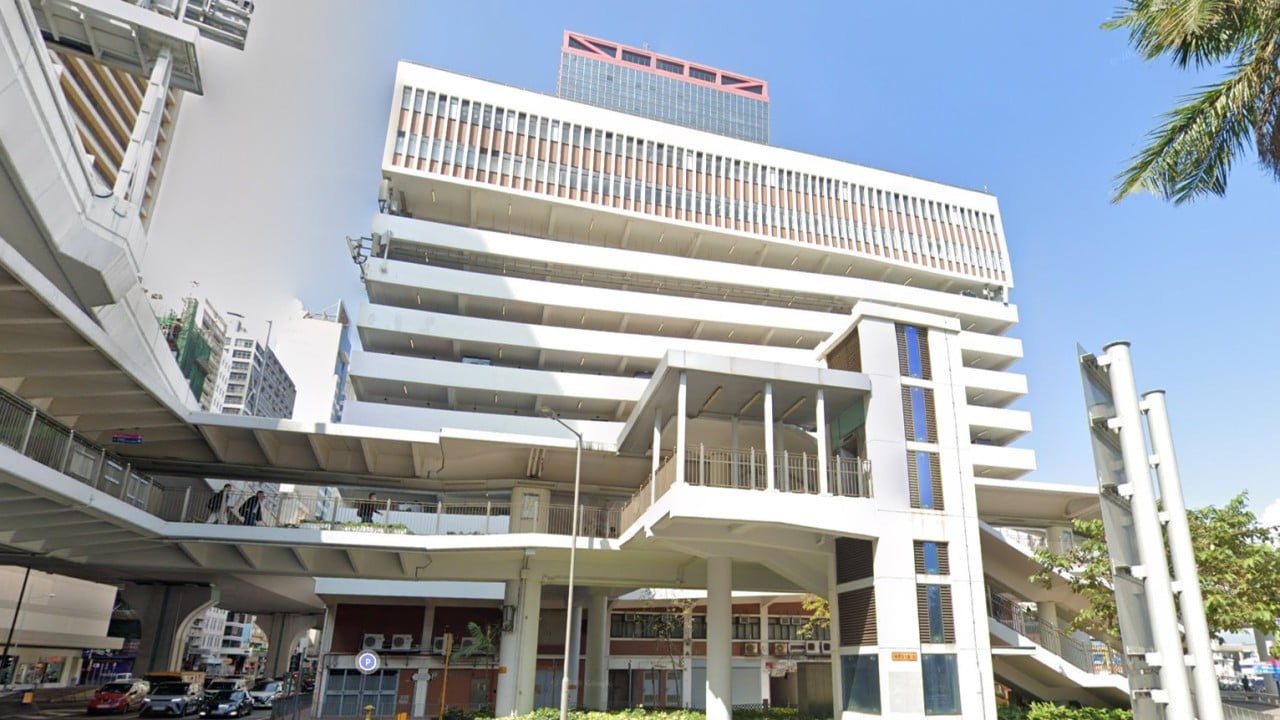
Municipal resource reallocation during international diplomatic summits creates immediate localized friction between security imperatives and public utility. The partial closure of the Rumsey Street car park for an Interpol meeting exposes the fragile mechanics of urban parking capacity management in dense commercial districts. When a major transit hub or parking infrastructure asset is diverted for high-security diplomatic use, the disruption extends far beyond a simple loss of parking stalls. It triggers a cascading sequence of traffic redistribution, increased search time for drivers, and localized commercial contraction.
Understanding this operational friction requires dissecting the event not as a localized inconvenience, but as a temporary structural shock to the district's mobility network. Security mandates for international delegations supersede standard public access, forcing authorities to prioritize perimeter defense, secure vehicle staging, and controlled entry points. Public parking facilities within core commercial zones function as high-turnover nodes. Removing two floors of capacity from a heavily utilized facility like Rumsey Street directly alters the parking supply curve, forcing displacement into adjacent zones where capacity is already near saturation. You might also find this related story interesting: Nine Days Beneath The Earth And The Mantra That Kept A Man Alive.
The Operational Mechanics of Facility Reallocation
Diplomatic events of the scale associated with Interpol meetings demand rigid physical security parameters. These requirements typically dictate perimeter hardening, dedicated command vehicle staging, and restricted zones for credentialed personnel. Multi-story car parks present unique architectural advantages for such deployments due to their controlled access points, elevated surveillance positions, and internal vehicular shelter.
When facility managers restrict access to specific tiers, the internal logistics of the building change completely. Normal hourly and monthly parkers are compressed into a reduced footprint, or expelled entirely into the surrounding street network. This reallocation introduces two primary operational bottlenecks. As extensively documented in detailed coverage by NBC News, the results are significant.
- Vertical Capacity Compression: Concentrating the remaining parking demand onto fewer floors accelerates peak-hour congestion within the facility ramps and entry lanes.
- Perimeter Staging Friction: Dedicating lower tiers to secure transport disrupts the natural ingress and egress flow, creating queuing spillover onto public thoroughfares.
The duration of the restriction—typically spanning several weeks for major summits—exceeds the threshold where regular users can absorb the inconvenience through temporary schedule shifts. Commuters and local business operators relying on predictable daily parking must permanently alter their transit routes or absorb higher search costs. This friction degrades the efficiency of the local transport network long before the summit officially commences.
Quantifying the Ripple Effect on Local Traffic Density
Urban traffic velocity is highly sensitive to parking search behavior. When drivers arrive at Rumsey Street car park and encounter reduced capacity, the probability of rejection increases. Rejected drivers must either queue for remaining stalls or cruise adjacent streets looking for alternatives such as the Sheung Wan Civic Centre or on-street meter bays.
This cruising behavior introduces a measurable penalty to overall traffic flow. Studies in urban mobility indicate that cruising for parking accounts for a substantial percentage of congestion in core business districts. Each vehicle forced to abandon its primary parking destination adds minutes of continuous operation to the local road network, compounding queue lengths at critical intersections along Des Voeux Road Central and Queen's Road Central.
[Arrival at Rumsey Street] ---> [Capacity Rejection] ---> [On-Street Cruising] ---> [Intersection Congestion Spillover]
The cascading effect operates on a direct cause-and-effect chain. The primary variables governing this disruption include the baseline occupancy rate of the district, the availability of real-time parking telemetry, and the responsiveness of alternative facilities. If surrounding car parks are operating at ninety percent capacity under normal conditions, absorbing displaced vehicles from Rumsey Street is mathematically impossible without inducing severe spillover queues.
Economic Externalities for Surrounding Commerce
Commercial density in the surrounding district relies on frictionless access for patrons, suppliers, and service providers. Parking constraints act as an invisible tax on retail and dining establishments. When regular visitors encounter systemic parking scarcity, their frequency of patronage declines.
The economic cost manifests across three distinct vectors:
- Retail Patronage Erosion: Spontaneous shoppers avoid districts with acute parking deficits, favoring suburban malls or transit-connected retail hubs where friction is minimized.
- Service Delivery Delays: Couriers and maintenance contractors face extended search times and illegal parking risks, increasing operational overhead for local businesses.
- Employee Productivity Loss: Workers who rely on personal vehicles spend compressed morning hours resolving parking logistics, lowering early-shift productivity.
While the Interpol meeting brings high-value temporary delegations into the city, the localized economic displacement borne by small businesses adjacent to the venue is rarely offset by the delegate spend, which remains largely concentrated within secure, internal summit venues and partnered hospitality providers.
Mitigating Municipal Mobility Shocks
Managing facility closures of this magnitude requires a transition from reactive traffic management to proactive capacity orchestration. Municipal authorities and facility operators must deploy specific structural interventions to compress the recovery timeline and minimize collateral disruption.
First, real-time dynamic messaging systems must be deployed at primary entry vectors to intercept drivers before they reach the facility gates. Diverting vehicles miles away from the constrained zone prevents localized queuing loops. Second, temporary fiscal adjustments at underutilized municipal facilities within a reasonable walking radius can artificially redistribute demand, using price elasticity to blunt the shock of lost capacity. Third, clear temporal communication regarding the exact scope and duration of the closure allows commercial operators to adjust delivery schedules outside of peak operational windows.
Deploying these countermeasures shifts the system from chaotic adaptation to managed equilibrium. The six-week window of restricted access is not merely an administrative hurdle for security planners, but a stress test of the urban transport network's resilience.
Strategic Resource Deployment for Future Summits
Future urban security planning must integrate mobility impact modeling directly into the permitting phase for international delegations. Treating parking infrastructure as an elastic sponge that can absorb arbitrary military or diplomatic staging without consequence guarantees systemic failure. Planners must calculate the precise vehicle-hour loss inflicted on the host district and mandate synchronized public transit enhancements to offset the deficit.
Establish a mandatory operational threshold where any closure exceeding fourteen days triggers a pre-approved alternative mobility plan, including dedicated shuttle connectivity from peripheral park-and-ride hubs and automated digital signposting across all arterial corridors. Aligning security protocols with urban continuity principles ensures that high-level international engagement does not compromise the operational integrity of the host city.