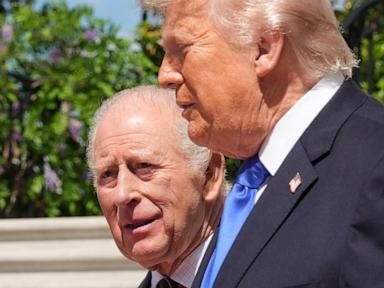
King Charles III has transitioned from a prince known for his outspoken environmentalism to a monarch capable of executing a high-stakes diplomatic maneuver with surgical precision. During his recent state visit to the United States, the King navigated the volatile terrain of American politics by balancing ancient ceremonial weight with modern diplomatic necessity. While critics expected a collision of personalities, the reality was a carefully scripted exercise in soft power that stabilized a relationship often frayed by political polarization.
The Architecture of the State Visit
State visits are rarely about the specific words spoken at a podium. They are about the optics of legitimacy. For King Charles, the primary objective was to demonstrate that the British monarchy remains the ultimate diplomatic asset for the United Kingdom, regardless of who occupies the White House. By engaging with the U.S. President on neutral ground—focusing on historical ties and shared global responsibilities—the King effectively bypassed the partisan bickering that usually defines transatlantic trade and security discussions.
The mechanics of this success relied on a "quiet diplomacy" framework. Unlike political leaders who must constantly sell a platform, the King operates on a timeline of decades. This longevity allows him to offer a sense of continuity that elected officials cannot match. During the visit, this manifested in a series of private meetings where the King leveraged his long-standing relationships with global business leaders to discuss private-sector climate financing. This was not a lecture on policy; it was an invitation to participate in a legacy.
Rebranding the Monarchy for a Skeptical Audience
The American public has a complicated relationship with royalty. It is a mix of fascination and a deeply ingrained revolutionary skepticism. To win over this audience, the King’s team pivoted away from the perceived aloofness of the past. They leaned into a persona of the "Working Monarch."
The Strategy of Strategic Relatability
Throughout the visit, the King focused on issues that resonate across the political aisle in the U.S., such as veteran affairs and heritage preservation. By visiting community projects in cities often overlooked by federal visits, he signaled that the Crown’s interest in the U.S. extends beyond the Beltway. This was a calculated move to broaden the appeal of the UK-US "Special Relationship" to a younger, more cynical generation of Americans who view traditional alliances through a transactional lens.
Managing the Trump Factor
Navigating a meeting with a figure as polarizing as Donald Trump requires a specific kind of royal discipline. The King’s approach was rooted in the principle of being "above the fray." By adhering strictly to protocol while maintaining a warm, personal rapport, he neutralized the potential for a "viral moment" that could have been misinterpreted as a political endorsement or a snub. This neutrality is the Crown's greatest strength. It allows the King to act as a bridge where politicians see a chasm.
The Economic Undercurrents of Royal Diplomacy
Behind the banquets and the motorcades lies the cold reality of trade. The UK remains desperate for a comprehensive trade deal with the United States, an goal that has remained elusive since the exit from the European Union. While the King cannot negotiate tariffs, he can create the atmosphere where such negotiations become more palatable.
Soft power acts as a lubricant for hard power. When the King hosts a dinner for American CEOs, he is effectively acting as the UK’s most senior brand ambassador. The prestige of a royal invitation is a currency that still holds significant value in the boardrooms of Manhattan and the tech hubs of Silicon Valley. Analysts noted a marked increase in positive sentiment regarding UK-US business collaborations immediately following the visit, suggesting that the "royal glow" has a tangible, albeit indirect, economic impact.
The Environmental Tightrope
One of the most significant risks of the visit was the King’s lifelong commitment to environmental activism. In a US political climate where climate change is a partisan battleground, the King had to frame his message carefully. He shifted the narrative from "environmentalism" to "sustainability and economic resilience."
This change in vocabulary was crucial. By linking green initiatives to job creation and national security, he made his message accessible to a broader demographic. He didn't demand legislative change; he showcased British innovation in green technology, essentially pitching the UK as a partner in the next industrial revolution. This allowed him to maintain his core values without appearing to interfere in domestic American policy.
The Burden of History and the Path Forward
The King’s visit also addressed the darker chapters of colonial history, a topic that is increasingly unavoidable in modern diplomacy. By acknowledging the complexities of the past without descending into performance, he managed to satisfy the demand for accountability while maintaining the dignity of the institution. This was achieved through small, symbolic gestures—private meetings with Indigenous leaders and visits to sites significant to the Civil Rights movement.
These actions were not merely PR exercises. They represented an evolution in how the British state views its role on the world stage. The King is signaling that the monarchy is not a static relic, but a dynamic entity capable of self-reflection. This adaptability is what ensures the institution's survival and, by extension, its continued utility to the British government.
The Reality of the Special Relationship
Despite the pageantry, the fundamental tensions between the two nations remain. Disagreements over agricultural standards, digital taxes, and defense spending do not vanish because of a successful state dinner. However, the King’s visit provided a necessary reset. It reminded the American political establishment that the UK is more than just its current government; it is a stable, long-term partner with a unique cultural and historical weight.
The success of the visit was not measured in signed treaties, but in the absence of friction. In a world of volatile leadership and shifting alliances, the ability of a 1,000-year-old institution to provide a steadying hand is a remarkable feat of political survival. The King didn't just win praise; he proved that the monarchy is a functional tool of modern statecraft.
The true test of this visit will be seen in the months ahead as trade envoys and diplomats attempt to capitalize on the goodwill generated. Soft power is a fleeting resource. It must be spent quickly to achieve concrete results. The King has done his part by clearing the path; now it is up to the politicians to walk it.
Future state visits will likely follow this blueprint: high-level business engagement, a focus on shared societal challenges, and a deliberate avoidance of the daily political cycle. The King has found his stride as a diplomat, proving that the most effective way to handle a political firebrand is with the cool, unflappable weight of tradition.