A Morning at the Riverbank
The water looks clear enough from ten feet away. It moves with a soft, steady hum over polished gray stones, reflecting the damp green willow leaves hanging along the bank. If you stand still for a moment, listening to the birds, you can almost believe everything is fine.
Then you step closer.
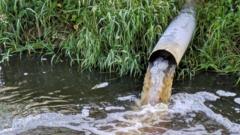
You smell it before you see it: a sharp, sour stench that sits heavy in the back of your throat. A gray, greasy scum clings to the river grass near the edge, bubbling faintly in the slow currents.
Consider Sarah, a mother of two who lives five minutes from a winding tributary in southern England. For years, her family spent hot July afternoons wading through these shallows, building pebble dams, letting the dog splash endlessly after floating sticks. It was a free, quiet slice of paradise in an increasingly crowded world. Today, her kids stay on the paved path. The dog is kept strictly on a short leash.
Her local stretch of river didn't change because of a sudden natural disaster. It changed because of what flows into it when nobody is looking.
The Gray Zone of the Water Industry
We are often told that sewage overflows are a rare, necessary safety valve. Water companies explain that when heavy rains threaten to back up human waste into homes and streets, storm overflows open. It is a violent emergency release valve designed for extreme weather.
That is the official story. The reality beneath the water's surface is vastly different.
New research into water management across England reveals that thousands of these spill events are not happening during unprecedented torrential downpours. They are happening on dry days. They are happening during mild spring showers. They are happening routinely, week after week, converting local rivers into open conduits for untreated effluent.
Legally, water companies are allowed to discharge untreated sewage only under exceptional circumstances—typically defined as intense rainfall that overburdens the infrastructure. When an overflow valve opens during normal weather, it stops being a safety mechanism. It becomes an illegal discharge.
The numbers are staggering, but raw statistics often numb the mind. Picture a steady stream of tanker trucks dumping raw waste into your local park every single hour of the day. That is the physical scale of what is happening across English waterways.
Water treatment facilities are required by law to treat a specific volume of sewage before resorting to an overflow spill. Yet, data analysis of monitoring sensors shows a troubling pattern: hundreds of treatment plants routinely spill waste long before reaching their mandated capacity limits.
The system isn't just leaking. It is operating outside the law.
What Lies Beneath
To understand how a developed nation’s infrastructure could fall into such disrepair, you have to look at the machinery hidden beneath the soil.
When human waste leaves a home, it travels through a vast, subterranean web of pipes toward a treatment plant. In a ideal setup, this waste undergoes several stages of filtration, bacterial digestion, and chemical purification before clean water is released back into the wild.
[Domestic Waste] ──> [Sewer Network] ──> [Treatment Plant] ──> [Clean River Water]
                                               │
                                       (During Overload)
                                               │
                                               ▼
                                   [Untreated Storm Overflow]
When heavy rain floods the sewer pipes, the volume explodes. Rather than letting that toxic mix back up through toilet bowls and drain covers into people's living rooms, the system discharges the excess straight into the nearest body of water.
Metaphorically speaking, it is like using a bucket to bail out a sinking boat, except the bucket is being emptied directly into your neighbor's swimming pool.
The core issue isn't that the emergency valve exists. The core issue is that the valve has been tied open to save costs on maintenance, expansion, and basic processing capacity.
The Invisible Price Tag
The true cost of this practice isn't reflected on a monthly utility bill. It is paid elsewhere.
- Public Health Risks: Raw sewage carries a heavy load of harmful pathogens, including E. coli, intestinal enterococci, and norovirus. Swimmers, kayakers, and children playing near the water face serious risks of gastrointestinal illness, skin infections, and respiratory issues.
- Ecological Degradation: When raw sewage enters a river, bacteria consume vast amounts of dissolved oxygen to break down the organic material. This sudden drop in oxygen smothers fish, kills delicate insect larvae, and collapses entire river ecosystems.
- The Loss of Shared Spaces: Communities lose their connection to the natural landscape. A river that once served as a gathering point, a place for recreation and mental restoration, becomes a biological hazard zone off-limits to the public.
Think of a local angler who has fished the same stretch of river for forty years. He remembers when the water was thick with trout and chub, when the riverbed was clean gravel instead of dark, choked silt. Today, his rod sits in the garage, gathering dust. The fish are gone, replaced by thick mats of sewage fungus clinging to the rocks.
His story is repeated in hundreds of villages and towns. The quiet destruction of community life rarely makes front-page headlines, yet its loss is felt daily.
A Failure of Oversight
How did illegal spillages become standard practice? The answer lies in decades of underinvestment and a regulatory framework that struggled to keep pace.
When the water industry was privatized, high returns were promised alongside world-class infrastructure upgrades. Over the following decades, billions of pounds were paid out to investors and executives. Meanwhile, the actual pipes, pumps, and treatment beds grew old, clogged, and outdated.
Populations grew. Concrete replaced fields, meaning rainwater could no longer soak into the ground and instead rushed straight into sewers. Yet the capacity of the treatment plants remained largely frozen in time.
Regulators relied heavily on water companies self-reporting their own spills. For years, sensor coverage was incomplete, creating massive blind spots where illegal dumping could occur without detection or penalty. Without eyes on the ground, the emergency valves kept opening, day after dry day.
Only recently, as public outrage mounted and independent researchers began analyzing raw sensor data, did the true scale of these potential legal breaches come to light. The data painted an unmistakable picture: an environmental disaster hiding behind the veil of routine operations.
Standing on the Edge
Fixing a subterranean system built over generations is neither fast nor cheap. It requires laying thousands of miles of new pipes, constructing massive underground storage tanks to hold storm water, and upgrading treatment facilities with modern filtration technology.
It requires enforcing the law with real financial consequences that outweigh the cost of upgrading the equipment.
Until those changes take root, the rivers bear the weight of human neglect.
The sun sets over the riverbank near Sarah's house, painting the sky in deep shades of amber and rose. The water catches the light, glowing like liquid bronze. From a distance, it looks pristine, timeless, and indestructible.
Close up, a single plastic wet wipe snags on a submerged branch, swaying silently in the polluted current.