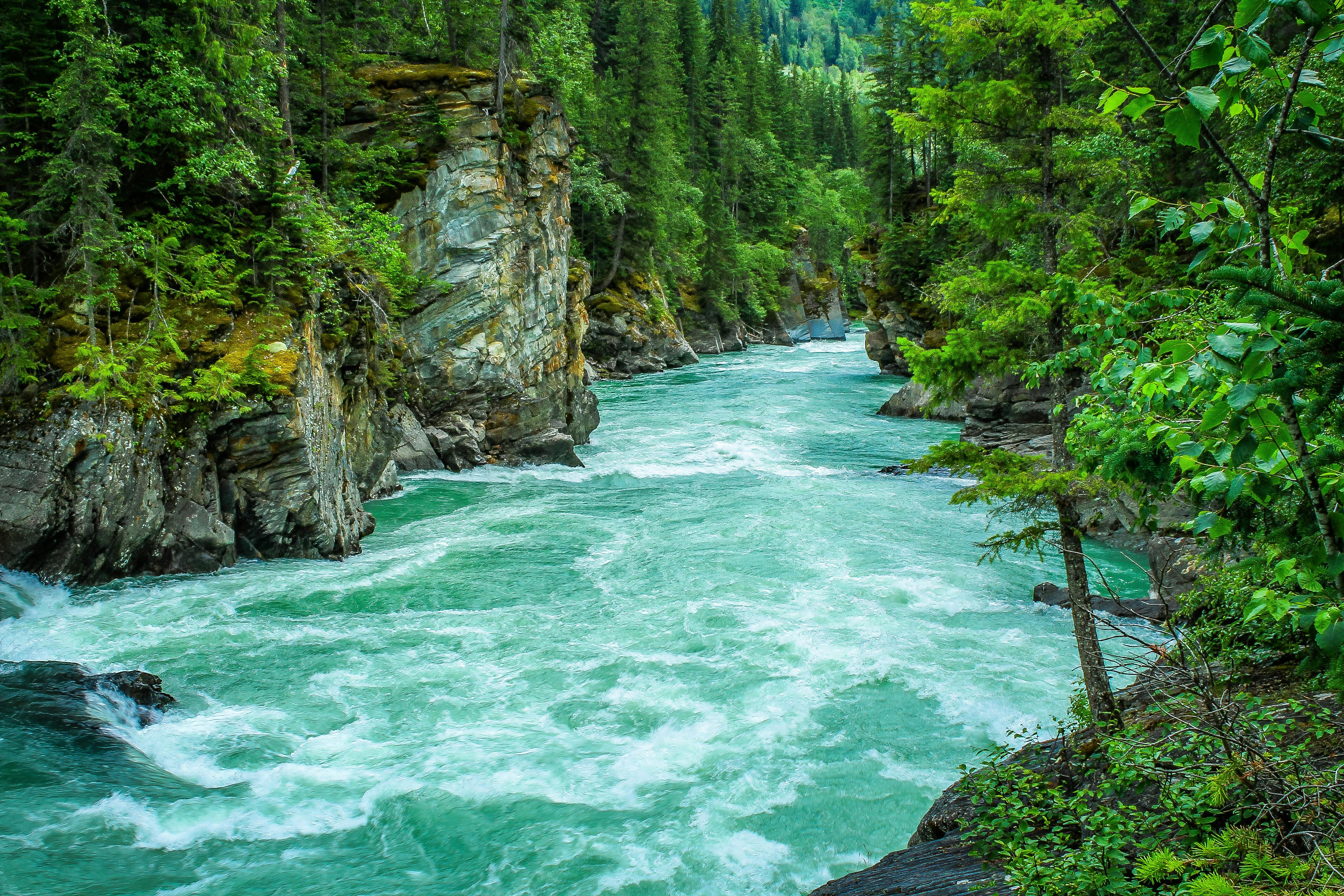
The water did not knock. It arrived with the heavy, oiled silence of a thief in the night, tasting of pulverized mountain and old mud.
By the time the sun tried to claw its way over the jagged shoulders of the Himalayas, the village of Melamchi was no longer a place on a map. It was an interrogation. Where the marketplace had stood—where vendors once weighed turmeric and dried chilis under striped canvas awnings—there was now only a gray plain of silt five feet deep. It looked less like a disaster zone and more like a construction site for an eternity that had already been canceled.
Stand here, on the banks of what used to be someone’s front yard, and the statistics lose their armor. You hear about monsoon surges, glacial lake outburst floods, erratic rainfall anomalies driven by a warming planet, and the numbers slide off the mind like rain on a tin roof. But numbers do not have weight. Silt has weight. A single photograph of a child’s schoolbook, stiff and bloated with brown water, half-buried beneath a boulder the size of a tractor engine—that has weight.
Consider what happens when a river decides to rewrite its biography in a single night.
In Nepal, the monsoon is an ancient rhythm, a seasonal lung that breathes life into terraced rice paddies and feeds the great river basins flowing south to the Ganges. For generations, communities carved their lives into the margins of these volatile waterways. They knew the floods would come. They packed belongings into higher lofts, cleared the drains, watched the cloud cover thicken over the high peaks with a mixture of reverence and anxiety.
Then the climate shifted its weight.
Scientists call it intensification. We call it the moment the rain stopped being a season and became an occupation.
In villages scattered across the Sindhupalchok district and the valleys feeding the Melamchi and Indrawati rivers, survivors woke to a world stripped of nouns. Their houses were gone, reduced to jagged ribs of rebar and concrete chunks. Their livestock had washed away, turning up miles downstream like driftlogs. Even the soil—the rich, black loam that had fed families for centuries—was smothered under meters of sterile, grey sand brought down from the upper slopes by catastrophic debris flows.
Walk through the temporary displacement camps now, months after the initial crest, and you will find a quiet that feels heavier than the floodwaters ever were.
Take Ramesh, a fifty-two-year-old carpenter whose hands look like they were carved from the same sal wood he spent forty years shaping into doorframes and roof beams. He sits on a plastic camp stool under a blue tarpaulin stamped with the logo of an international relief agency. He is staring at a small square of dirt where he has neatly arranged three salvaged objects: a bent aluminum spoon, the iron head of a framing hammer, and a brass key with no lock left to open.
"The river didn't just take the house," Ramesh says, his voice flat, drained of cadence. "It took the things I hadn't even bought yet. My father's grandfather built that workshop. Now, if I want to tell my grandson what his great-great-grandfather's door looked like, I have to draw it in the dirt with a stick. And the wind blows the drawing away before I finish the hinges."
This is the invisible architecture of disaster. We see the bridges snapped like dry twigs. We see the highways sheared off into empty air, dangling ribbons of asphalt over churning brown foam. Governments mobilize engineers, dispatch emergency rations of lentils and rice, and set up medical tents. These interventions are vital. They keep bodies alive.
Yet they leave the soul of the tragedy untouched.
What do you give a man whose entire lineage has been erased from the geography of his homeland? How do you compensate a woman who lost not just her kitchen, but the exact vantage point from which she watched the sun set behind the Langtang range for thirty years?
The psychological toll of climate-induced displacement in the Global South is a slow-burning fuse. It operates in the dark spaces between emergency relief and long-term recovery. When the tents come down and the international media crews pack up their satellite trucks, the survivors are left in a peculiar kind of limbo. They are refugees in their own country, displaced not by geopolitical borders, but by the shifting altitude of the snowline and the unprecedented volume of water cascading down vertical mountain faces that are losing their grip.
Geologists explain that the steep topography of the Himalayas makes them uniquely vulnerable. Deforestation, unmanaged road construction on unstable slopes, and shifting monsoon patterns create a lethal multiplier effect. When heavy rains hit, the hills don't just get wet; they liquefy. Entire mountainsides slide into narrow gorges, creating natural dams of mud and rock that eventually burst, sending walls of slurry down upon unsuspecting settlements below.
It is a mechanical breakdown on a planetary scale.
Yet, looking at the survivors, you see something else entirely: a stubborn, almost terrifying resilience that defies easy categorization.
A few hundred yards from the riverbed, where the mud begins to dry into cracked crusts under the midday sun, women are already at work. They have salvaged corrugated iron sheets from the wreckage, hammering them flat with stones to patch together makeshift shelters. They are sharing firewood, pooling dwindling cash reserves, and organizing shifts to look after the youngest children while the able-bodied men dig trenches to divert the secondary trickles of monsoon runoff away from their makeshift encampments.
There is no romance in this survival. It is grinding, dusty, exhausting labor. It is the work of people who understand that waiting for a savior—whether government or god—is a luxury reserved for the comfortable.
Sunita, a twenty-four-year-old mother with a toddler tied to her back with a faded cotton cloth, balances a yellow plastic jerrycan of drinking water on her hip. She lived through the night the river surged over the embankment, holding her son above her head while they clung to the branches of a guava tree for four hours until the roar subsided.
"People ask me if we will rebuild here," she says, pausing to wipe a streak of dried mud from her forehead. Her eyes are startlingly clear, fixed on the chaotic jumble of boulders where her home used to be. "Where else would we go? Kathmandu is too expensive, and the landlords look at us like we carry the mud on our shoes into their hallways. This is our land, even if the river has taken its turn sitting on it. We will wait for the dry season to dig out the foundations. What choice do we have? The mountains are our home, and you do not divorce your mother just because she has a fever."
Her words hang in the hot, humid air, stripped of self-pity or melodrama. They are a statement of raw, irreducible fact.
The world watches these disasters through the flattened glass of smartphone screens and television monitors. We feel a momentary twitch of empathy, click a donation link or swipe past to the next headline, and return to our climate-controlled rooms, our paved streets, our predictable plumbing. We treat these events as anomalies, aberrations in an otherwise orderly modern existence.
They are not anomalies. They are previews.
The frantic search for scraps of corrugated iron in Melamchi is a rehearsal for a century in which millions of people will find their ancestral geographies rewritten overnight by water, fire, and heat. The map we grew up memorizing is dissolving under our feet. The rivers are changing their minds, and they are not asking for our permission.
Evening falls quickly in the valley. The jagged peaks of the high Himalayas turn from gold to bruised purple, casting long, cold shadows over the grey expanses of silt. In the camps, small fires flicker to life, casting orange light against the blue plastic of the tarps. Someone is playing a soft, melancholic tune on a bamboo flute, the notes rising thin and clear above the steady, low murmur of the river rushing past its new, wider, unforgiving banks.
The water keeps moving south, carrying the history of the mountains toward the sea. And in the dark, the survivors tend their small fires, waiting for tomorrow, holding fast to the fragments of a world that is gone, building the next one out of mud and memory.