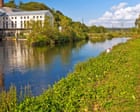
The water looks slow from the bank. It tricks the eye. In the summer, the River Ruhr in western Germany winds through the landscape like a thick, green ribbon, appearing almost stagnant under the heavy afternoon heat. It invites you in. It looks like a playground.
But rivers are master illusionists. Beneath that glassy, shimmering surface lies a chaotic architecture of undercurrents, sudden drop-offs, and shifting siltbeds. Most people who step into the water don't think about hydrostatic pressure or the way a mild current can anchor a grown man's boot to the riverbed until it is too late. They just feel the heat on their necks and see the cool, inviting water.
On a seemingly unremarkable afternoon, four people stepped into that trap.
They weren't daredevils. They were ordinary people looking for relief from the heat, completely unaware that the river had already marked them. Within minutes, the casual wading turned into desperate splashing. Then came the gasping. Then, the terrifying silence that actually accompanies drowning. Forget the movies. Drowning isn't a loud, dramatic affair with splashing arms and shouted cries for help. It is suffocatingly quiet. The body channels every ounce of its remaining energy into keeping the mouth above water, leaving nothing left for vocal cords.
They were slipping under. Four lives, turning into statistics in a country that sees hundreds of accidental drownings every year.
Then came the bicycle.
The Sudden Friction of Reality
Stefan was having a good ride. The air was crisp away from the asphalt, and the rhythmic clicking of his bike’s chainset was the only sound accompanying his breathing. For a cyclist, a long river pathway is a sanctuary. You lock into a cadence. Your mind drifts. You monitor your heart rate, the resistance of the wind, the slight burn in your calves.
Then the rhythm broke.
Stefan didn’t hear screaming, because as we know, the dying don't scream. He saw something wrong with the geometry of the riverbank. A pile of discarded shoes. A bicycle dropped carelessly on its side. And out in the channel, bobbing irregularly, were heads.
Human instinct is a strange, unpredictable machine. When faced with a lethal crisis, most people freeze. The brain enters a loop of disbelief, trying to reconcile the peaceful afternoon with the horror unfolding fifty yards away. Psychologists call it the bystander effect, but it isn’t always born of apathy. Often, it is pure paralysis. The brain demands certainty before it risks the body.
Stefan didn’t wait for certainty.
He dropped his bike. The metal clattered against the gravel—a sharp, ugly sound that shattered the afternoon peace. He didn't strip off his gear. He didn't calculate the depth, the temperature, or the strength of the Ruhr's hidden pull. He just ran into the water.
Imagine the sudden shock of that transition. One moment you are floating in the endorphin high of a weekend bike ride; the next, your lungs are constricting from the cold pressure of a river, and you are swimming toward four panicked, flailing mirrors of mortality.
The Physics of Panic
When a person is drowning, they lose their humanity for a brief, terrifying window. They become pure, unadulterated survival instinct. If you swim directly to them, they will climb you like a ladder. They will push you under to get their own mouth an inch higher into the air. It is not malice; it is biology.
Stefan reached the first swimmer.
To rescue one person from a live river is a exhausting feat that taxes the cardiovascular system to its absolute limit. To rescue four is an exercise in statistical impossibility. You are fighting gravity, fluid dynamics, and the sheer weight of fear.
He grabbed the first individual, using the classic cross-chest carry, fighting the river's desire to sweep them both downstream. Every kick felt like moving through wet concrete. His cycling shorts, designed for aerodynamics on a saddle, were now heavy, waterlogged anchors wrapping around his thighs.
He dragged the first victim to the shallows. No time to check breathing. No time to comfort.
"Stay here," he gasped.
He turned back around. The river looked wider now. The remaining three heads were further out, drifting toward a deeper bend where the current sharpens.
The second rescue was harder. The water had found its way into Stefan's shoes, making his feet feel like blocks of lead. His lungs burned—not the clean, satisfying burn of a steep hill climb, but the ragged, tearing burn of oxygen deprivation. He reached the second person, a body already growing heavy with the compliance of exhaustion, and hauled them back.
Two saved. Two remaining.
This is where the human mind usually negotiates an exit. The voice inside your head—the one dedicated entirely to keeping you alive—starts whispering logic. You’ve done enough. You saved two. If you go back out there, you will die too. Someone else will come.
Stefan drowned out the voice.
The Anatomy of an Unsung Hour
By the third trip, the river was winning the physical battle. Stefan’s muscles were entering anaerobic failure. Lactic acid was pooling in his arms. When you swim against a river current while towing dead weight, you aren't moving forward; you are merely arresting your descent backward. It is a millimeter-by-millimeter war.
He reached the third person. It was a blur of limbs, murky green water, and the taste of silt and iron. He dragged them in by sheer force of will, his fingers cramping into claws around their clothing.
Then, the fourth. The final soul.
The river had carried this one the furthest. When Stefan reached them, the person was barely moving. The frantic splashing had stopped. The river was taking its prize. Stefan reached out, submerged his own head to get the leverage he needed, and gripped the jacket.
When his feet finally touched the muddy gravel of the bank for the fourth time, his knees buckled. He collapsed into the reeds alongside the four people who, minutes earlier, had been seconds away from vanishing from the earth.
Five people lay on the grass, gasping for the same air, all covered in the same river mud.
The authorities arrived shortly after. Sirens wailed in the distance, cutting through the heavy summer air. The paramedics did their work, checking vitals, wrapping shivering shoulders in reflective foil blankets, and asking questions. The police took notes, their pens clicking as they recorded names, times, and coordinates.
Stefan stood to the side. His bike was still lying in the dirt where he had dropped it, the front wheel spinning slowly, lazily, until it finally came to a stop.
The Space Between the Facts
If you read the official reports, the story is reduced to a clean, clinical summary. A cyclist noticed four swimmers in distress in the River Ruhr. The cyclist entered the water and successfully brought all four individuals to safety. Local authorities praised the cyclist's quick thinking and bravery.
It is neat. It fits into a column on a news site. It satisfies the search engines.
But that paragraph completely erases the terrifying reality of those twenty minutes. It erases the smell of the river water. It erases the cold grip of terror that clutches a throat when a foot cannot find the bottom. It erases the conscious choice a human being made to risk everything for people whose names he didn't even know.
We live in an age where we are constantly bombarded by data, headlines, and metrics. We see numbers of casualties, percentages of risk, and geographical locations. We look at the world through a screen, watching events unfold from a safe, sterile distance. It is easy to become numb. It is easy to think that heroes belong to history books or cinema screens, wearing capes or uniforms.
But real heroism is messy. It wears soggy cycling shoes and smells like stagnant river mud. It is exhausted, shivering, and wondering if its legs will hold it up on the walk home.
Stefan didn't ask for a medal. He didn't wait around for a press conference. Once the paramedics had the situation under control and the adrenaline began its slow, painful retreat from his bloodstream, he picked up his bicycle. He brushed the dirt off the frame, checked the chain, and climbed back onto the saddle.
He rode home along the same river path. The water was still there, running quiet and green beneath the afternoon sun, looking completely harmless to the next stranger who might pass by.