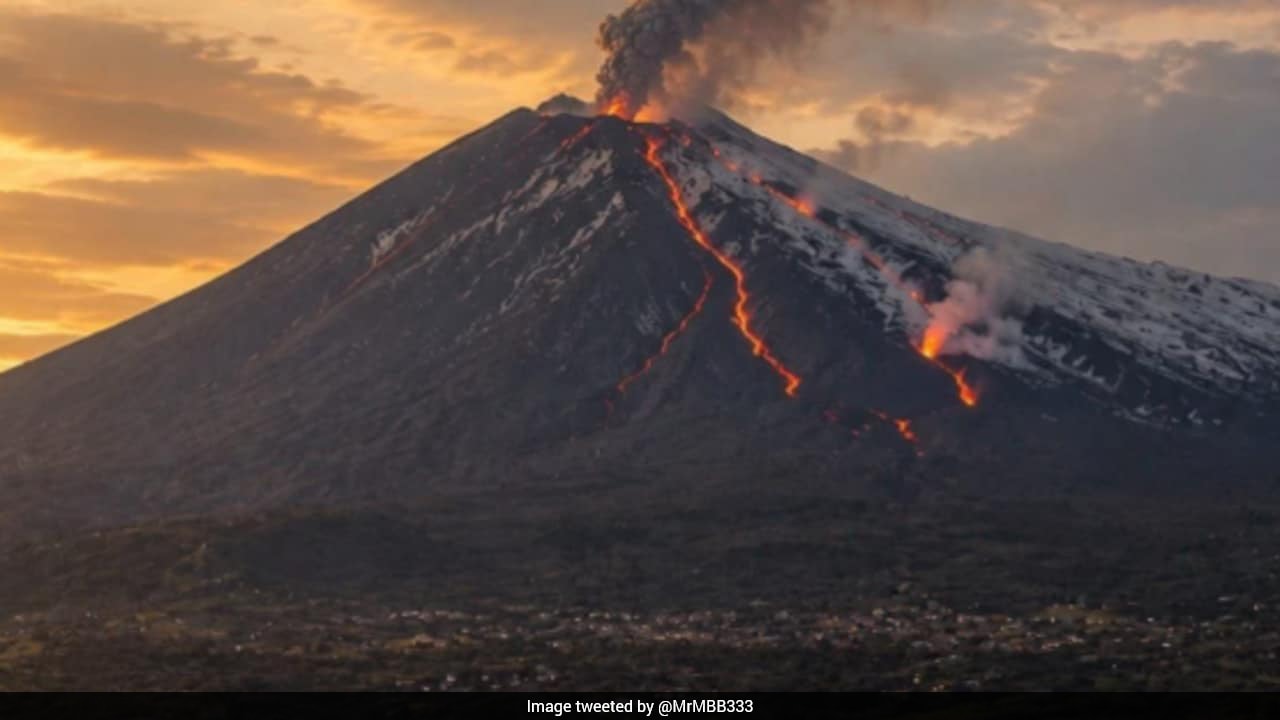
High-altitude environments impose unforgiving physical constraints on human activity, where environmental volatility routinely outpaces standard recreational planning. The fatal lightning strike involving an American tourist on Mount Etna is not merely a statistical anomaly; it is a structural failure of risk assessment, meteorological hazard recognition, and emergency response pacing at high elevations. When individuals enter active volcanic zones without accounting for rapid thermodynamic shifts, the probability of catastrophic exposure increases exponentially. This analysis deconstructs the structural variables driving high-altitude meteorological hazards, isolates the specific failure modes of tourist risk management on Mount Etna, and establishes the operational parameters required to survive extreme terrain volatility.
The Thermodynamic Mechanics of Volcanic Weather Systems
Mount Etna functions as a localized meteorological engine. Its sheer elevation, reaching over 3,300 meters, forces moist air masses upward, inducing rapid adiabatic cooling and condensation. This thermodynamic profile generates localized convective storms with little advanced warning. For an alternative perspective, read: this related article.
Standard lowland weather forecasts fail to capture microclimate volatility. While regional forecasts predict general atmospheric stability across Sicily, summit conditions operate under entirely different physical rules. Solar radiation heats the volcanic slopes during morning hours, creating localized thermal updrafts that collide with cooler maritime air masses. This collision triggers sudden cumulus development and high-intensity electrical activity.
Thermal Updrafts (Solar Radiation) + Maritime Air Mass Collision
       ↓
Rapid Adiabatic Cooling & Condensation
       ↓
Localized Convective Storms & Lightning Generation
The physical characteristics of Etna exacerbate this risk profile. The terrain is dominated by basaltic lava rock and iron-rich volcanic deposits, which possess high electrical conductivity compared to standard sedimentary soils. When an electrical discharge occurs, the grounding characteristics of the summit amplify ground-current dispersion. Hikers positioned on exposed ridges act as elevated conductive pathways, effectively reducing the dielectric breakdown threshold of the air column immediately above them. Similar reporting on the subject has been published by Travel + Leisure.
The Cognitive Bias of High-Altitude Recreation
Recreational hikers consistently misjudge the velocity of environmental degradation. Human decision-making in outdoor contexts suffers from normalcy bias, the psychological tendency to assume that current favorable conditions will persist indefinitely, despite clear indicators to the contrary.
When cloud cover builds rapidly above 2,500 meters, untrained observers frequently categorize the phenomenon as temporary atmospheric shading rather than an active convective hazard. This misclassification delays tactical retreat. By the time visual confirmation of lightning or thunder occurs, the electrical field gradient has already reached critical density.
Furthermore, the physical exertion of ascending steep volcanic ash and loose scoria degrades cognitive performance. Hypoxia, even at moderate elevations of 3,000 meters, reduces blood oxygen saturation levels just enough to impair complex risk evaluation. Hikers under physical stress rely on heuristic shortcuts, such as pressing forward to complete a summit objective rather than prioritizing immediate descent during atmospheric warning signs.
The Infrastructure and Protocol Deficit
Emergency management on active volcanoes requires an integrated framework combining real-time sensor data, strict access control, and rapid-response extraction logistics. Mount Etna presents unique jurisdictional and geographical hurdles that fragment this framework.
Emergency services must contend with vast, rugged terrain where vehicular access is restricted to established fire roads and cable car stations. When a lightning strike or medical emergency occurs at high elevation, ground-based rescue teams face significant transit delays. Rotor-wing aircraft, the primary vehicle for rapid extraction, are frequently grounded by the very meteorological conditions that cause the emergency: high winds, zero visibility, and active electrical storms.
Visitor management systems similarly lack dynamic enforcement capabilities. While warning signs are posted at base stations, access control relies heavily on voluntary compliance. Tourists unfamiliar with alpine environments treat hazard advisories as liability disclaimers rather than binding operational parameters. Without mandatory guide ratios or hard cut-off times enforced at choke points, individuals continue upward migration deep into hazardous weather windows.
The Tactical Blueprint for Alpine Risk Mitigation
Mitigating the hazards of high-altitude volcanic trekking requires a shift from passive observation to active threat modeling. Hikers, tour operators, and regional authorities must implement structured protocols that eliminate ambiguity during weather transitions.
The primary operational rule is temporal discipline. Convective activity on volcanic peaks follows a diurnal cycle, peaking during afternoon hours as solar heating maximizes atmospheric instability. The mandatory summit window must close by midday, forcing all personnel below the 2,500-meter threshold before convective cells mature.
The second operational requirement is electrical isolation. When atmospheric static increases—manifested by hair standing on end, metallic buzzing sounds, or St. Elmo's fire—standard movement must cease immediately. Personnel must drop heavy metal gear, assume a low crouching position on an insulating mat or backpack, and minimize ground contact area to reduce the potential difference across the body during a ground strike.
The third requirement is structural integration of real-time telemetry. Local authorities must deploy automated electrostatic field mills across high-traffic zones on Etna. These sensors detect charge accumulation in the atmosphere before a visible strike occurs, transmitting automated warning sirens and mobile alerts that mandate immediate shelter protocols.
Survival in extreme alpine environments is a function of disciplined adherence to physical laws rather than reactive adaptation. By treating high-altitude weather as an aggressive, predictable adversary, safety frameworks can eliminate the structural vulnerabilities that transform natural phenomena into preventable fatalities.


