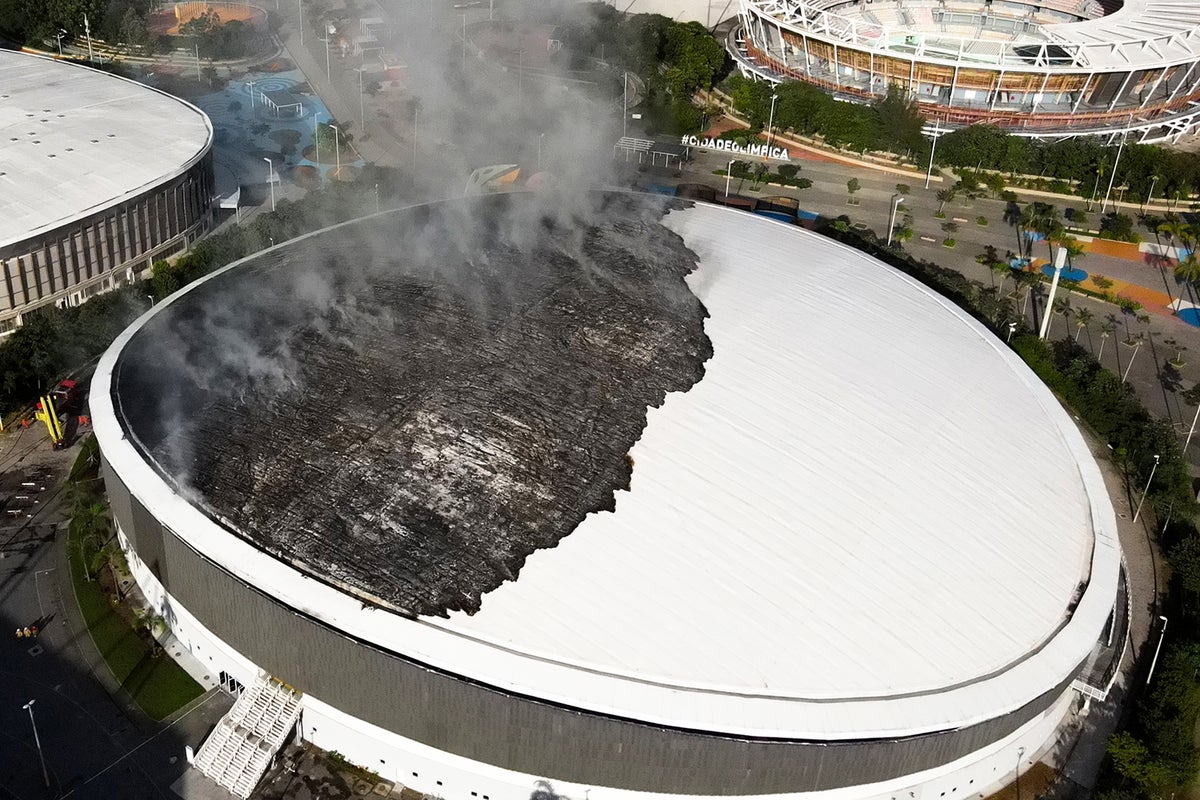
The smoke rising from the Rio de Janeiro Olympic Park isn't a tragedy. It is the logical conclusion of a business model built on planned obsolescence and geopolitical vanity. While mainstream outlets scramble to report on the "bravery" of firefighters or the "shock" of another blaze at a multi-billion dollar site, they are missing the forest for the charred, expensive trees.
This isn't a failure of maintenance. It is the predictable outcome of the "White Elephant" economy. When you build massive, hyper-specialized structures for a three-week party in a city that cannot afford to keep the lights on in its hospitals, fire isn't an accident. It is a secondary demolition crew.
The Fire is the Feature Not the Bug
The standard narrative suggests that a fire at an Olympic venue is a lapse in security or a freak electrical mishap. That is a naive reading of how global infrastructure works. In the world of high-stakes municipal debt, a derelict stadium is a liability. A burnt one? That is a cleared plot of land ready for a new tax-subsidized "revitalization" project.
I have watched cities from Athens to Rio bleed cash trying to preserve the skeleton of a "legacy" that never existed. The Olympic Park in Barra da Tijuca was sold to the public as a future hub for elite athletes and community growth. Instead, it became a 300-acre graveyard of rusted rebar and shattered glass.
When a fire breaks out in a place like this, we should stop asking "how did it start?" and start asking "who benefits from the vacancy?"
The Cost of Keeping the Ghost Alive
Maintaining an Olympic-sized venue costs millions annually. In Rio, where the municipal budget has the structural integrity of a wet napkin, these buildings are left to rot.
- Flammable materials: Most Olympic structures are built with "temporary" facades—composites and plastics designed to look good on 4K cameras, not to last fifty years.
- Zero Utility: The Velodrome or the Handball Arena have no pivot. You cannot easily turn a high-banked cycling track into a grocery store.
- The Insurance Trap: In some jurisdictions, the payout for "accidental" damage is more liquid than the value of the property itself.
We are seeing the physical manifestation of a bad investment. If you leave a billion-dollar asset to be reclaimed by the elements and the desperate, you are essentially inviting the spark.
Stop Crying Over Rusted Rebar
The media treats these fires with a somber tone, as if we are losing a piece of cultural heritage. We aren't. We are losing a monument to corruption and poor urban planning.
The International Olympic Committee (IOC) operates like a nomadic tribe that demands its hosts build cathedrals, only to leave the bill for the heating and the eventual demolition to the local taxpayers. By the time the first plume of smoke appears, the IOC has already moved its circus to the next continent.
If we actually cared about the safety and "legacy" of these sites, they wouldn't be sitting empty for nearly a decade.
Why the "Legacy" Argument is a Lie
People often ask: "Can't we just repurpose these buildings?"
The answer is almost always no. I’ve seen the blueprints. These venues are "bespoke" to a fault. The cooling requirements for a stadium full of 15,000 screaming fans are vastly different from what a local community center needs. To retrofit them is often more expensive than knocking them down and starting over.
- Specialized Engineering: You cannot turn an Olympic pool into a public park without spending tens of millions on filtration and safety upgrades.
- Location: Most Olympic parks are built on the periphery of cities—where land is cheap—making them inaccessible to the very people they are supposedly built for.
- The Ego Factor: Politicians want to cut ribbons on new buildings, not pay for the roof repair on an old one.
The fire in Rio is just the physical manifestation of a financial reality: nobody wants these buildings.
The Architecture of Abandonment
Let’s talk about materials. The competitor articles focus on the "blaze" and the "smoke." Let’s focus on the chemistry.
Olympic venues are increasingly built with ETFE (Ethylene Tetrafluoroethylene) or similar polymer membranes. While technically "fire retardant," these materials don't behave like stone or steel. When they go, they go fast, releasing toxic fumes and creating a spectacle that looks far worse on camera than a traditional structure fire.
This is the "IKEA-fication" of global sports. Everything is flat-packed, assembled for the cameras, and never intended to survive a decade of tropical humidity and neglect. When the Rio Olympic Park burns, it isn't a building burning—it's a massive pile of high-grade plastic and bad debt.
Dismantling the "Public Safety" Panic
The "People Also Ask" sections of the web are currently filled with questions about whether the smoke is dangerous or if the fire could spread to residential areas.
The honest, brutal truth? The most dangerous thing about that fire isn't the smoke. It's the precedent. Every time a major Olympic venue burns, it reinforces the idea that we can just walk away from the mess we made. We treat the fire as an act of God rather than an act of gross negligence.
If we wanted to prevent this, the solution isn't more fire marshals. It’s a total ban on new construction for the Games.
The Only Way Out is Through the Flames
The solution isn't to "fix" Rio's Olympic Park. It is to let it go.
The "contrarian" take here isn't just that the fire is inevitable; it’s that it might be the most honest thing that has happened to that park since 2016. It forces a conversation about why we keep doing this.
- Host cities should be restricted to places with existing, functional infrastructure.
- The IOC should be held legally liable for the environmental cleanup and decommissioning of every single venue they mandate.
- Insurance companies should stop underwriting "legacy" venues that have no clear 10-year business plan.
We shouldn't be mourning the loss of a stadium. We should be mourning the opportunity cost. Imagine what that money could have done for Rio’s basic infrastructure—water, sewage, transit—the things that don't look great in a drone shot but actually keep a city alive.
The Brutal Reality of Global Events
We are addicted to the "Big Build." We love the time-lapse videos of stadiums rising from the dirt. We ignore the time-lapse of them rotting.
Rio is not an outlier. It is the template. Whether it is Sarajevo, Athens, or Beijing, the post-Olympic reality is a slow-motion car crash. Rio just happens to have the right climate and the right level of systemic collapse to speed up the process.
The next time you see a "major blaze" at a former Olympic site, don't look for the arsonist. Look for the architect and the committee that signed the checks. They are the ones who handed over the matches years ago.
Stop pretending these buildings are symbols of human achievement. They are temporary stages that we forgot to strike after the show ended. If the fire clears the way for something that actually serves the people of Rio—even if it’s just a vacant lot—it will have done more for the city than the Games ever did.
The fire isn't the end of the story. It is the only honest ending possible.
The smoke isn't a signal for help. It’s a signal of a system that has finally run out of oxygen.
Burn the legacy. Start over. This time, build for the people, not the cameras.