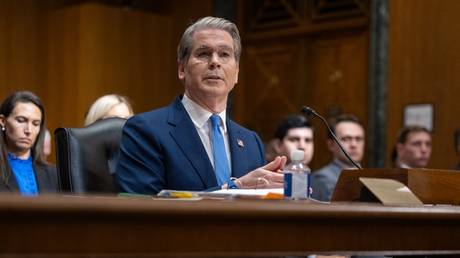
Political violence in Washington doesn't always arrive with a master plan. Sometimes it arrives via a panicked drive down from Massachusetts, fueled by a cocktail of severe mental health crises, drug abuse, and toxic online radicalization. Riley English walked up to Capitol Police in January 2025 with two crude firebombs, a folding knife, and a stark confession: she was there to kill Treasury Secretary Scott Bessent.
Now, the legal fallout is settled. A federal judge sentenced the 26-year-old transgender woman to six years and one month in prison, trimming down prosecutors' demands for a heavier decade-long penalty. But looking past the courtroom drama, this bizarre plot lays bare a much deeper, more disturbing vulnerability in modern American security.
Inside the Plot Against Scott Bessent
The details coming out of the federal court case show a plan that was as erratic as it was dangerous. English didn't start the day targeting Bessent. Court documents reveal she originally eyed several high-profile figures, including House Speaker Mike Johnson and Defense Secretary Pete Hegseth, alongside conservative institutions like the Heritage Foundation.
She pivoted to Bessent after catching his confirmation hearing on television. On January 27, 2025, just hours after Bessent was sworn into office, English arrived at the U.S. Capitol.
She carried a lighter, a folding knife, and two miniature vodka bottles filled with hand sanitizer meant to serve as makeshift explosives. Yet, the execution fell completely flat. The devices were practically incapable of igniting, and Bessent wasn't even physically present at the Capitol when she arrived.
Realizing the absurdity and danger of her own trajectory, English did something unexpected. She abandoned the plot entirely, approached officers on the grounds, and turned herself in.
The Dangerous Influence of Modern Copycats
Investigators uncovered a chilling detail during interrogations. English openly admitted she drew inspiration from Luigi Mangione, the man accused of gunning down UnitedHealthcare CEO Brian Thompson.
This copycat phenomenon is turning high-profile attacks into a sick form of social contagion. When sensational acts of violence dominate the news cycle, vulnerable individuals dealing with isolation or delusions fixate on these figures. They see a twisted blueprint for notoriety.
Federal prosecutors argued that English spent a month plotting the attack, categorizing it as a premeditated assassination attempt rather than a spur-of-the-moment breakdown. Assistant U.S. Attorney Brendan Horan emphasized during the hearings that the rising tide of political hostility across the country leaves little room for leniency when public officials are targeted.
Mental Health Versus Accountability in Federal Sentencing
The courtroom debate ultimately turned into a tug-of-war between public safety and mitigating personal circumstances. Defense attorneys painted a picture of a deeply traumatized individual. They pointed to English's struggles with a rejecting religious upbringing, substance abuse, and intense fears regarding the political climate surrounding transgender rights.
U.S. District Judge Rudolph Contreras acknowledged those profound hardships. He noted that English spent nearly 20 months behind bars awaiting trial, time that will count toward her current sentence.
Even so, the victims felt the heavy psychological toll of the ordeal. In a letter submitted to the court, Treasury Secretary Scott Bessent didn't mince words. He noted that his young children had been deeply frightened and robbed of their innocence by a threat directed at their family. Bessent argued that personal excuses and mental health struggles cannot outweigh the severe societal damage caused by targeting public servants.
While the court factored in her voluntary surrender and the fact that the weapons were largely ineffective, the message remains clear. Threats against government officials carry steep consequences, no matter how disorganized the execution might be. Keep a close eye on how federal judges continue to handle these politically charged sentencing guidelines as security measures around Washington tighten further.