Resurrecting dead artists on stage sounds magical in a pitch deck. In reality, it is a monument to misplaced nostalgia.
Every few months, another headline celebrates a London startup or a media conglomerate promising to bring back departed icons for live shows. The lazy consensus goes something like this: fans miss their heroes, audiences want spectacle, and modern projection or volumetric capture makes immortality affordable. Therefore, dead-artist concerts are a goldmine waiting to happen.
That logic is backward. It confuses novelty with durable demand. It mistakes a viral clip on social media for a sustainable live touring business.
I have watched executives burn millions chasing this exact illusion. They buy up catalog rights, pour capital into visual rendering pipelines, and book prime arena dates assuming that a recognizable face and a setlist of classics will sell out seats for years. Sometimes opening night draws curiosity seekers and press cameras. Then ticket velocity falls off a cliff. Why? Because a concert is not just a playback of old recordings with better lighting. It is a shared social contract between living performers and a living room. When one side of that contract is an archive, the magic wears off faster than the marketing budget.
To understand why so many of these ventures struggle, we have to ask the wrong question first. Most people ask: How realistic can we make a digital performer look? They should be asking: Why would a paying fan leave their house to watch a pre-programmed illusion instead of listening to the master recording at home with a glass of wine?
The Illusion of "Live"
Words matter in live entertainment, and promoters have spent years stretching the definition of "live" past its breaking point.
Strictly speaking, a hologram relies on optical interference patterns to reconstruct a three-dimensional light field in space. Almost none of the big "hologram concerts" you see in arenas are true holograms. Most rely on variations of Pepper's ghost—using angled glass or foil and high-lumen projection—or massive high-resolution LED walls and volumetric video capture. Calling a screen projection a hologram is a neat marketing trick, not a technical truth.
Even more important is the distinction between liveness and spectacle. A live performance involves real-time risk, physical presence, and mutual responsiveness. A singer breathes hard between verses. A guitarist misses a cue and recovers. A drummer pushes the tempo because the front row is losing its mind. When a dead icon appears on stage, every note, gesture, and crowd interaction is locked in amber. There is no improvisation. There is no danger. There is only synchronization.
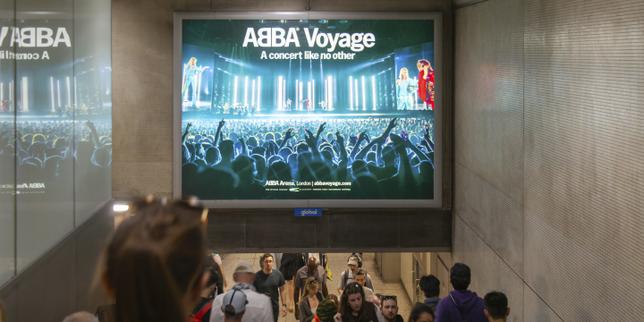
Think about ABBA Voyage in London, often held up by lazy commentators as proof that virtual or avatar-led shows have conquered the world. That show succeeded because Benny Andersson, Björn Ulvaeus, Agnetha Fältsign, and Anni-Frid Lyngstad were alive, deeply involved in shaping the creative direction and motion-capture sessions, backed by a live band, custom venue engineering, and decades of cross-generational pop equity. Treating that bespoke production as a repeatable template for resurrecting departed solo stars is like watching a master chef cook a tasting menu and assuming any microwave meal will do.
Even Tupac Shakur appearing at Coachella in 2012—widely cited as a watershed moment—worked largely because of shock value, surprise, and the immediate context of a massive festival set alongside living collaborators. Turning a one-off shock moment into a 40-city tour with recurring ticket demand is a completely different beast.
Why Fans Actually Buy Tickets
Ask any casual observer: Will fans pay top dollar to see their favorite dead singer perform again?
The brutally honest answer is: once, maybe. Twice, doubtful. Every year, no.
Ticket buyers do not show up solely to hear songs they already know by heart. If that were the whole equation, Spotify, Apple Music, and vinyl pressings would already satisfy the urge. Fans buy concert tickets for co-presence and belonging. They want to stand shoulder to shoulder with thousands of strangers who care about the same lyrics, feel bass vibrating through their sternum, and witness a moment that can never be replicated in the exact same way again.
When an artist is gone, that shared present tense is gone too. What remains is memory. And memory is fragile when confronted with synthetic imitation. If the digital likeness moves slightly too smoothly, or misses the micro-expressions that made the real person magnetic, the uncanny valley opens up. Instead of feeling awe, audience members feel distance. Some feel outright unease.
There is also the thorny question of consent and legacy. Estates often clash over how an icon is portrayed, what songs get sung, and who profits. Fans have sharp radar for cash grabs disguised as tributes. When a startup treats a beloved musician like an intellectual property asset to be squeezed for one more tour cycle, pushback follows quickly. Look at how quickly public sentiment turns when estates greenlight questionable commercial tie-ins or synthetic performances that feel detached from the artist's spirit.
Imagine a scenario where a beloved rock vocalist who died young is recreated on stage using archival vocals and computer-generated movement. At first, longtime fans tune in out of grief and curiosity. Within twenty minutes, the lack of real human chemistry sets in. The crowd realizes they are watching a high-budget tribute video inside an expensive room. Next time, they will buy a tribute band ticket at a local club where real musicians are sweating ten feet away—or stay home and play the original album.
The Economics Behind the Curtain
If the creative case is shaky, the financial math is even harsher.
Startups pitching dead-artist concerts love to talk about marginal cost. Once you build the digital model and animate the choreography, they claim, you can license it globally, drop it into arenas, and print money. That sounds great until you look at what a real tour actually costs.
You still have to pay for venue rentals, staging, audio systems, lighting rigs, insurance, local crew, security, marketing, and ticketing fees. You still have to clear publishing rights, master rights, name-and-likeness rights, and estate royalties—often with multiple heirs, managers, and labels holding veto power or demanding hefty advances. And if you want live musicians on stage to give the show pulse and texture, you are paying a full band on top of your tech overhead.
Worse still, visual technology ages fast. A rendering pipeline that looks dazzling today can look dated in four years as display standards, frame rates, and audience expectations evolve. A living artist's voice and charisma do not become obsolete with a software update. A 3D rig can.
I have seen founders underestimate the iteration cycle required just to make facial expressions and posture look natural on a giant screen. One awkward blink or stiff shoulder turn under harsh arena lighting can turn a multi-million-dollar centerpiece into a punchline on Reddit.
Where My Contrarian Stance Can Backfire
Being contrarian does not mean being blind. There are real scenarios where my skepticism could be proven too harsh—or where specific pockets of this market actually work.
First, niche and themed attractions are different from headlining arena tours. A residency or museum-style experience tied to a specific city, cultural landmark, or anniversary can work well if priced modestly and built as a destination stop rather than a global stadium juggernaut.
Second, younger audiences process media differently than older generations. Gen Z and younger cohorts grew up with virtual influencers, game engines, VTubers, and stylized avatars. They may care less about "photorealistic authenticity" and more about aesthetic style, community lore, and visual world-building. If a creator leans into stylized art rather than pretending to be a literal ghost, the uncanny valley shrinks.
Third, technological breakthroughs in real-time rendering, spatial audio, and interactive staging could lower production costs and raise emotional impact in ways today's clunky setups cannot. Never bet that engineers will stop trying to solve hard problems.
Still, none of those caveats erase the core commercial reality: scarcity drives live value. If anyone can watch a clip online or catch a copycat production in another city, the urgency to buy a high-priced ticket evaporates.
What Smart Operators Should Do Instead
If you are building in music, entertainment, or live experiences, stop trying to play necromancer with old catalogs. There are sharper, more durable ways to capture value.
- Build with living artists, not dead ones. Partner with active performers who want to experiment with stage visuals, interactive setlists, or hybrid physical-digital shows. Living artists can react to the crowd, promote the show directly, and build genuine momentum.
- Sell atmosphere, not impersonation. Focus on sound design, lighting architecture, community rituals, and shared space. Give fans a reason to be together in the room that goes beyond staring at a digital doppelgänger.
- Respect the archive without milking it. If you work with legacy catalogs, prioritize restoration, high-craft documentaries, listening sessions, and intimate tribute nights led by real artists who genuinely love the music. Treat heritage with restraint. Restraint protects brand equity; desperation destroys it.
- Test demand cheaply before scaling. Run small, localized proof-of-concept nights and measure repeat interest and word-of-mouth—not just opening-night curiosity clicks. If people do not talk about how the room felt, the concept needs work.
Nostalgia is a powerful spark, not a permanent fire. Real live music happens between living people in real time, and no projector on earth can fake a heartbeat.