The modern residential security architecture relies on a flawed assumption of "passive deterrence"—the belief that visible locks and basic lighting sufficienty discourage intrusion. In reality, residential breaches are the result of specific mechanical and behavioral failure modes that exploit the gap between a homeowner’s perceived safety and the actual physical integrity of the structure. Analyzing the recent intrusion in Calgary reveals that the victim’s experience was not a random anomaly but a predictable outcome of a compromised Perimeter Integrity Chain. To minimize risk, a property must be viewed not as a home, but as a series of nested defensive layers where the failure of one layer should not lead to the total compromise of the occupant's safety.
The Hierarchy of Perimeter Failure
Residential security operates on a three-tier hierarchy: the Outer Boundary (property line), the Shell (doors and windows), and the Interior Sanctuary (bedrooms). Most homeowners over-invest in the Shell through aesthetic hardware while neglecting the procedural discipline required to maintain it. Meanwhile, you can read related developments here: Why NATO stays strong even when the headlines say otherwise.
1. The Mechanical Vulnerability of Standard Entry Points
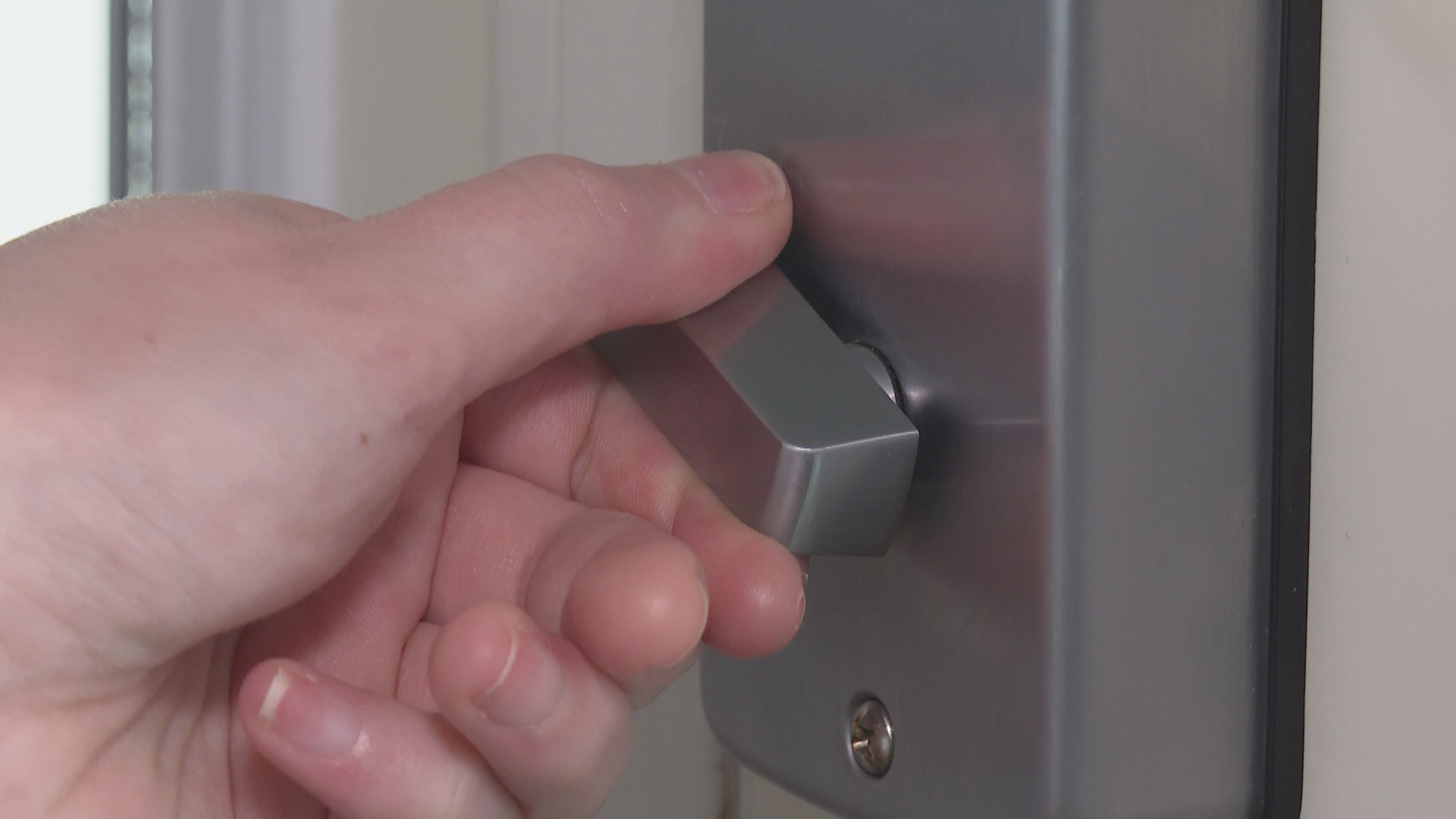
Standard residential doors are often equipped with Grade 3 deadbolts, which provide minimal resistance against physical force. However, the breach mechanism in the Calgary case—a window—highlights a more critical vulnerability. Standard double-pane windows utilize a latching system designed for weather-sealing rather than security.
- Fracture Point Analysis: Windows located at ground level or near external structures (like fences or AC units) provide high-leverage points for intruders.
- The Latch Deficit: Most window locks are thin zinc or plastic components that shear under less than 150 pounds of pressure.
2. Behavioral Slippage and the "Safety Illusion"
The most sophisticated security hardware is rendered inert by the "False Sense of Security" (FSS) effect. This occurs when an occupant feels safe due to geographic location or historical lack of incident, leading to a degradation of security protocols. Leaving a window unlocked during sleep is a primary behavioral failure. The cost of this failure is not merely property loss; it is the total loss of the Occupant Response Window—the time between detecting an intruder and physical contact. To understand the full picture, we recommend the detailed article by Associated Press.
The Cost Function of Delayed Detection
In high-stakes security environments, the goal is not to prevent an entry—which is nearly impossible against a determined actor—but to maximize Detection Lead Time. In the Calgary incident, the detection occurred after the intruder was within meters of the victim. This represents a 100% failure of the early-warning system.
The efficacy of a security system is measured by the equation:
$$T_{response} > T_{entry} + T_{movement}$$
Where $T_{response}$ is the time it takes for help to arrive or the occupant to find safety, $T_{entry}$ is the time it takes to breach the shell, and $T_{movement}$ is the time it takes the intruder to reach the interior sanctuary. When $T_{entry}$ is zero (unlocked windows), the occupant is mathematically guaranteed to be at a disadvantage.
Sensory vs. Electronic Detection
- Acoustic Signatures: Relying on the sound of a window opening or footsteps is an unreliable strategy. Ambient noise, deep sleep cycles, and the "startle response" delay cognitive processing.
- Distributed Sensing: A robust system uses vibration sensors on glass and contact sensors on frames. These provide an instantaneous alert, reclaiming the seconds lost to human sensory lag.
The Architecture of an Interior Sanctuary
When the Shell is breached, the survival of the occupant depends on the Interior Sanctuary Strategy. Most residential layouts are designed for flow and aesthetics, leaving bedrooms highly exposed once the perimeter is compromised.
Hardening the Sleep Zone
The bedroom door should be treated as a secondary perimeter. Most interior doors are hollow-core, consisting of thin wood veneers over a cardboard honeycomb. These provide zero structural resistance.
- Solid Core Upgrades: Replacing hollow-core bedroom doors with solid wood or metal-reinforced variants significantly increases $T_{movement}$.
- The 3-Inch Screw Rule: Builders often use 1/2-inch screws for strike plates. Replacing these with 3-inch screws that anchor into the wall studs prevents the frame from splintering under a kick.
Communication Redundancy
An intruder may disrupt primary power or local Wi-Fi. A security system that lacks cellular backup or a hardwired "panic" circuit is a single-point-of-failure system. The victim must have an immediate, one-touch method to alert law enforcement that does not rely on finding a smartphone or voice commands that reveal the occupant's location.
Psychological Aftermath and the Erosion of Shelter Utility
The impact of an intrusion extends beyond physical risk; it degrades the Psychological Utility of the home. A home is a primary "safe space," and the violation of that space leads to Hypervigilance Syndrome. This state of constant physiological arousal reduces sleep quality and long-term cognitive function.
The recovery process for victims of a "sleep-in" burglary is significantly longer than for those who experience a daytime break-in. The breach of the "sleep zone" is perceived by the brain as a fundamental survival threat, often requiring environmental modifications—such as moving or installing extreme security measures—to restore a baseline of perceived safety.
Strategic Response Protocols
To shift from a reactive to a proactive security posture, homeowners must implement a Continuous Perimeter Audit. This is not a one-time setup but a routine operational check.
- Hardware Audit: Identify every entry point. If a window or door cannot withstand a 200lb impact, it requires reinforcement (security film for glass, metal strike plates for doors).
- The Sunset Protocol: A mandatory checklist performed every evening. This includes physical verification of locks, clearing "laddering" objects (trash cans, patio furniture) away from the house, and checking exterior lighting.
- Surveillance as Evidence vs. Surveillance as Alert: Cameras that merely record a crime are forensic tools, not security tools. Effective surveillance must include active monitoring with push notifications and audible sirens to disrupt an intruder’s OODA loop (Observe, Orient, Decide, Act).
The failure in the Calgary case was not a lack of luck, but a lack of structural and behavioral redundancy. High-authority security is built on the principle of "Defense in Depth." By assuming the first layer will fail, you ensure that the second and third layers are positioned to prevent a tragedy.
Prioritize the installation of laminated security film on all ground-floor glass. Unlike standard glass that shatters, laminated film keeps the glass intact within the frame even after multiple strikes. This forces the intruder to spend more time—and create more noise—to gain entry, effectively resetting the $T_{entry}$ variable in your favor and providing the necessary window for a coordinated emergency response.