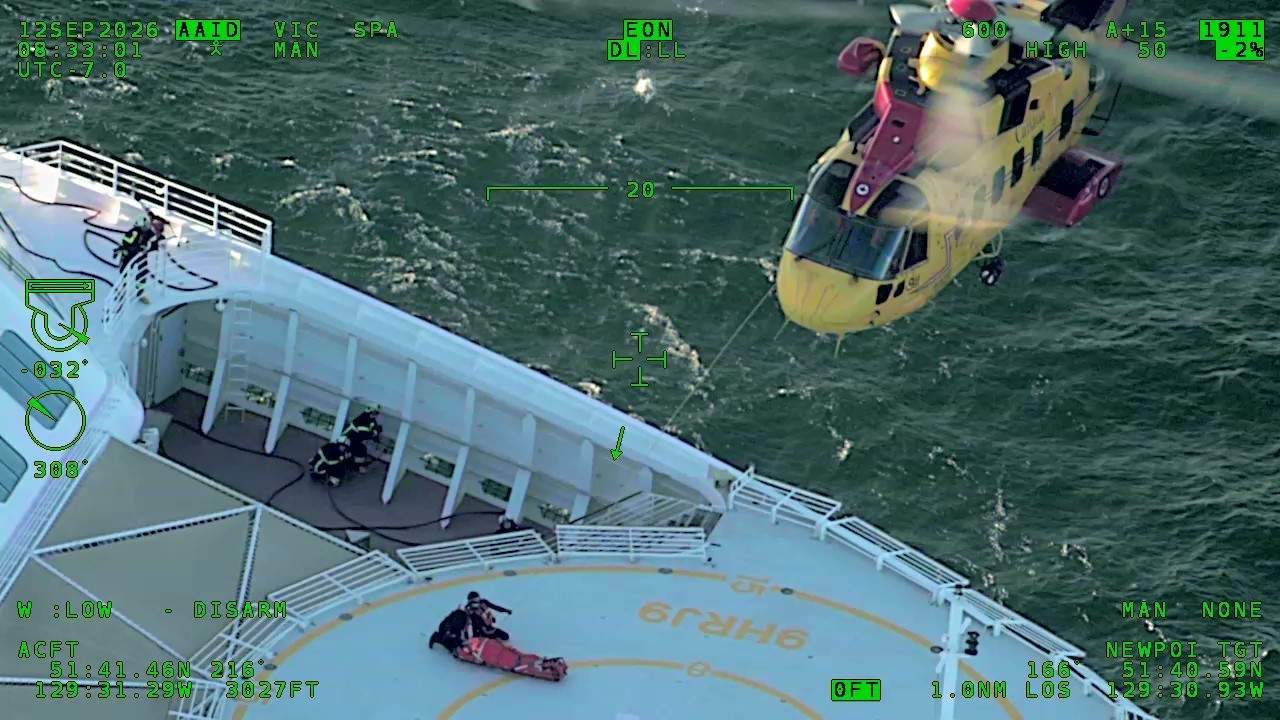
Every time a floating amusement park drops anchor in international waters or crawls along the Pacific coastline, a quiet countdown begins. It is not a matter of if an emergency occurs, but when. Passengers aboard these multi-story behemoths slip on wet decks, suffer cardiac events, or develop acute surgical emergencies miles from the nearest hospital shore. When they do, the default playbook swings into motion. Military helicopters scramble, taxpayers foot a six-figure aviation bill, and public search and rescue crews risk their lives to pull a tourist off a vessel run by a multi-billion-dollar parent company.
The standard media narrative applauds the heroism of the flight crews. Nobody looks at the ledger.
Let us strip away the feel-good headlines about brave pilots and examine the structural hazard of treating public military infrastructure as an on-call concierge service for the leisure cruise industry.
Maritime law requires vessels to render assistance to those in distress at sea, but modern cruise operations have effectively outsourced their internal emergency liability onto sovereign military assets. When a megaship carries thousands of passengers into remote coastal corridors, it assumes a calculated risk. Yet, when medical crises strike, the private entity running the voyage rarely absorbs the full cost of the extraction. Instead, public defense budgets absorb the operational strain.
Consider the mechanics of a long-range offshore hoist. You are dealing with variable maritime weather, salt spray, low ceilings, and the turbulent air wake generated by a massive cruise ship superstructure moving at sea. It is high-stakes aviation. If an engine fails or rotor clearance is miscalculated in a midnight squall, taxpayer-funded crews pay the ultimate price. Meanwhile, the cruise corporation continues collecting revenue from the remaining three thousand passengers eating midnight buffets two decks below.
Critics of this perspective argue that human life is priceless and that denying rescue is barbaric. That argument relies on a false binary. Nobody is suggesting abandoning patients in the Pacific. The question is who pays for the logistics, and why private operators face zero financial friction for operating high-risk medical environments far from standard shore-based trauma care.
If an airline experiences a mechanical failure over land that requires emergency
Stop Cheering For Coast Guard Rescues Because They Are Structural Failures Not Triumphs
travel, news
Every time a military helicopter hovers over a cruise ship to hoist a sick passenger off the deck, the internet erupts into applause. Headlines paint the Canadian Armed Forces as knights of the sea, swooping in to snatch a civilian from the jaws of tragedy off the British Columbia coast. We love the imagery. It feels heroic, expensive, and reassuringly high-tech.
It is also a massive systemic failure masquerading as a feel-good story.
Let us strip away the Hollywood veneer of the rescue. When a Cormorant helicopter deploys hundreds of miles out into the Pacific to winch a single individual off a floating luxury resort, nobody is asking the critical question: Why was a multi-thousand-ton floating city completely incapable of handling its own medical emergencies?
Cruise lines sell an illusion of total autonomy. They market massive vessels equipped with state-of-the-art amenities, floating cities complete with theaters, hospitals, and high-end dining. Yet the moment a passenger develops acute appendicitis, a cardiac event, or a severe respiratory crisis, the corporate mask slips. The onboard medical facility turns out to be an urgent care clinic with an ocean view, and the liability-conscious operator immediately dials public emergency services.
Publicly funded military resources absorb the financial and operational hit. Taxpayers foot the bill for multimillion-dollar aviation assets, fuel, and the extreme risk exposure of flight crews, all to bail out a private enterprise that priced its tickets without building an adequate medical evacuation infrastructure of its own.
The lazy consensus in the media treats these operations as unpredictable acts of nature. Storms happen. Passengers get sick. The military responds. End of story.
That narrative lets the cruise industry off the hook for externalizing its operating costs onto the public sector. If an airline experiences a medical emergency mid-flight, the pilot diverts to the nearest commercial airport. The airline pays landing fees, incurs delay costs, and manages the logistics. They do not dispatch a squadron of military jets to intercept the Boeing over Montana.
Yet maritime law and cruise industry norms operate in a parallel universe where corporate responsibility stops at the gangway. When things go wrong at sea, the state assumes the risk.
Let us look at the mechanics of these operations. Maritime rescue coordination centers handle hundreds of calls annually. Each long-range MEDEVAC involves grueling calculations of fuel windows, weather fronts, and hoist safety limits over moving vessel decks. Crew members operate in hostile environments where a single miscalculation during a night hoist can prove fatal. Turning these high-stakes military interventions into routine customer service extensions for vacation conglomerates degrades the core mission of search and rescue forces.
Defenders of the status quo argue that saving human life is the primary mandate of any government. Of course it is. No one advocates leaving a sick person to fend for themselves in international waters.
The distinction lies in prevention and accountability. Cruise corporations generate billions in profit while relying on a socialized safety net for their emergency logistics. Instead of celebrating a rescue, we should examine why cruise ships operating in remote northern waters are not mandated to carry higher-tier surgical staff, advanced telemedicine links, or contractual agreements with private maritime rescue providers.
If an offshore oil platform or a remote mining camp can maintain rigorous, self-contained emergency response protocols, a cruise ship carrying thousands of paying passengers should face the same regulatory standard.
Until we stop treating these rescues as miraculous triumphs and start seeing them as symptoms of corporate negligence, the public will continue subsidizing the hidden costs of luxury travel. The next time a helicopter blade chops the ocean air to lift a passenger off a cruise deck, do not cheer. Ask who is paying the bill.