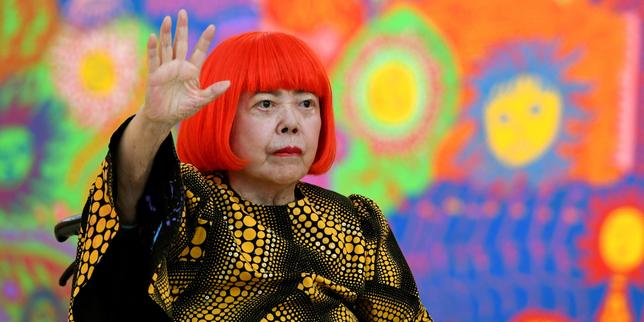
Obituaries for Yayoi Kusama lean on a lazy, comforting shorthand. The mainstream press remembers her as the eccentric, polka-dot-obsessed granny of contemporary art, a whimsical maker of infinite mirror rooms built for Instagram feeds and weekend crowds lining up around the block. This reduction is an insult. It turns a fierce, psychologically brutal avant-garde combatant into a novelty gift shop vendor.
The lazy consensus says Kusama succeeded because her dots were cheerful, accessible, and endlessly reproducible. The truth is much darker, and far more uncomfortable. Kusama weaponized her own severe psychiatric obsessions, transforming clinical hallucinations into an uncompromising interrogation of ego, erasure, and capitalism.
The Commodification Trap
We have sanitized an artist who once staged anti-war naked happenings on Wall Street and picketed the Venice Biennale independently because she was furious at the art establishment's commercial machinery. Today, museums treat her infinity rooms like amusement park rides. Visitors spend forty seconds taking selfies, upload the proof of their cultural consumption to social media, and walk out believing they have experienced profound transcendence.
This is not art appreciation. It is consumption.
Kusama herself has lived voluntarily in a psychiatric hospital in Tokyo since 1977, walking across the street to her studio every single day to paint. The contrast between her monastic, agonizing creative discipline and the frenzied, selfie-stick-wielding public clamoring for her work exposes a glaring cultural disconnect. We consume her dots while completely ignoring the trauma that birthed them.
Dismantling the Polka Dot Myth
The common narrative frames the polka dot as a playful signature motif, akin to a corporate logo. Let us correct this immediately. For Kusama, the dot is a mechanism of self-obliteration.
In her youth in Matsumoto, Japan, surrounded by her family's domineering tree nursery business and a turbulent domestic life, she began experiencing vivid hallucinations. Flowers talked to her. The patterns on tablecloths multiplied, crept up the walls, and covered her own body. The dots were not a stylistic choice; they were an invasion. They represented the terrifying dissolution of her identity into a vast, indifferent universe.
When she covered a naked man in dots during a 1960s anti-establishment performance, she was not decorating him. She was stripping away his individuality, merging him with the environment until the ego vanished entirely. Reducing this radical psychological warfare to cute museum merch strips the teeth right out of her life's work.
The New York Grind That History Erased
Art history textbooks love to position Kusama as a late-blooming Japanese eccentric rediscovered by a benevolent Western market in the late 1990s. This narrative is a convenient fiction designed to hide institutional theft.
When Kusama arrived in New York in 1958, she was not a shy outsider. She was a tactical genius who outmaneuvered the male-dominated Abstract Expressionist and Pop Art boys' clubs. She painted massive Infinity Net canvases that stretched ten meters long, filled with meticulous, looping arcs painted in obsessive repetition.
Claes Oldenburg stole her stuffed-fabric furniture ideas. Andy Warhol watched her repeat objects and arrange environments, then applied her exact playbook to his own gallery takeovers. Minimalism and Pop Art did not emerge in a vacuum; they absorbed Kusama's innovations while systematically locking her out of the financial and historical rewards. She worked herself to physical collapse in freezing New York lofts, surviving on scraps, while male contemporaries cashed multi-million dollar checks for ideas she pioneered.
If you want to understand why she retreated to Tokyo in total nervous exhaustion, stop looking at her cute polka-dot pumpkins and start looking at the chauvinistic gatekeepers of the 1960s New York art scene who robbed her blind.
The Mirror Room Illusion
The modern obsession with Kusama's Infinity Mirror Rooms reveals a profound cultural irony. These installations use mirrors and flashing LED lights to create the illusion of endless space, of a universe without boundaries where the viewer floats in absolute infinity.
Most viewers experience this as a moment of personal expansion, a fleeting brush with the sublime.
Kusama built them as traps.
Infinity is terrifying. It is the complete annihilation of the self. To stare into one of her mirror rooms is to confront your own utter insignificance in a cosmos that does not care if you live or die. When you stand inside those flashing chambers, you are supposed to feel small, panicked, and erased. Turning that existential terror into a backdrop for a dating app profile picture proves that modern audiences can look directly into the void and see only themselves.
What We Can Learn from the Obsession
The art world wants easy heroes and consumable icons. It wants artists who fit neatly into press releases and look good on tote bags. Kusama refused to fit, even as the market tried to swallow her whole. Her entire life stands as a direct rebuke to the notion that art should make you comfortable, validate your identity, or look nice above your sofa.
The next time you see a line stretching around a museum block for a forty-second immersion in a polka-dot wonderland, remember the woman sitting in her Tokyo studio, painting the same frantic nets over and over because stopping means letting the hallucinations win.
Art is not a selfie backdrop. It is a panic room with the door locked from the inside.