The mailbox at the end of a gravel driveway in rural Saskatchewan is a lonely sentinel. Most days, it holds nothing but flyers for farm equipment or bills from the power company. But this week, a splash of color sits among the envelopes. It is a postcard. It asks a question that seems almost too massive for a piece of cardstock: Who owns the childhood of the next generation?
The provincial government is reaching into the physical world to solve a problem that exists entirely in the ether. They are mailing out these prompts to every household, seeking feedback on a proposed ban on social media for minors. It is a collision of the nineteenth century and the twenty-first. A paper survey trying to catch a digital ghost.
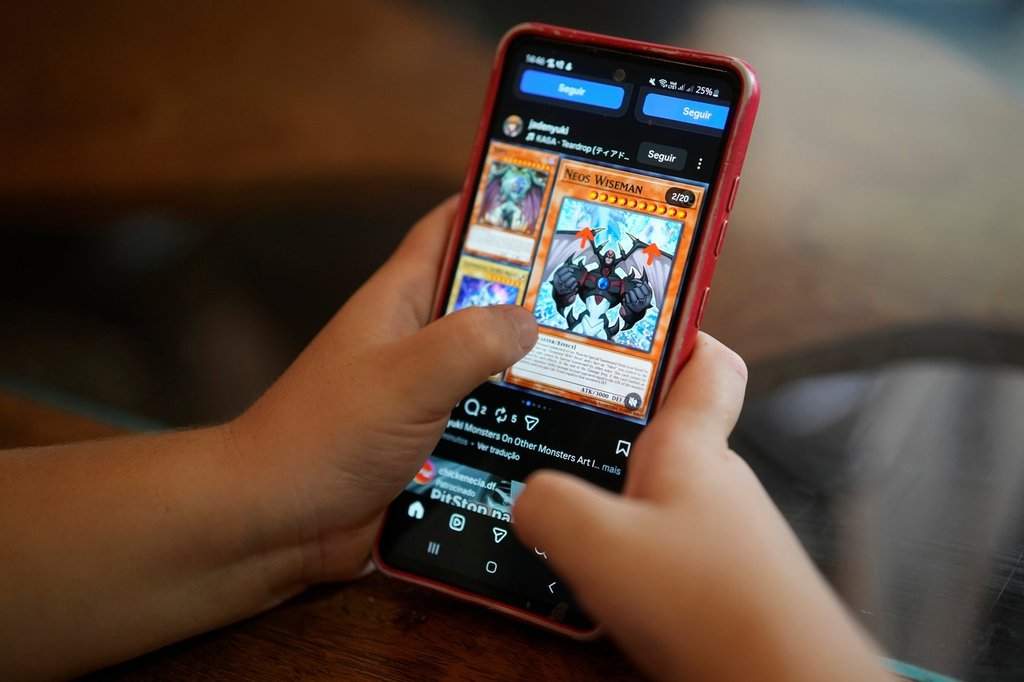
Consider Sarah. She is fifteen, living in a town where the nearest movie theater is a forty-minute drive. For her, the blue light of her smartphone isn’t just a distraction. It is her mall. It is her park. It is her lifeline to a world that feels larger than the horizon of wheat fields. Now, imagine her parents sitting at the kitchen table, holding that government postcard, wondering if they should vote to cut the cord.
The stakes are invisible, but they are tectonic.
The Algorithm and the Adolescent Brain
We have spent the last decade conducting a massive, uncontrolled experiment on the human psyche. We handed the keys to the kingdom to companies whose business model is predicated on the "scroll." It is a slot machine designed to never pay out, only to keep you pulling the lever. For a brain that is still building its prefrontal cortex—the part responsible for impulse control and long-term planning—the fight isn't fair.
The data suggests we are losing. Rates of anxiety and depression among youth have spiked in tandem with the rise of the front-facing camera. We see a generation that is more connected than any in history, yet reports feeling more isolated. They are "alone together," staring at curated highlight reels of lives they feel they aren't living.
The Saskatchewan government’s move is a blunt instrument. A ban is a wall. Proponents argue that children simply do not have the biological equipment to resist the dopamine loops engineered by Silicon Valley. They see the postcard as a way to reclaim the dinner table. They see it as a chance to force a pause in a race that has no finish line.
The Geography of Connection
But the problem with a wall is that it creates an inside and an outside. In a province as vast and sparsely populated as Saskatchewan, the digital realm provides a "third space" that doesn't exist in physical reality. For a queer kid in a conservative town, or a young artist looking for a mentor, the internet isn't just a place to waste time. It is where they find their people.
If you take away the digital forum, what replaces it?
In the 1990s, you might have hung out at the local rink or the basement of a church. Those spaces still exist, but the culture has moved. To ban social media for those under sixteen—or whatever age the final legislation lands on—is to effectively exile them from the modern town square. There is a fear among critics that this move doesn't protect children so much as it blinds them, leaving them ill-equipped to navigate the very world they will eventually inherit as adults.
The postcard asks for feedback, but it doesn't offer a roadmap for how to teach "digital literacy" once the ban is eventually lifted. It’s the difference between banning a car and teaching someone how to drive. One keeps you safe in the driveway; the other lets you travel.
The Burden of the Gatekeeper
Parents are exhausted.
There is a visceral, weary heaviness in the voices of mothers and fathers trying to police "screen time." It is a constant, low-grade war fought in bedrooms and over breakfast. The government's proposal offers a seductive promise: we will be the "bad guy" so you don't have to be. By legislating the ban, the state takes the phone out of the child’s hand, ending the domestic argument.
Yet, there is a hollow ring to the idea of state-mandated parenting. Critics argue that this is a massive overreach, a bypass of the family unit. They wonder why the government is focusing on the end-user rather than the architecture of the platforms themselves. Why not legislate against the "infinite scroll"? Why not ban the algorithms that push harmful content?
Instead, the focus is on the child. It is easier to build a fence around a person than it is to regulate a multi-billion-dollar industry that spans international borders. The postcard is a signal of intent, but it is also an admission of powerlessness. It suggests that we cannot fix the internet, so we must hide our children from it.
A Dialogue in Ink
The survey arrives at a time when the "Age of Verification" is becoming a global trend. From the United Kingdom to Florida, governments are wrestling with the same ghost. They are all looking for a way to verify age without destroying privacy—a technical paradox that no one has quite solved yet.
Saskatchewan’s approach is uniquely grassroots. By using the mail, they are bypassing the very algorithms they seek to regulate. They are forcing the conversation into the physical realm. You have to pick up a pen. You have to walk to the end of the driveway. You have to engage with the dirt and the wind and the reality of your own community.
There is something poetic about it. The provincial government is betting that the most important decisions about our digital future should be made on paper.
But as the postcards are filled out and mailed back to Regina, Sarah is still in her room. The screen glows. She is watching a video of a girl in South Korea making tea. She is reading a comment from a friend in Saskatoon about a math test. She is learning, laughing, and wasting time in equal measure.
The red envelope in the mailbox is a message from a world that is trying to remember how to be human. It is a plea for a slower pace. But the light from the phone is faster. It travels at the speed of thought, crossing borders and boundaries that a postcard can never reach.
The silence in the farmhouse is heavy. Outside, the wind moves through the grass, a sound that has remained unchanged for ten thousand years. Inside, the thumb swipes up. The loop begins again. The postcard sits on the counter, a small, paper witness to a world that is changing too fast to be caught.
If the ban happens, the screens will go dark, but the hunger for connection will remain. We can take away the tool, but we cannot take away the instinct. The question isn't just whether we should turn off the light, but what we intend to show our children in the dark.
The ink on the postcard is already drying.