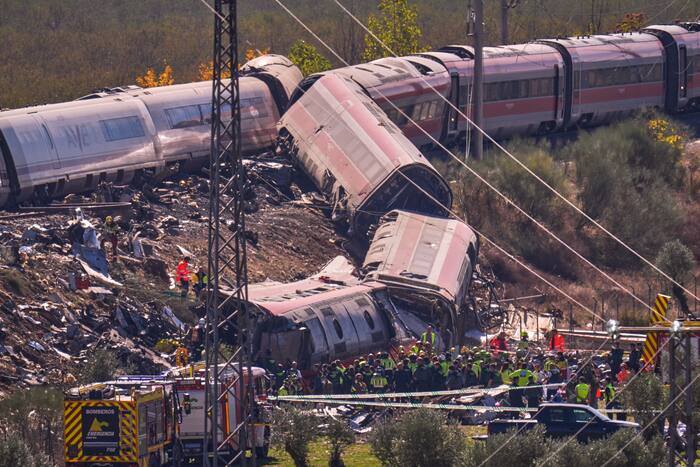
Two high-speed trains shouldn't be able to occupy the same stretch of track at the same time. That's the entire point of modern rail engineering. Yet on the morning of October 28, 2026, a Renfe AVE train traveling between 160 and 200 kilometers per hour slammed straight into the rear of a stopped Iryo Frecciarossa 1000 near Urda, in Spain's Toledo province.
At least 69 people died, including 54 Spanish citizens and 15 foreign nationals—four of them Americans. More than 200 others were injured.
If you're having déjà vu, you're not alone. This wasn't an isolated freak accident. It was Spain's second catastrophic high-speed train collision in nine months on the exact same Madrid-to-Seville corridor, coming right after the January 2026 disaster in Adamuz that killed 46 people. For decades, Spain's Alta Velocidad Española (AVE) network has been held up as the gold standard of European transit—fast, punctual, and virtually untouchable. Now, that reputation is in pieces, and passengers are asking a blunt question: how does a world-class rail system fail twice in less than a year?
The Six-Minute Chain of Errors Near Urda
Most initial news reports focused on the sheer devastation at kilometer marker 118—carriages thrown down an embankment, a steel rail lifted from the trackbed and driven straight through a passenger car, and over 900 Civil Guard personnel scrambling to reach the rural site. The visceral details matter, of course. Still, if you want to understand why this happened, you have to look at what went wrong inside the control room six minutes before impact.
At roughly 8:30 a.m. local time on October 28, the Madrid–Seville line's primary automated safety net—the LZB (Linienzugbeeinflussung) automatic train protection system—went dark. According to briefings from Spain's Ministry of Transport, a communication failure across three computers knocked out automated speed and location monitoring along a 63-kilometer stretch of track.
The system actually did what it was designed to do when blinded. It triggered automatic halts, bringing multiple southbound trains—including the Iryo train carrying 147 people—to a complete stop on the tracks.
Then came the human breakdown.
Under Spanish railway safety rules, when LZB fails and a block of track is occupied, trains stay put. If dispatchers authorize movement at all, drivers must switch to strict visual-sight rules—crawling forward slowly enough to stop on a dime if an obstacle appears ahead. Instead, at around 8:36 a.m., the traffic control center run by state infrastructure manager ADIF cleared the trailing Renfe AVE train, carrying nearly 400 passengers, to resume normal high-speed operation despite a red signal and a stationary train sitting directly in its path.
The AVE covered roughly 25 kilometers before plowing into the back of the Iryo at 8:54 a.m. Even though the two trains' positions were visible on screens back at the Madrid control center, nobody issued an emergency stop order. Even outgoing Transport Minister Óscar Puente called the authorization "inexplicable" before resigning from office and politics six days later.
Why People Confuse Urda With the January Adamuz Crash
Because both tragedies happened on the Madrid–Andalusia corridor and involved the exact same operators—state-owned Renfe and private rival Iryo—it's easy to lump them together as the same failure on repeat. Technically, they weren't. Mixing them up misses the deeper rot inside Spain's rail network.
Here's how the two 2026 disasters actually differ:
- The January 18 Adamuz crash was an infrastructure failure. In Córdoba province, an Iryo train traveling from Málaga to Madrid derailed while changing tracks after a rail fractured—despite Civil Guard investigators later finding that track-circuit readings had dipped the night before without triggering an alarm. Carriages spilled onto the adjacent line, where an oncoming Renfe Alvia train struck them, killing 46 people and injuring 292.
- The October 28 Urda crash was a signaling and human-protocol collapse. The rails themselves didn't break beforehand. Instead, an aging signaling architecture failed, and human controllers overrode basic fail-safes by waving a train through at full speed into an occupied block.
Put those two together, and a troubling picture emerges. One crash points to physical wear and delayed maintenance on a line opened back in 1992. The other exposes brittle fallback procedures when automated electronics crash. Both involve the same underlying pressure: Spain's rail network is running harder and denser than ever before.
Did High-Speed Rail Liberalization Stretch the Tracks Too Thin?
Nobody in Madrid likes saying this out loud during national mourning, but the math on Spain's tracks changed dramatically over the past few years.
Spain aggressively opened its high-speed lines to private competition—bringing in French-backed Ouigo and Italian-Spanish consortium Iryo to compete directly against Renfe. For travelers, competition was fantastic. Ticket prices plunged, train frequencies surged, and ridership hit record highs.
Behind the scenes, however, cramming far more high-speed trains onto corridors like Madrid–Seville—the oldest high-speed line in the country—meant narrower headway margins and vastly higher stress on switches, rails, and signaling computers. Political analysts like Ramón González Férriz of El Confidencial and major Spanish rail unions such as CSIF and UGT have all zeroed in on the same tension. Governments love cutting ribbons on shiny new routes and subsidizing cheap fares because voters notice them immediately. Boring, expensive maintenance and signaling overhauls? Those get pushed down the road.
In fact, European Union prosecutors opened an investigation right after the Urda collision into potential fraudulent misuse of funds meant specifically to upgrade signaling along that exact corridor. If money earmarked for modernizing 1990s-era safety electronics never made it onto the tracks, "human error" stops looking like a solitary dispatcher's mistake and starts looking like systemic negligence.
What History Tells Us About Spain's Rail Safety Blind Spots
If you look closely at Spain's worst modern rail disasters, a stubborn pattern keeps showing up right at the seam where automated technology hands control back to human operators.
Take the July 2013 derailment outside Santiago de Compostela, which killed 79 people. On that stretch of track, the train transitioned from high-speed European Rail Traffic Management System (ERTMS) oversight onto an older ASFA signaling section just before a sharp 80-kilometer-per-hour curve. The automated speed enforcement dropped off, the driver got distracted on a phone call with railway staff, and the train entered the curve at more than double the safe speed.
Urda isn't an exact copy of Santiago, yet the vulnerability is eerily similar. When Spain's automated systems—whether ERTMS or LZB—are active, the safety record is stellar. The moment a software glitch, computer outage, or line transition forces humans to manually bridge the gap, the safety margin collapses. Modern high-speed trains move at roughly 55 meters per second. Human reaction times and manual voice clearances simply aren't built for vehicles moving that fast without hard electronic interlocks stopping a dispatcher from clearing an occupied block.
Political Fallout Ahead of Spain's Snap Election
Timing turned an infrastructure crisis into a political earthquake. Prime Minister Pedro Sánchez called a snap general election for November 29 after right-wing opposition parties voted down his government's legislative package in October. Sánchez wanted the campaign focused on housing affordability and social spending. Instead, voters are heading to the polls under the shadow of 115 rail deaths in a single calendar year.
Transport Minister Óscar Puente's resignation on November 3—admitting a minister couldn't stay on after two disasters of this scale in under twelve months—bought the administration only temporary breathing room. Opposition leader Alberto Núñez Feijóo of the People's Party has demanded an independent nationwide audit of every rail line in Spain, while far-right party Vox refused to pause campaigning during the mourning period, accusing the government of hiding behind grief to dodge accountability for decaying public infrastructure.
Regardless of who wins on November 29, the next Spanish government inherits a network suffering from a severe trust deficit. Passengers who used to board an AVE without a second thought are suddenly checking seat locations—avoiding the front and rear end-cars—and questioning whether lower ticket prices came at the expense of basic safety buffers.
How to Track the Investigation and Travel Smart on Spanish Rail
If you have upcoming travel booked on Spain's high-speed network or want to follow the official findings without getting lost in partisan noise, take a few practical steps right now:
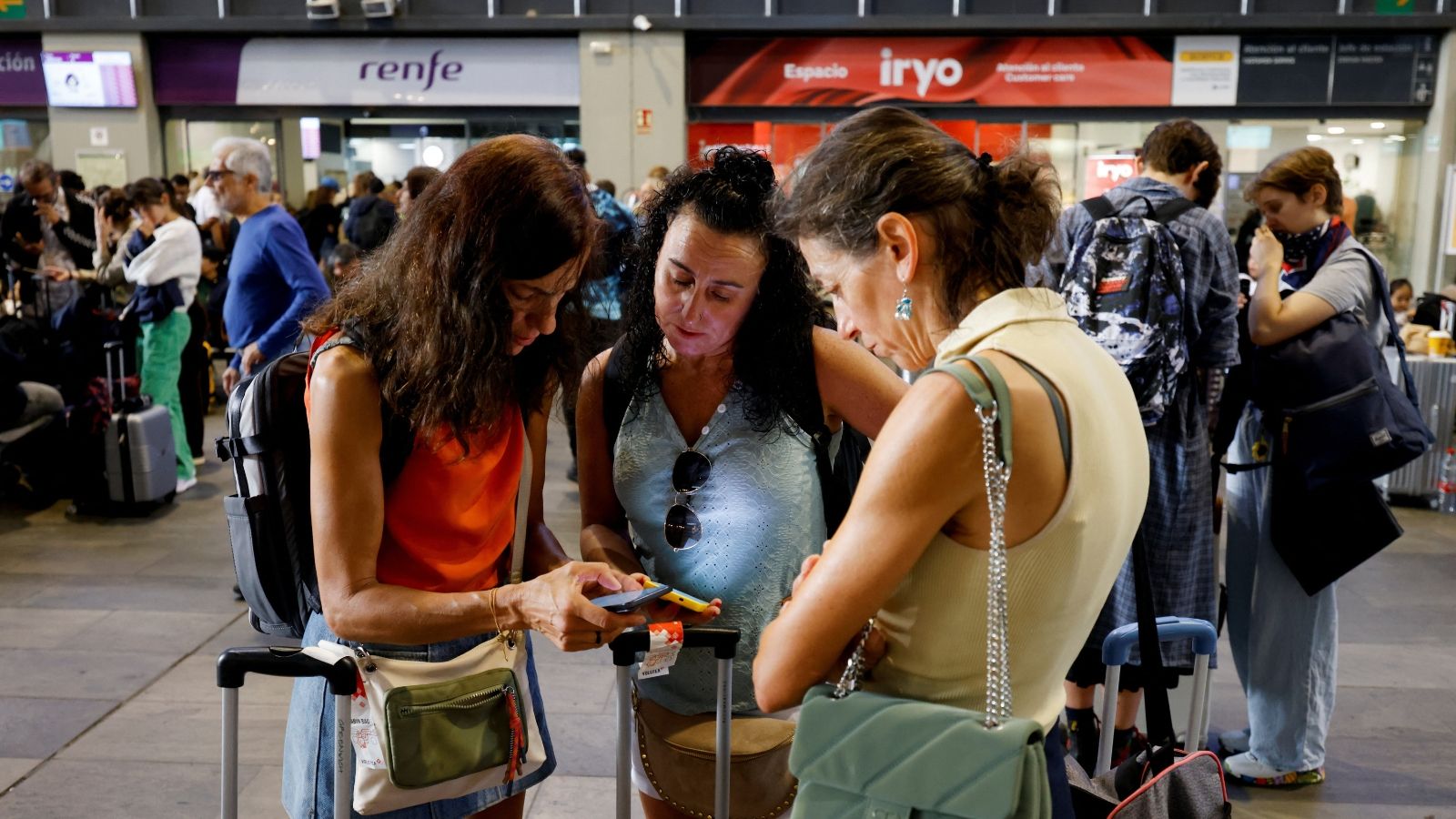
- Check corridor service updates directly through ADIF and operators. Following the Urda collision, all high-speed traffic between Madrid and Andalusia was suspended for recovery and track reconstruction, forcing thousands of passengers onto replacement buses or alternative routes. Always verify live status directly on Renfe, Iryo, or Ouigo portals before heading to Atocha or Santa Justa stations, as lingering speed restrictions can add 30 to 60 minutes to southern routes.
- Watch for the CIAF technical report, not just political hearings. Spain's Railway Accident Investigation Commission (Comisión de Investigación de Accidentes Ferroviarios) conducts the formal technical probe separate from the Orgaz criminal court investigation. Pay specific attention to what CIAF says about why ADIF's interlocking software permitted a manual override into an occupied LZB block.
- Follow the EU Public Prosecutor's signaling audit. Keep an eye on updates from the European Public Prosecutor's Office (EPPO) regarding the Madrid–Seville signaling upgrade funds. That investigation will reveal whether aging 1992-era LZB equipment was overdue for replacement with modern ERTMS Level 2 systems.
- Know your passenger rights during rail disruptions. Under European Union rail passenger regulations, delays over 60 minutes entitle you to a 25% fare refund, and delays over 120 minutes entitle you to 50% back—even when disruptions stem from infrastructure closures. File claims directly through your ticket issuer within three months of your travel date.
Spain built one of the most impressive high-speed rail networks on earth, stretching nearly 4,000 kilometers across rugged terrain. Nobody wants to see that achievement dismantled. Still, pride in speed means nothing if the signaling computers fail and the people watching the screens let a 200-kilometer-per-hour train drive blind into the dark.
For a closer look at the timeline and control-room breakdown behind the tragedy, watch Spain rail disaster: 68 dead after “inexplicable” instruction to train, which walks through the signaling failure and initial official findings from the Urda crash site.