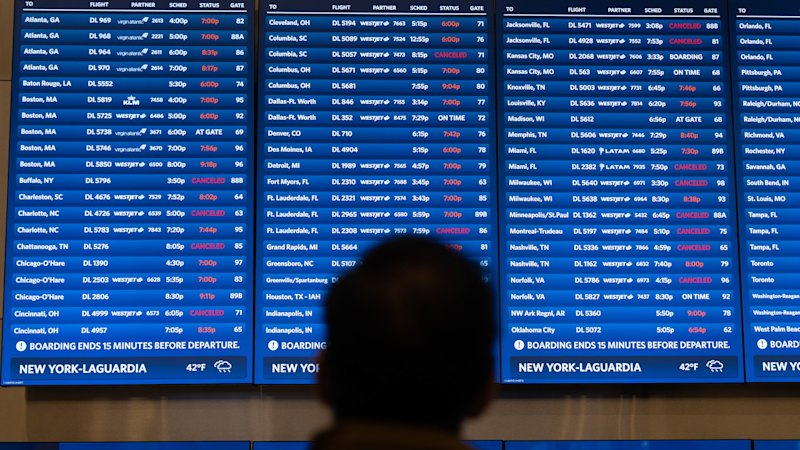
Your departure screen flips to canceled. A crowd forms around the gate podium. Somewhere in the terminal, an announcement blames an FAA ground stop, and suddenly nobody can give you a straight answer about your seat, your money, or where you're sleeping tonight.
Here's the bottom line right away. If your flight gets canceled during an FAA ground stop and you choose not to take an alternative flight, you're entitled to a full cash refund to your original payment method, even on a nonrefundable basic economy ticket. What you won't automatically get is a free hotel room or meal voucher from the airline, because an FAA ground stop sits outside the airline's control. In related news, read about: What Indian Airlines Aren't Telling You About the November 2026 Saudi Flight Suspensions.
Plenty of travel guides stop right there. Honestly, that leaves out half the survival playbook. Knowing the refund rule helps, yet when air traffic halts, speed, documentation, and backup coverage decide whether you get home that night or get stuck paying out of pocket.
Why an FAA Ground Stop Hits Hard
A ground stop isn't just a routine gate hold. The Federal Aviation Administration orders a ground stop to keep aircraft bound for a specific airport or airspace sector on the ground when conditions can't safely absorb more arrivals. Thunderstorms, low ceilings, runway bottlenecks, or air traffic control equipment glitches can all trigger one. Lonely Planet has provided coverage on this fascinating topic in extensive detail.
Take the equipment outage at Chicago O'Hare on November 24, 2026, right around Thanksgiving travel, when a ground radar issue restricted flights heading into the airport. Or look back at the FAA's nationwide ground stop on November 13, 2026, following a technical issue involving router functionality, where roughly 3,500 airborne flights landed safely while departures paused until operations stabilized later that evening.
When the FAA freezes departures, planes and crews fall out of position fast. Even after the ground stop lifts, airlines spend hours untangling displaced aircraft and tight crew duty limits. That ripple effect is why a two-hour ground stop so often turns into an outright cancellation later in the day.
A ground stop also differs from a ground delay program or an airspace flow program, which meter departures with assigned release times rather than halting movement into a target zone outright. If your plane sits on the tarmac waiting to take off during a broader disruption, U.S. Department of Transportation tarmac delay rules kick in separately—requiring access to food and water no later than two hours into a tarmac delay and an opportunity to deplane before three hours for domestic flights or four hours for international flights, subject to narrow safety, security, or air traffic control exceptions.
Your Rights When Canceled During a Ground Stop
Passengers frequently confuse cash refunds with stranded-passenger care like hotels and meals. Federal rules treat those two buckets very differently.
Cash Refunds vs. Travel Credits
Under U.S. Department of Transportation refund rules, if an airline cancels your flight—or makes a significant change, such as a domestic delay or schedule shift of more than three hours or an international one of more than six hours—and you decline rebooking or vouchers, you're owed a refund. That refund covers the unused ticket fare plus mandatory taxes, fees, and extra charges you paid for services you didn't get, like seat assignments or checked bag fees.
Don't let an airline push you into accepting a flight credit or voucher if you don't want to fly. Airlines must issue refunds within seven business days for credit card purchases and within 20 calendar days for cash, check, or other payment methods.
Watch what you click in the app. Accepting an alternative flight can waive your right to a refund for that canceled trip if you later change your mind.
Hotels, Meals, and Ground Transport
Here's where expectations clash with reality. Airline commitments tracked on the U.S. Department of Transportation Airline Cancellation and Delay Dashboard for complimentary hotels, meal vouchers, and ground transport apply to delays and cancellations within the airline's control, such as routine maintenance or crew scheduling.
Because an FAA ground stop is ordered by air traffic management rather than caused by the carrier, airlines are generally not required to pay for your hotel room or dinner. Some agents or carriers may still hand out goodwill amenities during widespread disruptions, especially if a situation evolves, yet you shouldn't count on it at the gate.
Also keep an eye on federal delay-classification rules. Following the FAA Reauthorization Act of 2024, the DOT issued a rule reclassifying ten disruption causes as outside airline control, with implementation pushed back to February 1, 2027 (and reporting starting January 1, 2027) after a request from Airlines for America. Even as those amenity rules shift, a traveler's right to a cash refund on a canceled or significantly changed flight remains intact.
What Experienced Flyers Do First
When a ground stop cancels your flight, standing in a 60-person customer service line is usually the slowest move you can make. Gate agents are juggling reassignments, crew swaps, and angry travelers all at once.
Instead, do these things in order while everyone else is still staring at the departure board:
- Grab the next viable seat immediately. Open the airline's mobile app or website right away to see if you've already been auto-rebooked or if open seats remain on a later flight or nearby airport. If the app shows nothing good, call the airline's international or premier support line while simultaneously messaging customer care in the app.
- Ask for rebooking on another carrier if needed. Many legacy and partner airlines have interline or rebooking agreements for major disruptions, though not every carrier offers cross-airline rebooking on every disruption. It costs nothing to ask politely, especially if the next seat on your own airline is two days out.
- Screenshot the cancellation notice and stated cause. Gate boards change and app histories sometimes get messy. Save screenshots showing the cancellation, flight number, timestamps, and any reason displayed so you have clean records later.
- Check your credit card and travel insurance before booking a room. If you paid with a travel credit card that includes trip delay or trip cancellation coverage, check its minimum delay threshold—often six hours or an overnight stay—and per-day or per-claim limits. Keep itemized receipts for lodging, food, and transit in case you file a claim with your insurer or request a discretionary review.
Mistakes That Cost Travelers Time and Money
One classic mistake is waiting at the podium until it's your turn while seats on the last flight of the night vanish on the app. By the time you reach the desk, the inventory is gone.
Another trap is paying out of pocket for a pricey last-minute ticket on another airline without checking whether your original airline can rebook you or whether a refund makes more sense. If you buy a separate replacement ticket on your own while still holding an active rebooked itinerary, sorting out refunds can turn into a tug-of-war.
Finally, travelers sometimes assume a ground stop means no flights are moving anywhere. A ground stop usually targets specific arrival airports or airspace flows, not every route in the country. Checking FAA National Airspace System status updates helps you see whether the bottleneck is localized or nationwide before you overreact.
Action Steps If You're Stuck Right Now
If your flight just got canceled during an FAA ground stop, take a breath and run through a quick checklist before leaving the terminal. Confirm whether you still need to travel today or want your money back. If you're choosing not to fly, submit a formal refund request through the airline's official channel—clearly stating you're declining alternative travel and want a refund to your original payment method—and save your confirmation number.
If you are traveling and staying overnight, book a reasonable room, save every itemized receipt, and check both your airline's customer service plan and your card's benefits guide. And if an airline drags its feet on a required refund past the seven-business-day or 20-calendar-day window—or fails to meet customer service commitments it made—you can escalate directly through the U.S. Department of Transportation air consumer complaint portal.