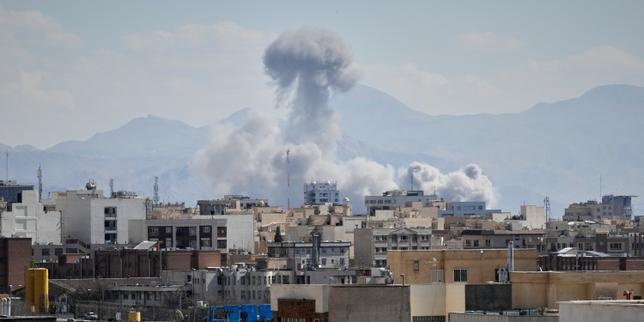
The Middle East just hit a point of no return. If you thought the tension between Washington and Tehran was manageable, Sunday night’s events in Iran changed everything. Massive explosions rocked Tehran for the second night in a row, lighting up the sky and rattling windows across the capital. While the world watched the smoke rise over the Pasteur district, Donald Trump dropped a bombshell on Truth Social. He didn't just hint at military progress; he claimed U.S. forces have already sent nine Iranian naval ships to the bottom of the ocean.
"They will soon be floating at the bottom of the sea, also!" Trump posted, referring to what's left of the Iranian fleet. He wasn't exaggerating the scale of the strikes. Between the decapitation of the regime's leadership and the systematic dismantling of their maritime power, this isn't a "skirmish." It’s a full-scale campaign to neuter Iran's ability to project power in the Persian Gulf.
Why Nine Ships Matter
Losing nine vessels in a single weekend is a catastrophic blow for any navy, but for Iran, it's a death knell. Trump noted that some of these were "relatively large and important." This likely includes the Jamaran-class corvette that CENTCOM confirmed was hit in the Gulf of Oman. Imagine a country’s primary naval defense—the ships meant to block the Strait of Hormuz—vanishing in 48 hours.
The loss of these assets means the "Smart Control" of the Strait that the IRGC bragged about just weeks ago is effectively over. If you can't protect your own coastline, you certainly can't hold the world's oil supply hostage. Trump’s tone was predictably blunt, mocking the destruction of the Iranian Naval Headquarters by saying, "Other than that, their Navy is doing very well!"
It's clear the U.S. isn't just looking for a "measured response." They're stripping the regime of its toys.
The Night Tehran Shook Again
The explosions on Sunday evening weren't random. They were surgical and devastating. Around 9:00 PM local time, blasts ripped through northern and eastern Tehran. One of the primary targets? The state television headquarters (IRIB). When a regime loses its ability to broadcast propaganda, it loses its grip on the narrative.
Reports indicate that the strikes also hit the Sarallah Headquarters, the nerve center for security in the capital. This is where the IRGC plans its domestic crackdowns. By hitting these specific spots, the U.S.-Israeli coalition is sending a message to the Iranian people: the enforcers who have been brutalizing protesters since 2025 are no longer untouchable.
The Human and Military Cost
The reality on the ground is grim. We aren't just talking about buildings and boats.
- The Supreme Leader is gone: Confirmation that Ali Khamenei was killed in the initial Saturday strikes has left a massive power vacuum.
- U.S. Casualties: This isn't a one-sided victory. CENTCOM confirmed the death of three U.S. service members in Kuwait—the first American combat deaths in this conflict. Trump has already warned there "likely will be more."
- Regional Blowback: Iran isn't going down without a fight. They've launched retaliatory strikes against U.S. bases in Qatar, Bahrain, and Kuwait. Even the Burj Al Arab in Dubai saw debris from interceptions.
What Most People Are Missing
Everyone is focused on the "if" and "when" of a ground invasion, but they're missing the three-phase plan the IDF and U.S. are actually executing.
First, they dismantled the air defenses. Second, they're taking out the command and control (the "decapitation" of the leadership). Third, they're neutralizing the navy and missile launch sites. They aren't trying to occupy Iran; they're trying to break the regime's ability to function until it collapses from the inside.
Netanyahu and Trump are basically handing the Iranian people a window of opportunity. They're telling the public to "seize this moment" while the IRGC is distracted trying to keep its ships from sinking. It's a high-stakes gamble that assumes the Iranian people have enough left in them to rise up after years of suppression.
The New Reality in the Gulf
If you're looking at your gas prices or your retirement account, pay attention. A third of the world's sea-borne oil passes through the area where those nine ships used to sit. The "Second Iran War" is no longer a theoretical risk. It's the current reality.
The U.S. has moved B-2 stealth bombers into the theater to hit fortified missile sites, and they aren't showing any signs of slowing down. The goal isn't a ceasefire. It’s total "regime change" through structural destruction.
Stay informed by monitoring official CENTCOM updates and watching the movement of carrier strike groups like the USS Abraham Lincoln. The next 72 hours will determine if this remains a contained (though massive) air and sea campaign or if we’re looking at a regional conflagration that draws in every neighbor from Riyadh to Tel Aviv.
If you have family or business interests in the Gulf, now is the time to verify evacuation routes and secure communication lines. The "status quo" died on Saturday morning.