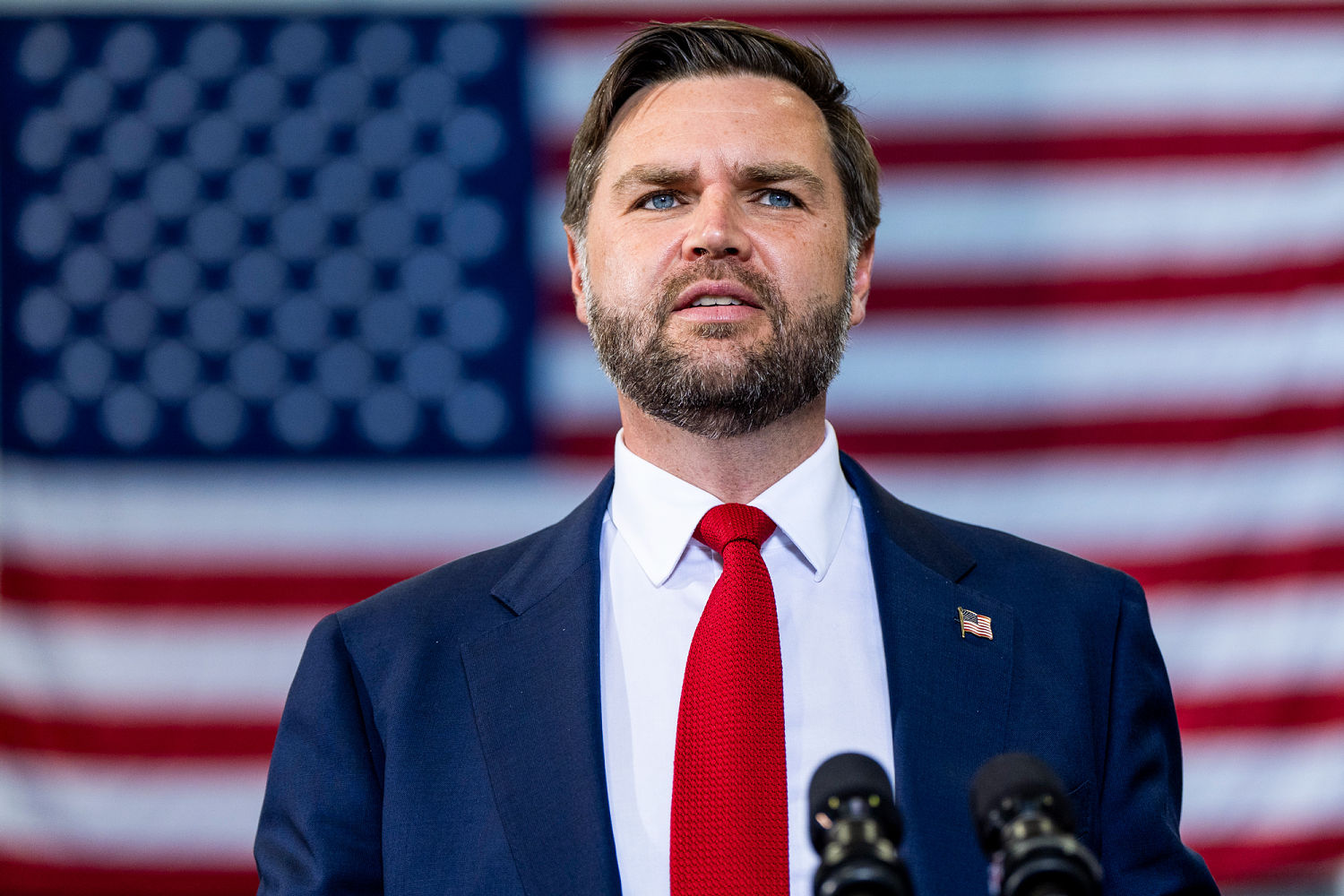
The political theater of Silicon Valley politics just collided with ancient theology. When Vice President JD Vance publicly praised Pope Leo XIV’s monumental 42,000-word encyclical on artificial intelligence, Magnifica Humanitas, calling the document "profound," it was more than a routine nod to his own Catholic faith. It was a calculated pivot. The White House is using the Vatican’s moral authority to justify a looming regulatory crackdown on tech monopolies while simultaneously shielding its own aggressive military AI programs from domestic critics.
By wrapping realpolitik in papal vestments, the administration is attempting to solve its biggest technological dilemma: how to slow down domestic tech giants without losing the global computation race.
The Alliance of Convenience
The relationship between the current administration and the Holy See has been notoriously fractured, fueled by sharp disagreements over foreign policy and immigration. Yet, Magnifica Humanitas provided an unexpected bridge. The encyclical draws an explicit historical parallel to Pope Leo XIII’s 1891 Rerum Novarum, which addressed the brutal realities of the early Industrial Age. Today, Pope Leo XIV frames AI not as a series of software updates, but as a "change of epoch" capable of birthing "new forms of slavery" through exploitative supply chains and raw data extraction.
For Vance, a former Silicon Valley venture capitalist, endorsing these warnings is an elegant way to distance himself from the tech elite while appealing to working-class voters. The administration faces growing public anxiety over automated job displacement. Acknowledging the pope's warnings allows Washington to signal empathy without committing to immediate, economically disruptive policies.
The Corporate Subsidiarity Trap
The core of the Vatican’s critique targets the staggering concentration of power among a handful of transnational corporations. Pope Leo XIV invokes the Catholic principle of subsidiarity—the doctrine that decisions should be made at the most local level possible rather than by a centralized authority.
"Communities and intermediary organizations must not be reduced to passive recipients of decisions made elsewhere; they must be able to contribute to discernment and oversight," the pope writes, demanding algorithmic transparency and independent audits.
This creates an ideological weapon for Washington. For years, antitrust regulators have struggled to curb the influence of Meta, Alphabet, and Microsoft using traditional economic metrics. By shifting the debate to a moral framework based on human dignity and local autonomy, the state gains a powerful narrative to justify breaking up data monopolies or mandating strict algorithmic oversight.
However, the administration’s enthusiasm evaporates when the encyclical turns its gaze to the defense sector.
The Armed Logic Dilemma
The most glaring hypocrisy in Washington’s embrace of Magnifica Humanitas lies in the realm of defense. Pope Leo XIV issued a scathing condemnation of the "armed logic" of tech competition, explicitly forbidding the surrender of lethal or irreversible combat decisions to automated systems.
The White House cannot reconcile this with its current defense strategy. The administration is aggressively integrating autonomous systems into its military framework to keep pace with foreign adversaries. While Vance smoothly handles press briefings by talking about balancing safety with innovation, the reality is a hard national security doctrine that views algorithmic supremacy as non-negotiable.
Washington is happy to use the pope's words to discipline corporate executives who refuse to grant the military unrestricted access to their advanced models—as seen in recent administrative friction with firms like Anthropic. But the state has no intention of disarming its own computational arsenal.
The Mirage of Moral Consensus
Relying on external moral authorities to guide technological policy is inherently unstable. Other factions within the political landscape have already dismissed the encyclical as inappropriate tech editorializing from a religious figure.
The administration’s strategy assumes it can extract the anti-corporate sentiment of the Vatican's message while ignoring its pacifist core. This is a dangerous gamble. As AI deployment accelerates, the economic and ethical fractures will only widen. A 42,000-word theological treatise can provide excellent cover for political maneuvers, but it cannot resolve the fundamental friction between state survival and human ethics. Washington may celebrate the moral clarity of the Vatican today, but tomorrow it will have to face the realities of an automated economy entirely on its own.