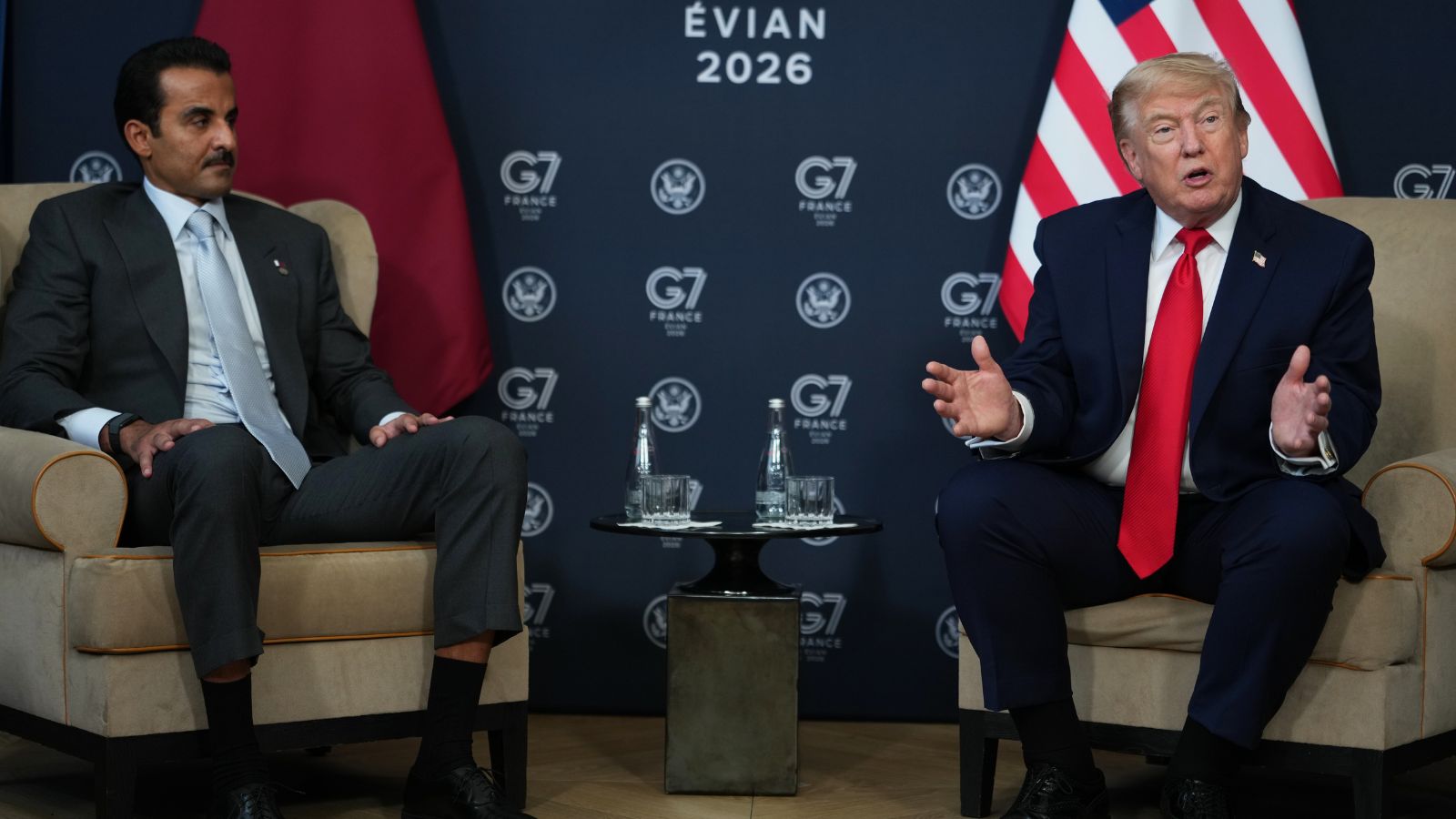
The triumphant announcement from the G7 summit in France that the United States and Iran have averted catastrophic escalation has sent global markets into a celebratory tailspin. Oil prices plummeted, stock indexes surged, and the declaration that the Strait of Hormuz will be permanently toll-free painted a picture of masterclass diplomacy. But the rhetorical bravado coming out of the administration, punctuated by warnings that all hell will rain down if Tehran pursues a nuclear weapon, masks an uncomfortable reality. This framework agreement does not solve the underlying crisis. It merely kicks the nuclear bucket down a heavily mined road while leaving the volatile region on the brink of another eruption.
What has actually been signed in this electronic memorandum of understanding is not a comprehensive disarmament treaty. It is an expensive, fragile sixty-day pause designed to reverse the immediate consequences of a short, high-intensity conflict that began on February twenty-eighth. The administration has traded a naval blockade and frozen billions for a temporary return to the status quo, wrapping the concession in the language of an absolute ultimatum.
The Illusion of the Zero-Weapon Guarantee
The administration has repeatedly assured the public that the core of this new agreement is a rigid, explicit declaration that Iran will never possess a nuclear weapon. Yet any seasoned observer of West Asian diplomacy knows this is a hollow victory. Iran ratified the Nuclear Non-Proliferation Treaty in 1970 and signed onto the same exact pledge in the preamble of the 2015 nuclear accord. Repeating an unverified vow is not a breakthrough; it is a baseline.
The fundamental disagreements that triggered the conflict remain completely unaddressed. The current framework creates a sixty-day window for negotiators to figure out the actual mechanics of dismantling Iran's nuclear program. Vice President JD Vance stated that Iran has committed to disposing of its highly enriched material with the help of the International Atomic Energy Agency. However, the details of how, where, and under whose supervision this material will be destroyed are entirely absent from the text.
Even the timeline for a domestic enrichment freeze is a volatile point of contention. The American delegation is pushing for a strict twenty-year moratorium on all uranium enrichment. Tehran is dug in at ten years, insisting on its treaty-based right to develop civilian nuclear energy. By hinting that the White House might settle for a fifteen-year compromise, the administration has already signaled a willingness to move the goalposts before the formal signing ceremony in Geneva even takes place.
The Unfunded Mandates and Fractured Alliances
The financial underpinnings of this deal resemble a high-stakes shell game. Behind closed doors, officials admit that the framework dangles immense economic carrots, including the eventual unfreezing of twenty-four billion dollars in Iranian assets and a theoretical three-hundred-billion-dollar reconstruction fund. While American representatives publicly insist that zero dollars have been transferred so far, the promise of these sweeping economic sweeteners has already triggered furious blowback from congressional hawks.
More dangerous than domestic political skepticism is the total disconnect between Washington's paper agreement and the reality on the ground in the Levant. Iranian Foreign Minister Abbas Araghchi has bluntly stated that a permanent cessation of hostilities is contingent on an immediate Israeli military withdrawal from southern Lebanon. Israeli Prime Minister Benjamin Netanyahu has explicitly rejected this condition, launching fresh airstrikes on Beirut just hours before the deal's framework was finalized.
Netanyahu has made it clear that Israel does not consider itself bound by a bilateral document signed by Washington and Tehran. The administration's attempts to strong-arm its closest regional ally by publicly calling for more responsible behavior have failed to alter Israel's defensive calculations. If the security architecture of this peace deal requires a regional ceasefire that one of the primary military combatants openly refuses to recognize, the entire arrangement is built on sand.
Conflicting Realities in the Strait
Nowhere is the fragility of this deal more apparent than in the conflicting interpretations of how global shipping will resume through the Strait of Hormuz. The administration has declared the vital energy corridor completely open and unhindered. Concurrently, Iranian state-run media outlets close to the Islamic Revolutionary Guard Corps are telling an entirely different story to their domestic audience.
Tehran claims that marine traffic through the Persian Gulf will be strictly regulated by Iran in direct coordination with Oman. Iranian officials are already framing the removal of the American naval blockade not as a mutual concession, but as an absolute capitulation by the West. They maintain that their navy will continue providing security and navigation services, a euphemism for maintaining a maritime checkpoint on one-fifth of the world’s liquefied natural gas and oil supply.
Navigating this semantic minefield will require more than just aggressive rhetoric at press conferences. The hard work of demining the physical waters of the strait and rebuilding international shipping confidence will take weeks, if not months. If an American commercial vessel is intercepted or harassed by an Iranian patrol boat under the guise of regulatory coordination next week, the sixty-day negotiation window will collapse before the first meeting in Switzerland concludes.
The administration has chosen to buy time, betting that a combination of overwhelming military posturing and economic leverage can force a rational calculation from a bruised Iranian leadership. It is a classic gamble that confuses a temporary ceasefire with permanent disarmament. The reality is that the war which began in February did not alter the fundamental ambitions of Tehran or the existential anxieties of Jerusalem. It merely increased the stakes. When the sixty-day clock runs out, the administration will find that paper walls and rhetorical threats are no substitute for a verifiable, enforceable treaty.