The UAE Ministry of Finance just turned decades of sovereign debt management on its head. By launching its first Sovereign Retail Treasury Sukuk program with a minimum investment threshold of just AED 1,000, the federal government bypassed the institutional gatekeepers that traditionally dominate state debt. This structural shift opens high-grade, Shariah-compliant government debt to ordinary residents and citizens, creating a direct investment link between household savings and national infrastructure. While the official rhetoric emphasizes financial literacy and regional savings cultures, the underlying mechanics reveal an aggressive effort to capture localized liquidity, insulate domestic debt from global interest rate volatility, and accelerate the development of a deep secondary market on Nasdaq Dubai.
For years, the mechanics of sovereign debt issuance in the Arabian Gulf operated under a predictable playbook. Governments issued multi-billion-dollar tranches denominated in US dollars, targeted at international asset managers, sovereign wealth funds, and massive regional banking corporations. The minimum entry ticket for these allocations typically hovered around $200,000, keeping small-scale investors out of the market entirely. Even previous local attempts to introduce retail-friendly debt programs locked down capital behind entry barriers of AED 4,000 or higher. Dropping the floor to AED 1,000 signals a deliberate re-engineering of how the state intends to fund itself. It is a tactical move that builds directly on the broader, institutional T-Sukuk program, which has faced constant oversubscription from corporate treasuries and institutional asset desks.
The Micro-Funding Engine Behind National Balance Sheets
To understand the scale of this pivot, one must look at the structural plumbing of Islamic finance. Unlike conventional treasury bonds, which represent a pure debt obligation backed by the tax-generating capacity of a state, a Sukuk represents fractional ownership in a tangible, income-generating asset or service. The sovereign issuer pools these assets, and investors earn regular payouts derived from the profits generated by those specific holdings.
Historically, fractioning these multi-million-dirham asset pools into tiny pieces for thousands of retail savers was deemed administratively inefficient. The operational costs of managing an IPO-style subscription model for small-dollar accounts outweighed the immediate capital benefit to the treasury. The sudden willingness to shoulder this administrative burden points to a larger economic objective. By transforming individual savings into sovereign-grade capital, the state establishes a domestic buffer. This domestic pool of capital remains insulated from the sudden capital flight that often plagues emerging markets when global macro conditions shift. When global central banks adjust benchmark rates, foreign institutional investors can pull out of regional debt rapidly. Retail investors holding local-currency denominations rarely behave with that same speculative volatility. They tend to buy, hold, and accumulate.
This program operates in direct alignment with the legislative themes of 2026, specifically supporting long-term domestic savings frameworks. Lead receiving banks like Emirates NBD, alongside participating institutions such as Abu Dhabi Islamic Bank, Mashreq, Emirates Islamic, and Ajman Bank, have already upgraded their digital infrastructure to process these subscriptions directly through mobile banking applications. Subscriptions open officially on June 24, 2026. This transforms what used to be a complex investment banking process into a routine digital transaction.
The Nasdaq Dubai Liquidity Calculus
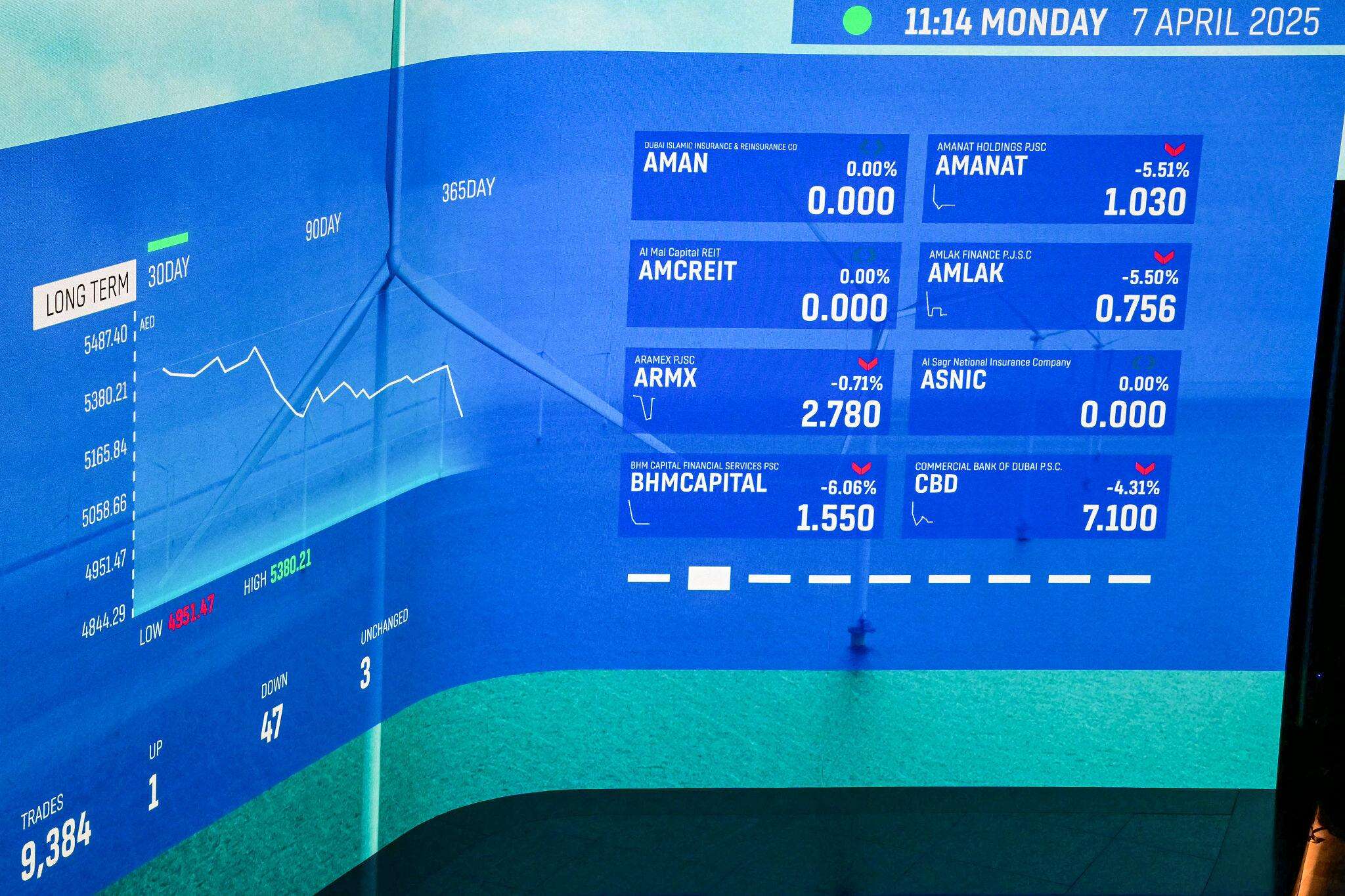
A major risk factor in retail debt programs has always been the lock-in effect. Savers are often hesitant to lock up cash for three, five, or ten years because unexpected personal emergencies require immediate cash. The Ministry of Finance addressed this by routing the post-allocation lifecycle of these instruments straight to Nasdaq Dubai, which acts as the central securities depository and settlement platform.
The secondary market listing provides a mechanism for investors to liquidate their positions before maturity. However, this feature exposes retail savers to a dynamic they might not fully comprehend: market pricing volatility. If an investor purchases a T-Sukuk at par value and benchmark interest rates across the UAE banking sector rise subsequently, the market value of that fixed-profit Sukuk will fall. An individual forced to sell their holdings on Nasdaq Dubai prior to maturity could face a net capital loss, receiving an amount significantly lower than their initial AED 1,000 investment.
Furthermore, secondary market liquidity for retail-sized lots is notoriously difficult to maintain. While large institutions trade blocks worth tens of millions, a retail saver trying to unload a holding worth AED 3,000 might find a wide bid-ask spread, or worse, a temporary lack of active buyers. Nasdaq Dubai and the Dubai Financial Market are tasked with managing this trading environment, but the reality is that secondary market trading for small-denomination sovereign paper remains an unproven frontier in the regional financial ecosystem.
Banking Alliances and the Digital On-Ramp
The distribution network chosen for this deployment reveals a calculated reliance on established retail banking empires. The selection of specific receiving institutions highlights the strategy:
- Emirates NBD: Acting as the lead receiving bank, providing the primary digital funnel through its extensive retail user base.
- Abu Dhabi Islamic Bank (ADIB): Capturing the core Shariah-conscious consumer base through dedicated mobile applications.
- Mashreq and Ajman Bank: Providing specialized digital access points to diversify the geographic reach across different emirates.
These banks are not merely acting as passive order takers. They are integrating these sovereign instruments directly into their primary wealth management tabs, placing risk-free government assets alongside standard savings accounts and high-yield structured products. For the banks, this is a double-edged sword. While it allows them to offer a premium, secure asset to their clients, it also threatens to cannibalize their own low-cost current and savings account deposits. If a depositor can move cash from a basic savings account yielding minimal returns into a sovereign-backed T-Sukuk offering a higher, government-guaranteed profit rate, capital will inevitably migrate.
The Global Precedent and Sovereign Resilience
The UAE is not the first nation to realize the value of localized retail debt distribution. Countries ranging from Singapore to the United States have long maintained highly efficient retail treasury programs to anchor their domestic funding strategies. What makes the UAE initiative distinct is its execution within an exclusively Islamic framework and its denomination in UAE Dirhams, which are pegged directly to the US dollar.
This dollar peg adds an extra layer of structural stability for foreign expatriates residing within the country. It removes the currency depreciation risk that typically deters international professionals from investing their earnings into local-currency instruments within emerging economies. At the same time, the program injects clean, non-inflationary liquidity into the state's fiscal systems, allowing the Ministry of Finance to fund strategic national projects without increasing its reliance on external foreign-currency borrowing.
This model shifts the state from a distant macroeconomic entity into a direct investment partner for the everyday resident. It alters the psychological relationship between the population and national economic growth. When residents own a piece of the infrastructure they use daily, their long-term economic commitment to the jurisdiction deepens.
The true test of the program will not be the initial subscription numbers, which are highly likely to show substantial oversubscription driven by marketing and early enthusiasm. The true metric of success will be observed twelve to eighteen months down the line, measured by the daily trading volumes on the Nasdaq Dubai secondary desks. If the secondary market remains stagnant and spreads remain wide, the instrument will effectively function as a traditional locked savings certificate, limiting its utility for dynamic portfolio management. If liquidity thrives, the UAE will have successfully built a self-sustaining financial loop that feeds on household savings to solidify sovereign independence.