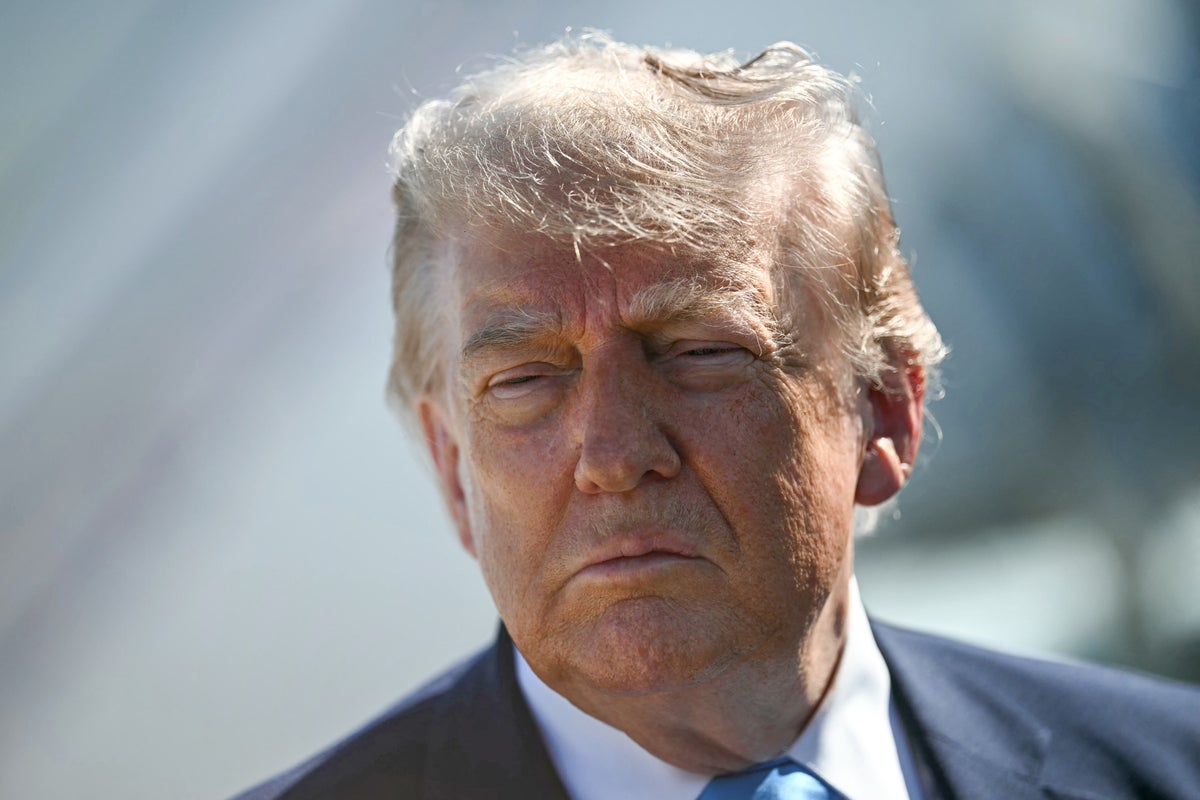
The federal government has quiet machinery designed to settle routine legal disputes. It was never intended to finance political operations. When the Department of Justice announced a $1.776 billion settlement to resolve Donald Trump’s personal lawsuit against the Internal Revenue Service over leaked tax registries, the headlines focused entirely on the creation of the "Anti-Weaponization Fund." Critics labeled it a taxpayer-backed war chest for political allies and January 6 defendants.
But the real structural threat to the public interest is not just where that money is going. It is what the President got in return, and the unprecedented tax exposure it creates.
By packing a personal civil settlement, an official government policy, and a sweeping halt to ongoing tax audits into a single-page document, the administration has created a highly volatile tax anomaly. Corporate lawyers and tax authorities are looking at the deal with deep skepticism. Legal precedents dictate that when a private citizen settles a lawsuit and receives personal financial relief, that relief is considered taxable income. By forcing the IRS to permanently drop audits into his personal wealth—including a high-stakes dispute over a $100 million double-deduction on his Chicago skyscraper—Donald Trump may have inadvertently triggered one of the largest individual tax liabilities in modern history.
The Mechanics of a Self-Rebating Lawsuit
The architecture of the settlement breaks every convention of federal litigation. In January, Donald Trump, his sons, and the Trump Organization sued the IRS, demanding $10 billion in damages. The claim stemmed from the actions of Charles Little John, a former IRS contractor sentenced to five years in prison for leaking Trump's tax data to news organizations.
Under normal circumstances, a civil suit against a federal agency is defended aggressively by civil division attorneys at the Department of Justice. Instead, the administration negotiated with itself. Acting Attorney General Todd Blanche’s office structured an agreement that bypassed standard judicial oversight entirely.
The mechanics rely on the federal Judgment Fund. This is a permanent, indefinite appropriation used to pay settlements and judgments against the United States when a court order or a formal compromise makes the government liable. It is designed to ensure the government pays its valid debts without needing a specific congressional appropriation each time.
By utilizing the Judgment Fund to establish a $1.776 billion pool managed by five politically appointed commissioners, the administration effectively turned an administrative remedy into a discretionary spending program.
[Taxpayer Funds] ──> [Federal Judgment Fund] ──> [Anti-Weaponization Fund ($1.776B)] ──> [Discretionary Disbursal to Allies]
This arrangement bypasses the basic constitutional principle that only Congress has the power of the purse.
The Hidden Value of a Dropped Audit
While public outrage focuses on the cash distributed to third parties, the immediate, quantifiable financial benefit flowed directly to the plaintiff. The Department of Justice stipulated that as part of the settlement, the IRS must immediately halt all ongoing investigations and audits into Donald Trump’s tax returns. Furthermore, the agency was required to issue a formal apology.
To understand why this creates a severe tax vulnerability, one must look at what the IRS was actively investigating.
For years, the IRS has been locked in a quiet, high-stakes audit regarding the Trump International Hotel & Tower in Chicago. Tax authorities argued that Trump utilized a "worthless partner" loophole to claim massive, overlapping write-offs. By declaring his interest in the property worthless in 2008, he claimed a parallel deduction that allowed him to avoid paying taxes on vast sums of subsequent income. The IRS estimated the potential back taxes, interest, and penalties on that single dispute at roughly $100 million.
Under Section 61 of the Internal Revenue Code, gross income means all income from whatever source derived, including the discharge of indebtedness and economic benefits received via legal settlements.
When a taxpayer settles a lawsuit, the tax treatment of the settlement depends strictly on "in lieu of what" the settlement was paid. If a corporation settles a claim by forgiving a debtor's balance, that debtor realizes immediate taxable income. When the federal government agrees to vanish a $100 million tax investigation in exchange for a plaintiff dropping a privacy lawsuit, the government has not merely settled a case. It has handed the plaintiff a direct economic benefit worth $100 million.
Why the Settlement Itself is Taxable Income
The core legal defense of the deal relies on the idea that the President did not receive cash from the $1.776 billion fund. The money sits in a separate vehicle, purportedly out of his hands, intended for individuals who claim they were mistreated by previous administrations.
However, tax law looks at substance over form. The constructive receipt doctrine and the economic benefit doctrine dictate that if a person directs funds from a settlement to be paid to a third party for their own political or personal benefit, the primary plaintiff can still be taxed on the entire sum.
Consider a standard corporate litigation scenario. If a CEO sues an competitor for defamation and instructs the competitor to pay the $10 million settlement directly to the CEO's private foundation or political action committee, the CEO cannot claim their tax liability is zero. The IRS treats the transaction as if the CEO received the money, paid taxes on it, and then distributed it.
By using his position as both the plaintiff and the ultimate authority over the defendant (the executive branch) to route $1.776 billion into a fund that serves his distinct political agenda, Trump has created a powerful argument for tax authorities. He exercised complete dominion over the disposition of the funds.
The Inevitable Congressional and State Law Backlash
The sheer scale of the transaction has triggered a parallel legislative and state-level counter-offensive that could unravel the financial protections the settlement attempted to build.
Ranking Member Jamie Raskin has introduced the No Taxpayer-Funded Settlement Slush Funds Act, aiming to amend the Judgment Fund statute retroactively to bar payments linked to January 6 investigations or civil cases brought by sitting executives. Simultaneously, state lawmakers are exploiting the limits of federal immunity.
Because federal settlements do not bind state departments of revenue, states like Connecticut are moving to implement a 100 percent tax rate on any distributions state residents receive from the fund.
Legislative Countermeasures Against the Settlement
| Bill / Initiative | Primary Sponsor | Mechanism | Target Objective |
|---|---|---|---|
| No Taxpayer-Funded Settlement Slush Funds Act | Rep. Jamie Raskin | Retroactive Judgment Fund restriction | Blocks the use of federal cash for the $1.776B pool |
| The SLUSH FUND Act | House Democrats | 100% Federal Tax Mandate | Taxes all individual payouts from the fund at absolute maximum rates |
| State Level Clawback Bills | Connecticut / Multi-State Coalitions | State Income Tax Adjustments | Seizes individual payouts distributed to residents within state borders |
The Fiction of Permanent Immunity
The most precarious element of the strategy is the belief that a single-page Department of Justice settlement can permanently immunize an individual from future tax enforcement.
A future administration, or even an independent, career-led IRS division, retains the authority to challenge the validity of a settlement signed under obvious conflicts of interest. The law recognizes that contracts executed between an individual and an entity they control can be set aside as shams. If the IRS determines that the settlement was a pretext to extinguish a valid tax debt without consideration, the agency can reopen the audits.
If that occurs, the financial fallout will multiply. Not only would the original $100 million Chicago tower liability return to the ledger, but the IRS could assess fraud penalties and interest compounding from the date the settlement was signed.
The administration attempted to use the Judgment Fund as a shield to protect its allies and insulate its leader from financial scrutiny. Instead, by mixing personal legal grievances with public funds and demanding the erasure of valid tax audits, they have constructed an unstable legal architecture. The $1.8 billion deal was meant to close the book on Trump's financial battles with the government. Instead, it has provided a detailed blueprint for a massive tax enforcement action the moment the political winds shift.
The mechanics of this federal fund and the resulting legal pushback are explored further in this report on Trump's $1.8B taxpayer fund facing fierce legal fights, which outlines the lack of transparency in the appointment of commissioners and the legislative hurdles being erected by opponents.