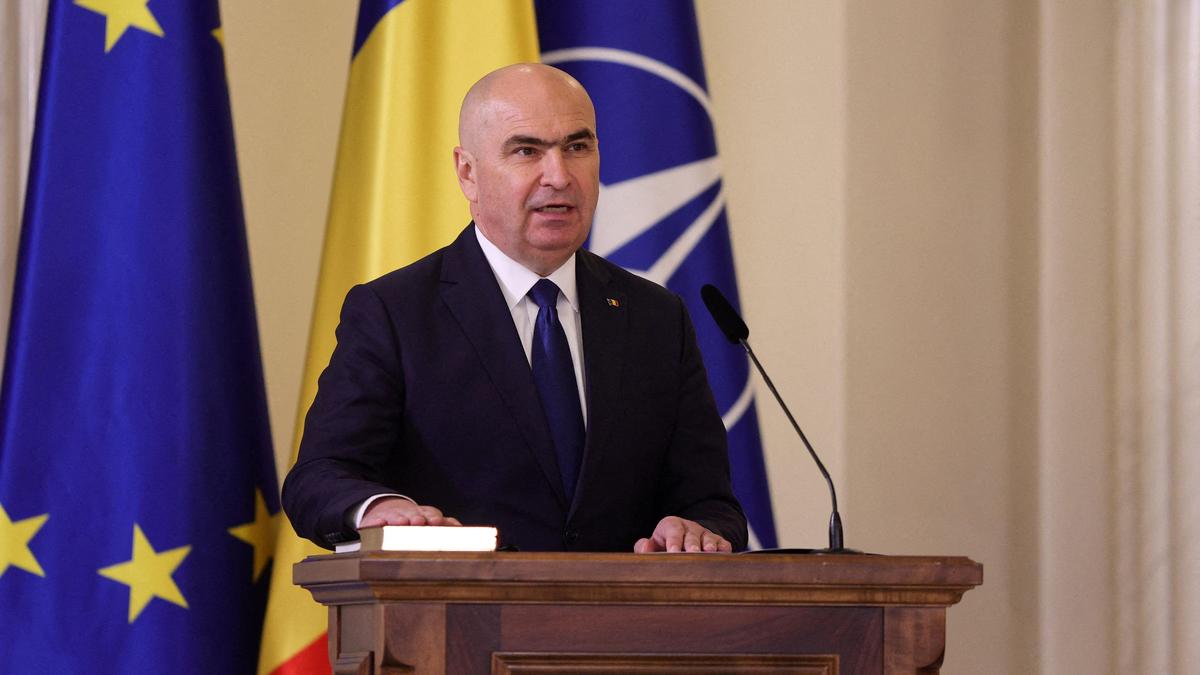
The fragile peace that has held Romania together since the chaotic re-run elections of 2025 is effectively over. On Monday, the Social Democratic Party (PSD) is expected to formally demand the resignation of Prime Minister Ilie Bolojan, a move that would plunge Bucharest back into the familiar, exhausting cycle of political paralysis.
While the public narrative focuses on a "spontaneous" rift over fiscal policy, the reality is far more calculated. This isn't just about spending cuts or budget deficits. It is a pre-emptive strike by a political machine that feels its grip on power slipping as the far-right continues to gain ground in the polls. By pulling the plug on Bolojan now, the PSD is attempting to distance itself from the very austerity measures it helped approve, hoping to find a scapegoat before the 2028 elections loom too close.
The Bolojan Calculus
Ilie Bolojan was never supposed to be a permanent fixture. He was brought in as a "fixer"—a disciplined Liberal known for his administrative efficiency in Bihor—to stabilize a country reeling from the annulled presidential elections of late 2024. His mandate was clear: implement the harsh fiscal reforms required to keep €18 billion in EU Recovery and Resilience Facility (RRF) funds flowing.
He did exactly what was asked. His cabinet froze public sector salaries, slashed "danger pay" bonuses, and taxed pensions. These moves were economically necessary to prevent Romania from falling off a fiscal cliff, but they were a political death sentence.
The PSD, led by veterans who understand the pulse of the Romanian electorate better than most, sees the writing on the wall. They know that being tethered to a "Prime Minister of Austerity" is a liability they can no longer afford. By demanding his exit a full year before the scheduled 2027 power rotation, they are effectively trying to rewrite the script of the last ten months.
A Crisis of Legitimacy
The current tension exposes the fundamental flaw in the "Grand Coalition" model that has dominated Romanian politics. It is a marriage of convenience between the center-right National Liberal Party (PNL) and the leftist PSD, mediated by President Nicușor Dan.
When the coalition was formed, it was marketed as a "pro-European" bulwark against the rising tide of the far-right. However, this alliance has created a vacuum. With the two largest traditional parties governing together, the only remaining space for opposition has been occupied by extremist elements.
The PSD leadership is now paralyzed by a specific fear: that by staying in this coalition under Bolojan, they are fueling the rise of the radical right. Internal polling suggests that the Social Democrats are losing their traditional base—low-income workers and rural voters—to populist rhetoric that paints the coalition as a puppet of Brussels.
The Weaponization of the Budget
The immediate trigger for the current standoff is a dispute over the Thursday cabinet meeting. PSD ministers have threatened a "bloc resignation" if Bolojan does not step down by then.
The Social Democrats are framing this as a defense of the common man against Bolojan's "cold-blooded" accounting. They are demanding a reversal of several key spending cuts, knowing full well that such a move would violate Romania's agreements with the European Commission. It is a classic "win-win" for the PSD:
- If Bolojan refuses, they cast him as an elitist out of touch with the people.
- If Bolojan agrees, they claim credit for "saving" the taxpayers' money.
- If the government collapses, they blame Bolojan's "intransigence" for the crisis.
The President's Impossible Choice
President Nicușor Dan finds himself in a corner. Having spent the early part of 2026 attempting to mediate between the warring factions, he has publicly stated that there is "no other option" but for this coalition to continue.
But the President’s power is limited. While he nominates the Prime Minister, he cannot force a majority to support one. If the PSD follows through on its threat to withdraw political support, Bolojan’s government becomes a zombie administration, unable to pass a single piece of legislation.
The President’s strategy has been to offer a compromise: the PSD could drop the demand for an immediate rotation of power if the PNL agrees to replace Bolojan with a more "flexible" Liberal. Essentially, the PSD is asking for a sacrifice. They want the head of the man who did the dirty work, so they can replace him with someone who will allow for a pre-election spending spree.
The Cost of Instability
While the political elite in Bucharest play their games of musical chairs, the real-world consequences are mounting. Rating agencies have already warned that political instability is the single greatest risk to Romania's investment grade.
The country is currently on the last rung of that grade. A downgrade to "junk" status would see borrowing costs skyrocket, making the very budget deficit the PSD is arguing over even harder to manage. Furthermore, the European Commission has little patience for the "theatrical politics" of Bucharest. The suspension of EU funds is no longer a theoretical threat; it is a mechanism that could be triggered if the reform calendar is derailed by a cabinet collapse.
Romania has emerged from the most serious political crisis since 1989 only to walk right back into the fire. The underlying issue is a lack of political accountability. When everyone is in government, no one is responsible for the failures, yet everyone tries to claim credit for the successes.
The PSD's demand for Bolojan's resignation is a cynical attempt to exit a burning building they helped build. Whether Bolojan stays or goes, the structural problems of the Romanian state—the ballooning deficit, the bloated bureaucracy, and the predatory political class—remain untouched.
The next few days will determine if Romania continues on a path of painful but necessary reform, or if it reverts to the populist chaos that has characterized its lost decades. The "Biggest Party" in the coalition has made its move. Now, the country waits to see if there is anyone left to govern the ruins.
Fix the political culture or prepare for a decade of stagnation.