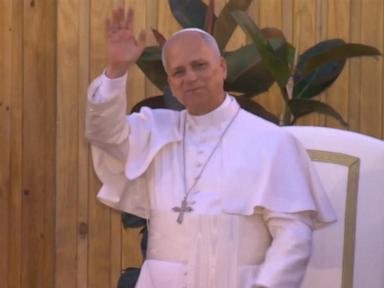
Pope Leo XIV did not travel to Madrid simply to wave from a armored vehicle or to admire architectural achievements. He arrived to confront a quiet crisis. The American pontiff stepped onto Spanish soil on June 6, 2026, marking the first papal visit to the country in fifteen years. While local headlines focus on the massive crowds choking the Plaza de Cibeles, the real story unfolds behind closed doors. The Vatican is using this weeklong itinerary to test an entirely new approach to Western Europe, a region where traditional religious practice has cratered and political fracture has taken its place.
By pushing past the typical itinerary of cathedrals and state dinners, the Pope is diving directly into Europe’s most volatile battlegrounds: political polarization, the rise of artificial intelligence, and the structural pressures of migration. Spain is the laboratory for this high-stakes shift in strategy.
Breaking the Silence in Parliament
The most telling moment of this trip will not happen at an altar. It will happen on June 8 inside Las Cortes Generales, the Spanish parliament.
When Pope Leo addresses a joint session of Congress and the Senate, he will achieve something neither John Paul II nor Benedict XVI did during their numerous trips to the Iberian Peninsula. He will stand before a legislature deeply split by corruption scandals and fierce debates over the country’s legal structure. The gesture is a calculated risk. For a secular government led by Prime Minister Pedro Sánchez, hosting a foreign religious leader in the halls of democracy is a delicate balancing act.
The speech comes at a time when political groups are gaining traction by hammering the ruling coalition’s open approach to immigration. Pope Leo’s decision to enter this arena is intentional. He is attempting to pull the Catholic Church out of the culture wars and reposition it as an independent mediator. During his arrival address at the Royal Palace, he criticized political strategies that build support by dividing populations. He urged leaders to stop fanning the flames of polarization, a direct challenge to the modern political playbook.
The Architectural Spire and the Spiritual Vacuum
On June 10, the papal entourage will move to Barcelona to mark the centenary of the death of Antoni Gaudí. There, Pope Leo will inaugurate the newly completed Tower of Jesus Christ at the Sagrada Família, officially making it the tallest church structure in the world.
The symbolism is striking, but it masks a deeper institutional challenge. Spain is no longer the monolith of faith it was during the mid-twentieth century. The numbers show a stark reality:
- Over 22,000 parishes remain across the country.
- Yet regular church attendance among young Spaniards has fallen below 15%.
- Dioceses face an aging clergy, with thousands of communities relying on international priests to survive.
The soaring 172.5-meter spire represents a pinnacle of structural engineering, but the Vatican knows that stone towers cannot fill empty pews. This explains why the Pope’s schedule pairs high-profile cultural events with gritty realities. Before blessing the cathedral's new spire, he will spend the morning at the Brians 1 Penitentiary Center, sitting with inmates away from the television cameras. It is an effort to show that the institutional church is focused on peripheral social realities rather than its own internal monuments.
The Canary Islands Test Case
The final and most significant leg of the trip takes place on June 11 and 12, far from the capital. By flying to Gran Canaria and Tenerife, Pope Leo is executing a strategy that his predecessor, Pope Francis, championed but never fully realized on European soil: prioritizing the borders over the centers of power.
The Canary Islands have become Europe's primary entry point for thousands of migrants crossing the Atlantic from West Africa. In 2024, arrivals peaked at nearly 47,000 individuals. While numbers dropped to just over 2,000 in the first months of 2026 due to stricter maritime policing, the archipelago remains a geopolitical flashpoint.
| Date | Location | Primary Strategic Focus |
|---|---|---|
| June 6–8 | Madrid | State Diplomacy, Youth Mobilization, Parliament Address |
| June 9–10 | Barcelona | Cultural Integration, Gaudi Centenary, Prison Ministry |
| June 11–12 | Canary Islands | Border Migration, Geopolitics, Humanitarian Crisis |
The Pope's itinerary includes direct meetings with arrivals at the Las Raíces center in Tenerife and humanitarian workers in the port of Arguineguín. This itinerary stands in stark contrast to standard diplomatic tours. Spain's current administration recently bucked regional trends by announcing plans to regularize the status of hundreds of thousands of undocumented workers to counter an aging workforce. By showing up at the southern border, the Pope is providing international backing to these policies, framing the issue as a matter of universal human dignity rather than national security.
Confronting Internal Scars
This journey cannot escape the shadow of institutional failure. Just before departure, the Vatican confirmed that Pope Leo would hold private meetings with survivors of clerical abuse.
The Spanish church has historically lagged behind its European and American counterparts in acknowledging the scale of past misconduct. A recent independent report revealed decades of cover-ups within various dioceses, forcing a painful and delayed institutional reckoning. The Pope’s insistence on meeting survivors on their home turf is an acknowledgment that external diplomatic success means nothing without internal reform. The Vatican is signaling that financial restitution and psychological support protocols are now mandatory baselines for local bishops, not optional measures.
The Digital Manifesto
During his addresses to the youth in Madrid’s Plaza de Lima, which drew hundreds of thousands of attendees, the Pope introduced a surprising theme: the ethics of technology. He warned that young people must not become passive consumers in an era dominated by automated algorithms.
The Vatican is preparing a broader document on digital humanism, and the Pope used his Spanish speeches to test these concepts. He urged the crowd to prioritize physical community over digital isolation, arguing that human relationships must remain the center of economic and social life. This approach reframes the Church’s message for a generation that views traditional moral doctrine as outdated, focusing instead on the preservation of human autonomy in a technological society.
The success of this strategy will not be measured by the immediate enthusiasm of the crowds or the sales of papal merchandise in Madrid. It will be measured by whether local dioceses can maintain the social momentum once the aircraft returns to Rome. The Pope has laid out a blueprint that demands engagement with secular parliaments, migrant camps, and internal institutional failures. The era of the comfortable, culturally dominant European church is over, and the Vatican is adjusting to that reality.